
This year is on track to be the second hottest on record, behind 2016, the World Meteorological Organization (WMO) said on Wednesday.
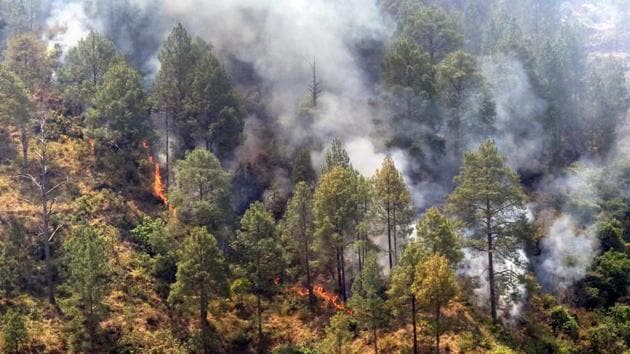
Five data sets currently place 2020, a year characterised by heatwaves, droughts, wildfires and raging hurricanes, as the second warmest since records began in 1850.
Suggested For You
“2020 is very likely to be one of the three warmest years on record globally,” the Geneva-based UN agency said in its State of the Global Climate in 2020 report.
Stoked by extreme heat, wildfires flared across Australia, Siberia and the United States this year, sending smoke plumes around the globe.
Less visible was a surge in marine heat to record levels, with more than 80% of the global ocean experiencing a marine heatwave, the WMO said.
Also Read | India forms high-level committee to implement Paris Agreement targets
“2020 has, unfortunately, been yet another extraordinary year for our climate,” said WMO Secretary-General Petteri Taalas, urging more efforts to curb the emissions that are fuelling climate change.
Greenhouse gas concentrations climbed to a new record in 2019 and have risen so far this year despite an expected drop in emissions due to Covid-19 lockdowns, the WMO said last month.
{{/usCountry}}Greenhouse gas concentrations climbed to a new record in 2019 and have risen so far this year despite an expected drop in emissions due to Covid-19 lockdowns, the WMO said last month.
{{/usCountry}}The latest WMO report said the global mean temperature was around 1.2 degrees above the 1850-1900 baseline between January and October this year, placing it second behind 2016 and marginally ahead of 2019.
Hot years have typically been associated with El Niño, a natural event that releases heat from the Pacific Ocean. However, this year coincides with La Niña which has the opposite effect and cools temperatures.
The WMO will confirm the data in March 2021.
A climate pact agreed in Paris five years ago compels countries to make efforts to limit warming to 1.5 degrees Celsius, above which scientists warn of catastrophic climate change.
While it is not the same as crossing that long-term warming threshold, the WMO says there is at least a one in five chance of temperatures temporarily, on an annual basis, exceeding that level by 2024.
Explore More
ABOUT THE AUTHOR
Follow the latest breaking news, major developments and agenda-setting stories from India and around the world with the newsdesk at Hindustan Times. Operating round the clock, the desk brings together experienced editors, reporters and correspondents to deliver fast, accurate and contextual reporting across subjects that influence public policy, governance, business, society and international affairs. The HT News Desk covers politics, elections, government policies, the economy, business and markets, science and technology, the environment, law and order, infrastructure, education, climate issues and geopolitics, while closely tracking developments across states, institutions and global capitals. The team also leads coverage of major breaking news events, policy announcements, court proceedings, natural disasters, public emergencies and significant international developments. Reports published by the newsdesk are based on information gathered from reporters on the ground, official statements, government agencies, court records, regulatory filings, recognised institutions and other authoritative sources. Stories undergo editorial scrutiny and verification processes to ensure accuracy, fairness and relevance, and are updated as events evolve and additional information becomes available. Whether covering a key political decision in New Delhi, an economic policy shift affecting millions, a landmark court ruling or a major global event, the HT News Desk aims to provide readers with reliable, fact-based journalism that delivers not only the latest developments but also the context and analysis needed to understand their wider implications.
