
 E-Paper







Follow the latest breaking news, major developments and agenda-setting stories from India and around the world with the newsdesk at Hindustan Times. Operating round the clock, the desk brings together experienced editors, reporters and correspondents to deliver fast, accurate and contextual reporting across subjects that influence public policy, governance, business, society and international affairs. The HT News Desk covers politics, elections, government policies, the economy, business and markets, science and technology, the environment, law and order, infrastructure, education, climate issues and geopolitics, while closely tracking developments across states, institutions and global capitals. The team also leads coverage of major breaking news events, policy announcements, court proceedings, natural disasters, public emergencies and significant international developments. Reports published by the newsdesk are based on information gathered from reporters on the ground, official statements, government agencies, court records, regulatory filings, recognised institutions and other authoritative sources. Stories undergo editorial scrutiny and verification processes to ensure accuracy, fairness and relevance, and are updated as events evolve and additional information becomes available. Whether covering a key political decision in New Delhi, an economic policy shift affecting millions, a landmark court ruling or a major global event, the HT News Desk aims to provide readers with reliable, fact-based journalism that delivers not only the latest developments but also the context and analysis needed to understand their wider implications.
India forms high-level committee to implement Paris Agreement targets
The high-level inter-ministerial Apex Committee for Implementation of Paris Agreement will be chaired by enviroment ministry secretary and its purpose would be to generate a coordinated response on climate change matters


The Centre has constituted a high-level ministerial committee for the implementation of the targets under the Paris agreement on the climate crisis.
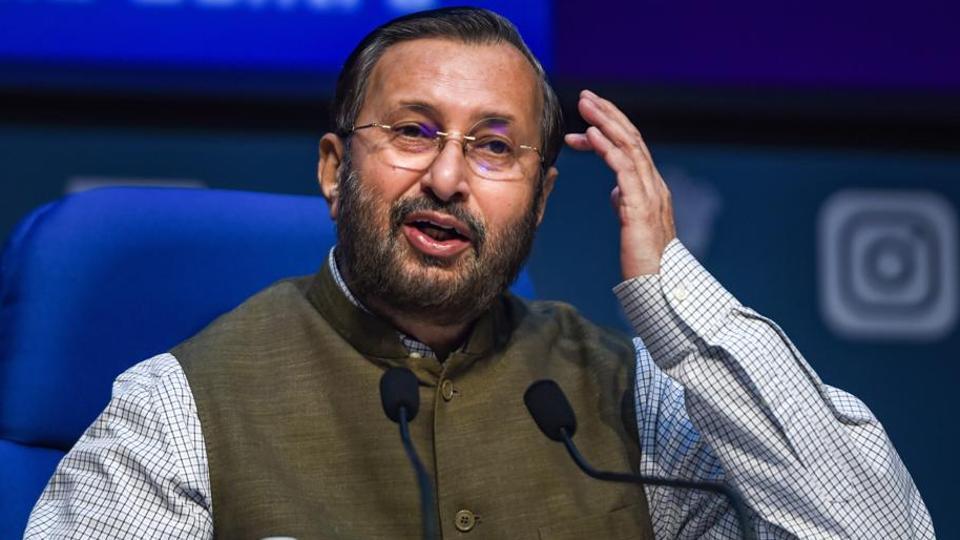
“In another move that re-affirms India’s seriousness to ‘walk the talk’ on climate change, the Ministry of Environment, Forest and Climate Change (MoEFCC) has constituted a high-level inter-ministerial Apex Committee for Implementation of Paris Agreement (AIPA) under the chairmanship of Secretary, MoEFCC,” the ministry said in a statement issued on Wednesday.
“The purpose of AIPA is to generate a coordinated response on climate change matters that ensures India is on track towards meeting its obligations under the Paris Agreement including its Nationally Determined Contributions (NDC).”
Also read | India inches towards first marine ‘designated area’ off Maharashtra coast
Signed in 2016, the agreement under the United Nations Framework Convention on Climate Change deals with greenhouse gas emissions mitigation, adaptation, and finance. It sets out a global framework to avoid climate change by limiting global warming to well below 2°C and pursuing efforts to limit it to 1.5°C. It also aims to strengthen countries’ ability to deal with the impacts of the climate crisis and supports them in their efforts.
India is also one of the signatories.
The high-level committee of senior officials from 14 ministries will oversee the progress in the implementation of India’s NDC and receive periodic information updates to monitor, review and revisit climate goals to fulfill the requirements of the agreement.
Another key function of AIPA would be to operate as a national authority to regulate carbon markets in India under the agreement.
It will also formulate guidelines for the consideration of projects or activities, issue guidelines on carbon pricing, market mechanism, and other similar instruments that have a bearing on climate change and NDCs.
The committee will engage with the private sector as well as multi, bi-lateral agencies in the field of climate change and provide guidance for aligning their actions with national priorities.
“The year 2021 would mark the beginning of the implementation of the Paris Agreement and constitution of AIPA is central to strengthening the national systems and institutional arrangements for implementation and monitoring of climate actions. It will also ensure that India maintains its climate leadership as one of the few countries in the world whose climate actions are consistent with the goals of the Paris Agreement,” the environment statement said.





