
 E-Paper





El Niño and the grid: How climate is rewriting India’s power planning
El Niño is unfolding against a hotter climate, amplifying weather extremes and electricity demand in India.




Sometime in the 1600s, fishermen in Peru began noticing unusually warm ocean water that coincided with a drop in their catch. Because the phenomenon tended to appear around Christmas, they named it El Niño de Navidad or Christ Child. What they had identified, long before satellites or climate models existed, was part of one of the planet’s most influential climate cycles. Every two to seven years, warming in the central and eastern Pacific Ocean alters rainfall, temperature, and weather patterns around much of the world.
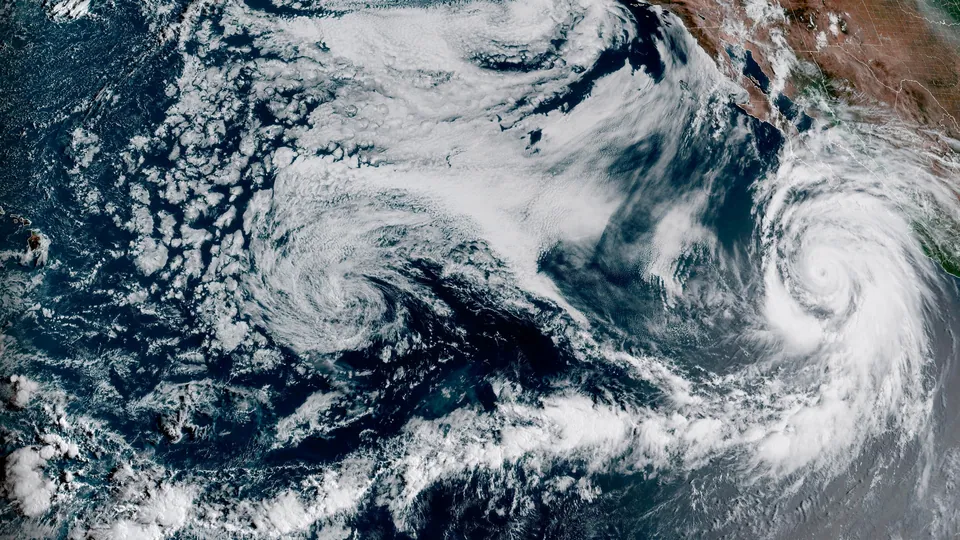
El Niño itself is not new, but the conditions in which it is now unfolding are.
Decades of warming have handed El Niño a much hotter baseline to start from. Warmer oceans and atmosphere mean more heat and moisture to work with. While scientists are still studying its precise relationship with human-induced climate change, there is far less uncertainty around how frequent and intense climate risks are becoming and how they compound one another.
In late August, for instance, traces of an earlier tropical storm associated with El Niño contributed to intense rainfall that triggered deadly flooding in the Grand Canyon. Just days before, a glacial collapse in Nepal had unleashed a massive deluge. Over the past three decades, the country’s glaciers have lost nearly a third of their ice mass, with the pace accelerating sharply through the 2010s. For a country that contributes less than 0.1% of greenhouse emissions to the globe, the estimated cost of rebuilding lands close to a tenth of its economy, at around USD 4-5 billion. One cannot help but recall the Kedarnath floods of 2013. Scientists even back then warned that rising temperatures and erratic weather patterns would only make such events more likely. Thirteen years, and those warnings are only becoming a lived reality.
These events stand as stark reminders of the human, economic, and environmental costs of climate shocks. They also reveal a difficult tension: to limit further warming and climate risks, we need to move away from traditional fuels and rapidly expand renewable energy and electrification. For power systems, the shift means holding reliability and affordability steady while the climate they operate in grows less predictable. India’s power system is already being asked to manage both sides of this equation.
The first is surging demand. Between April and August, India’s electricity consumption grew by roughly 9.5%, compared to just 0.3% the same period last year. Much of that increase can be attributed to higher cooling requirements spurred by hotter and more humid weather under El Niño conditions. CREA’s scenario projections suggest this trend is likely to intensify. Higher cooling demand alone could add nearly 10 TWh of electricity consumption in a single year. To put that in perspective, it’s roughly a quarter of what Delhi consumes annually.
The second is integrating a growing share of weather-dependent renewables when the weather itself is harder to forecast. We have already seen this in hydropower generation, with its share in the power mix falling to nearly 22% following a weak monsoon in July. Wind output can also turn inconsistent with changes in atmospheric pressures and wind speeds. Solar has so far been the least affected by El Niño, and with peak demands occurring mainly during the day, it has been available to support the grid. But as high temperatures persist into the night, when solar is entirely offline, matching demand becomes harder. The impact is already visible in the price curve. On May 21, when India recorded its highest-ever peak demand, power on the Indian Energy Exchange’s Day-Ahead Market (IEX-DAM) was trading at ₹1.56/unit at 1:00 p.m. By 6:30 p.m., with no solar generation online, the same unit reached the market ceiling of Rs 10. This reflects the growing demand-supply pressure that builds when solar drops away.
The answer is not to slow the transition. Instead, it calls for equipping our systems with the intelligence needed to anticipate changing conditions. And the first challenge we must address is network-wide visibility. Last year alone, nearly 2 TWh of renewable electricity was curtailed due to inflexible coal plants and a demand-supply mismatch, keeping the grid from absorbing and dispatching the surplus. The system needs to know where demand is emerging, where congestion is building, and where generation is likely to fluctuate. Advanced forecasting, Artificial Intelligence, digital grid mapping, and real-time analytics can enable utilities to anticipate stress before it becomes failure.
India must also accelerate investments in energy storage. The Central Electricity Authority estimates that the country will require around 208 GWh of battery storage capacity by 2030. Batteries are already emerging as essential grid assets that absorb excess renewable generation, improve reliability, and reduce the need for costly network expansion. They will also prove effective in helping the grid meet demand during off-solar hours.
Finally, India should recognise that grid resilience is ultimately economic resilience. Climate shocks do not recognise sectoral boundaries. They ripple through agriculture, health care, industry, water systems, and households. Investments to make the power system more adaptable also become about safeguarding economic and social development.
Events like El Niño should, therefore, no longer be viewed as sector-specific, one-off disruptions. Climate risks need to be accounted for at every stage of our developmental planning. And India’s energy transition depends not just on the gigawatts we build. Equally important is how ready our grids are to deliver them reliably when the conditions are at their most difficult.
(The views expressed are personal)
This article is authored by Tanya Singhal, vice president and country head, India, Global Energy Alliance for People and Planet.





