
 E-Paper




From a word coined in 1944 to ICJ's Rohingya ruling, the history, definition and law on genocide
Raphael Lemkin’s conception became a treaty in 1948. On Thursday, ICJ applied it to Myanmar’s 2017 campaign against the Rohingya.

 Prefer HTon Google


The International Court of Justice (ICJ) ruled on Thursday that Myanmar committed genocide against the Rohingya, with its judges splitting nine votes to six over how to read the 1948 treaty’s requirement of an “intent to destroy” a group.

It is the first time that the United Nations’ top court has held a state responsible for committing genocide. The court accepted a UN fact-finding mission’s estimate that Myanmar’s 2017 military campaign against the Rohingya killed at least 10,000 people, and called the figure “supported by the record”. More than 700,000 Rohingya fled into Bangladesh.
Myanmar has denied genocide, saying its forces were tackling a violent insurgency. Asked about the ruling on Friday, Khaing Khaing Soe, the presidential spokeswoman, told reporters in Naypyidaw: “It is not fair.”
The treaty
The Convention on the Prevention and Punishment of the Crime of Genocide, adopted by the UN General Assembly on December 9, 1948, defines genocide as any of five acts “committed with intent to destroy, in whole or in part, a national, ethnical, racial or religious group, as such”. They are:
- Killing members of the group
- Causing them serious bodily or mental harm
- Deliberately inflicting conditions of life calculated to bring about the group’s physical destruction
- Imposing measures intended to prevent births within the group
- Forcibly transferring its children to another group
The definition has two parts. The first is the act, which lawyers call the actus reus. The second is a special intent to destroy the group, known by its Latin name, dolus specialis, which must be proven on top of the intent to commit the act, the court said in its judgment.
The court said “destroy” refers to “the physical or biological destruction of the group rather than destruction of the group’s culture”. The treaty also makes conspiracy, direct and public incitement, attempt and complicity punishable.
Also read: ‘Justice is finally being served’: Rohingya widow hears Myanmar genocide ruling from refugee camp
The word’s origin
Raphael Lemkin, a Polish-Jewish lawyer, coined the word “genocide” in 1944 in his book Axis Rule in Occupied Europe. He joined the Greek “genos”, meaning race or tribe, to the Latin “cide”, meaning killing, according to the UN.
Lemkin had gathered decrees issued across Nazi-occupied Europe. Studying them at Duke University in the US, he saw a pattern aimed at eliminating whole groups, according to Philippe Sands, a lawyer for The Gambia in the Myanmar case who wrote about Lemkin in his book East West Street. Sands was speaking on The Ezra Klein Show, a New York Times podcast, in 2025.
The Nuremberg tribunal’s judgment on Nazi leaders in October 1946 never used the word, Sands said. Lemkin lobbied the new United Nations, whose General Assembly adopted the Genocide Convention two years later.
The treaty was narrower than Lemkin’s own idea of genocide, according to Sands. It required proof of a special intent to destroy a group and left out political groups. To get a treaty at all, Lemkin “had to accept that the best is the enemy of the good”, Sands said.
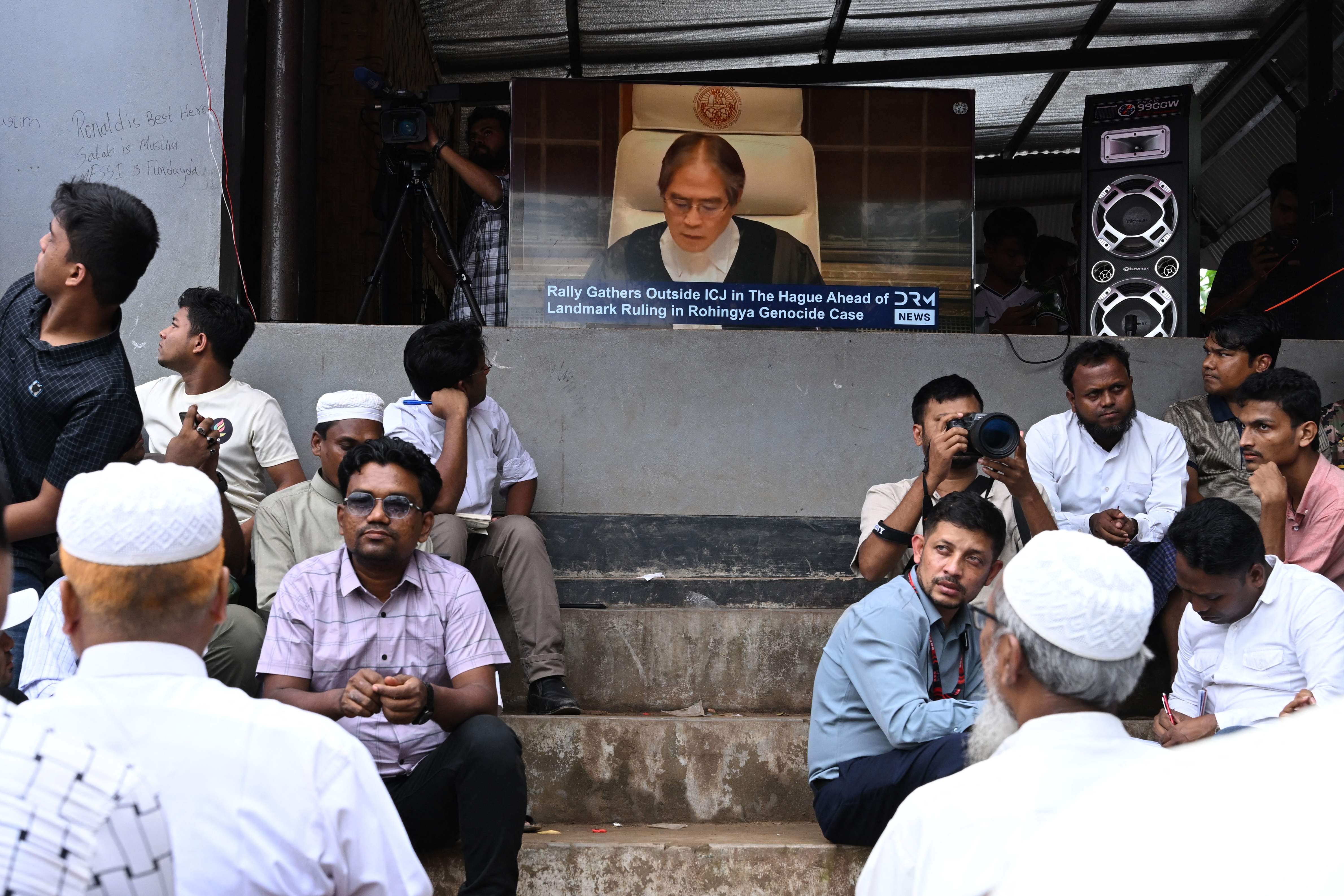
The ICJ ruling
The court found that the Rohingya are “a distinct ethnic group”, which makes them a protected group under the treaty. Myanmar targeted the roughly 815,000 Rohingya who lived in northern Rakhine State before 2017. The judges said that number alone made them a “substantial” part of the group.
Myanmar’s security forces “intentionally killed members of the protected group on a large scale”, the judgment says. The court accepted that at least 1,834 people were raped and found serious bodily harm, as well as serious mental harm to “a very significant number of members of the Rohingya group”.
It also found that Myanmar imposed measures intended to prevent births, citing a 2005 regional order that restricted Rohingya marriages and births, along with the sexual violence. Proof that the birth rate actually fell was not required, the court said.
The judges did not find the third act on the treaty’s list. The evidence of restrictions on the Rohingya’s living conditions did not “conclusively establish” it, they said. The Gambia, the West African country that brought the case in 2019, did not allege the fifth, the transfer of children.
Forcing people from their homes is not by itself an act of genocide, the court said, though the circumstances of an expulsion, such as families being separated and homes destroyed, can amount to serious mental harm.
Also read: 'Holy mothers of Gaza': Italian artist's work draws attention to war’s toll on mothers
Reading ‘intent’
Genocide has rarely been established in international courts, largely because of the need to prove a specific intent to destroy a group, according to Reuters. The court can infer that intent from circumstantial evidence only if it is “the only reasonable inference that can be drawn from the evidence”, the judgment says.
The judges noted that the test is not found in the 1948 treaty itself. It is a general rule of international criminal law, they said. The burden of proof lay with The Gambia, the court said.
“Since Nazi Germany, leaders who want to destroy groups have learned that you don’t put in writing, you don’t articulate your intention to destroy a group in whole or in part,” Sands said on the podcast.
Myanmar told the court its forces were countering “violent terrorist attacks by ARSA and its supporters”, a reference to the Arakan Rohingya Salvation Army, a Rohingya insurgent group that attacked about 30 police posts and an army base in August 2017. It argued that the approach The Gambia proposed risked turning the test into a “one possible inference” test.
The majority said casualties and damage “far in excess of what was justified by military necessity” counted against the counter-insurgency explanation, and that genocidal intent can exist alongside other aims. The court found “no evidence in the record of any effort or plan by the Myanmar Government to transfer or evacuate the Rohingya population”. An intent to displace people and an intent to destroy them “may thus co-exist”, the judges said.
Six judges disagreed. In a joint dissent, they accepted the pattern of conduct and the 815,000 figure but said the evidence could also point to “‘collective punishment’ inflicted above all to intimidate and thereby deter”. They argued that the majority’s approach tends to “implicitly shift the burden on the respondent”, or – in this case – Myanmar.
Professor Janina Dill, an Oxford University expert on international law and the use of force, said in a statement that the Myanmar ruling “is very instructive of how the Court approaches some of the crucial questions that it faces in other pending genocide cases, including the polarising case of South Africa versus Israel”.
She said the 9-6 majority in the Myanmar ruling and a number of separate and dissenting opinions from judges “highlight the lingering doctrinal complexities”, AP reported.
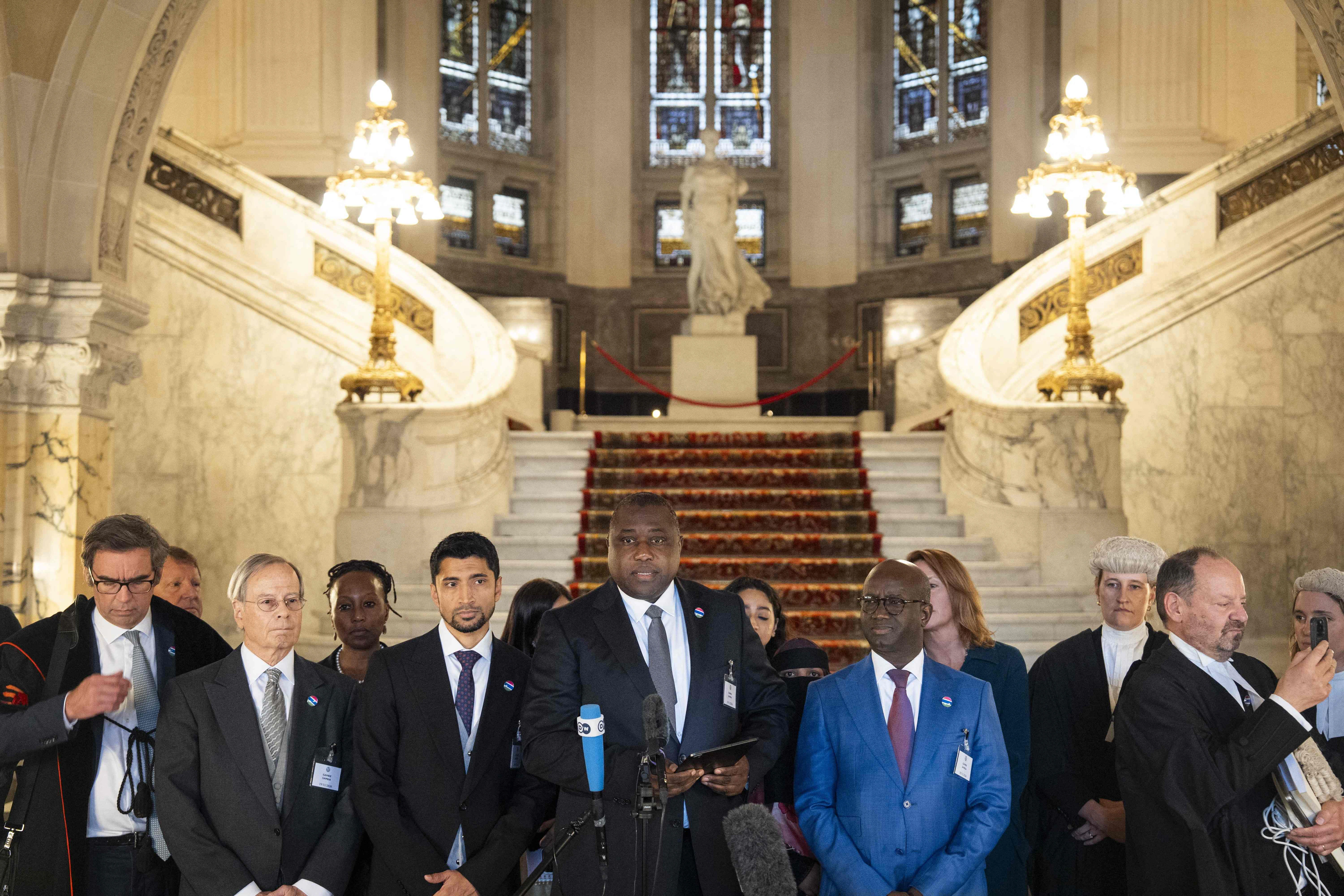
Why earlier cases fell short
The ICJ had been asked to find a state guilty of genocide before but had never found enough evidence to do so, AP reported. Two earlier cases show where the bar has stood.
In Bosnia’s case against Serbia, decided in 2007, the court agreed that the 1995 massacre at Srebrenica, where Bosnian Serb forces killed some 8,000 mostly Muslim men and boys, was genocide. But it stopped short of holding Serbia, the state, responsible for committing it. It ruled instead that Serbia had failed in its duty under the treaty to prevent the killings.
In Croatia’s case against Serbia, decided in 2015, Croatia said Serb forces had committed genocide in attacks on Croatian regions between 1991 and 1995. The court accepted that killings and other acts listed in the treaty had taken place. But it was not convinced they were carried out with the intent to destroy Croats as a group, which the treaty requires.
In Thursday’s judgment, the court said the evidence in both those cases had shown a deliberate practice of moving people out of an area. It found no such plan in Myanmar. An intent to force the Rohingya out “does not explain the totality of the evidence”, the judges said.
Before Thursday, international courts had recognised genocide in three situations: Rwanda in 1994, Srebrenica in 1995, and Cambodia under the Khmer Rouge regime in the late 1970s.
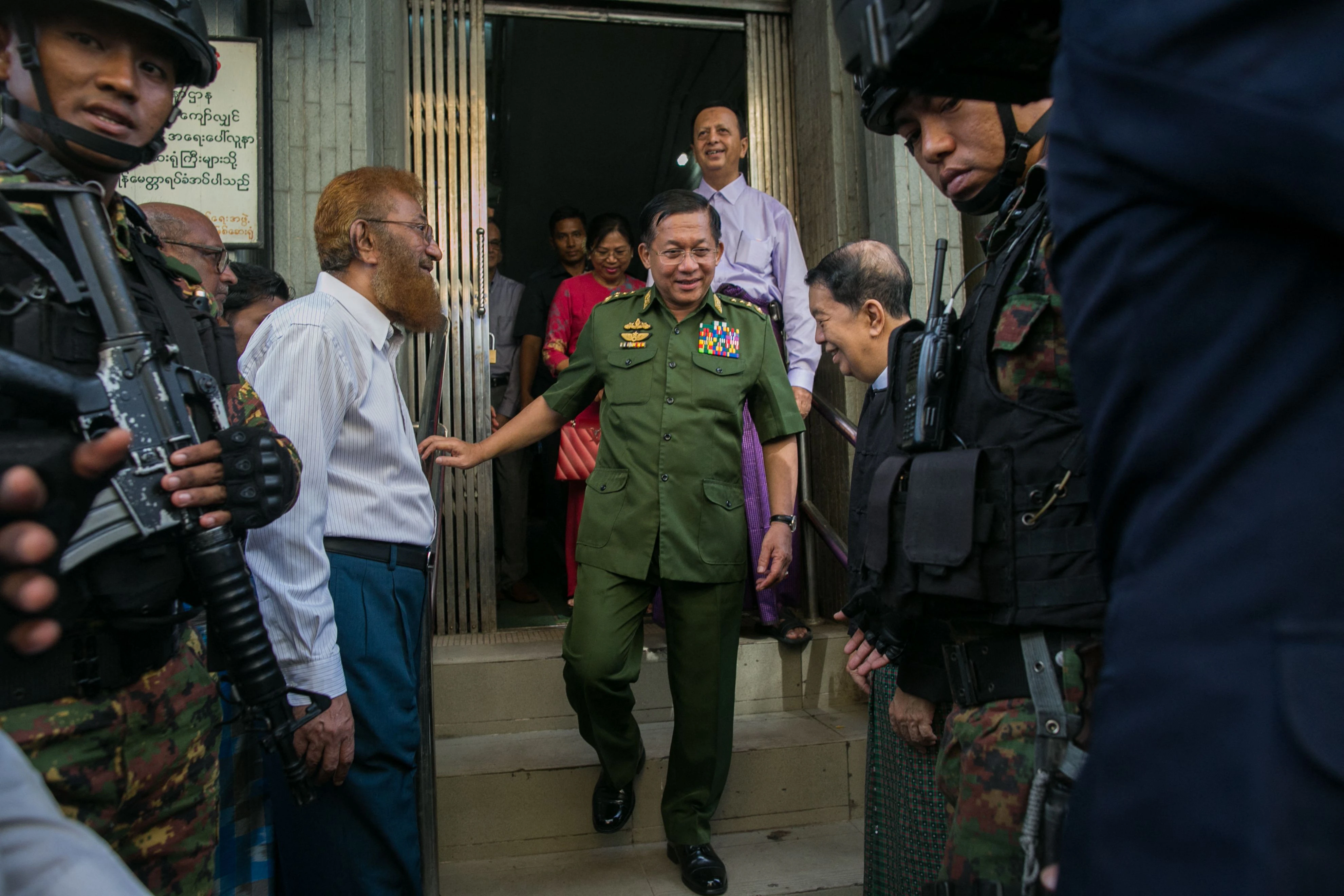
A state’s responsibility, not a person’s guilt
The ruling concerns Myanmar’s responsibility as a state. The ICJ settles disputes between states, while the International Criminal Court (ICC) prosecutes individuals.
ICC prosecutors have sought an arrest warrant for Myanmar’s current president, who commanded the military in 2017, over alleged crimes against humanity. The application is pending.
The court ordered Myanmar to investigate and, if warranted, prosecute those suspected of genocidal acts in the 2017 operations. It also ordered Myanmar to allow the “safe, voluntary and dignified return” of those who fled and to pay compensation. It has two years to report to the court on the restitution it has made and the compensation it proposes.
There is no appeal against the ruling, which is binding. The court’s only means of enforcing it is to report non-compliance to the UN Security Council, AP reported.
Legal experts will study the ruling for clues to other pending cases, including South Africa’s accusation that Israel committed genocide in Gaza, which Tel Aviv denies. That case is years from a ruling on its merits.
Ukraine has a separate case against Russia, accusing Moscow of fabricating genocide claims to justify its 2022 invasion.





