
 E-Paper






Godhooli Sharma is working as Senior Content Creator and is based in Lucknow. She majorly covers Education and Science beats alongside cultural and human-interest stories. If not in office, she can be found wandering in quest of news stories - driving from one end of the city to another until dusk just to file the stories in time. She has over four years of experience in the field of journalism and was previously with The Times of India. A fast learner, hard worker and multitasker who rises up with the zeal to get on a whole new expedition of learning. She goes by believing that coming into this profession was by her choice and not by chance - generally considered the other way around for journalists. Outside of journalism, she is engaged in creative pursuits, including photography, painting, bird-watching and travel. Being a creative person inside out, she believes in pulling out some soft stories that can bring cheer to society. Her reporting frequently features stories on scientific innovations, academic issues across Lucknow University and local schools, student achievements under adverse circumstances, and local cultural affairs like the city's theatre scene. Born and raised in Indore, she completed his intermediate and later her higher education from Isabella Thoburn College and Lucknow University respectively.
20 years on: LU’s political old guard bats for return of student union polls
AMU’s return to student polls and Jamia’s move towards elections have revived the debate on campus democracy

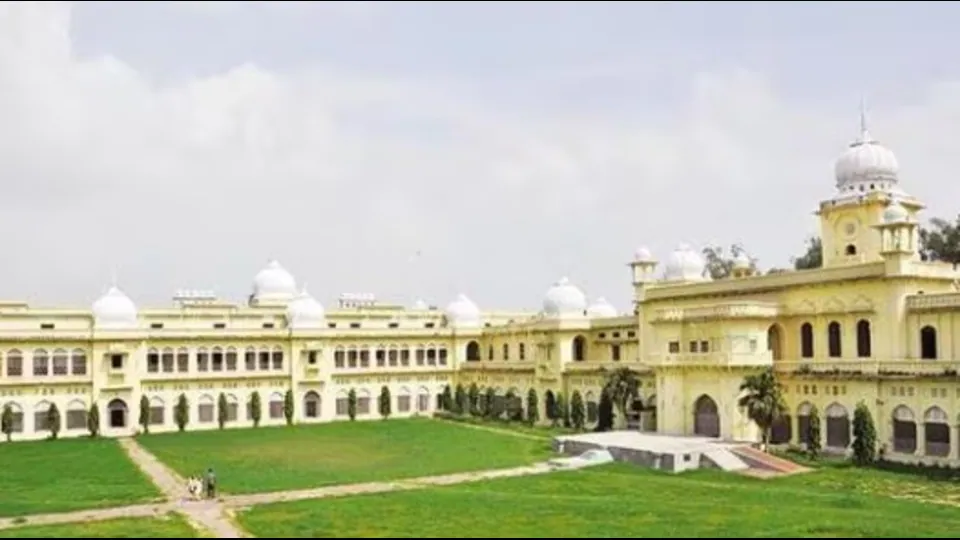
As Lucknow University (LU) marks its 106th foundation day, former student union leaders who went on to occupy key political positions across party lines have called for restoring campus elections, suspended for nearly two decades.
The demand has gained momentum after Aligarh Muslim University (AMU) held its student union elections in November. Jamia Millia Islamia has also agreed to resume student polls after a gap of nearly two decades. The Lucknow University Students’ Union (LUSU) has not held elections since 2005, when the university suspended them citing Supreme Court directives based on the Lyngdoh Commission’s recommendations.
A platform for grassroots leadership
Transport minister Daya Shankar Singh, who served as LUSU president and general secretary in the late 1990s, said the union played a role in the freedom struggle and provided a democratic platform for emerging leaders.
“LUSU hosted freedom fighters like Subhash Chandra Bose and several prime ministers over time. The Chhatra Sangh Bhawan was constructed in 1926 and always played a role in fighting for social causes and students’ struggles, including fee hikes and academics. Today, most people with resources only get an opportunity to join politics, but the student union back then was a democratic platform that instilled natural leadership,” he said.
Singh said student politics laid the foundation for his political career and called for restoring the union, pointing out that teachers’ and employees’ unions continued to hold elections.
Pawan Pandey, former Ayodhya MLA and a former LUSU president and general secretary, said student unions provided young people from working-class, middle-income and farming families a platform to raise grievances and develop leadership skills.
“Student unions were a ‘nursery of politics’ and a training ground for leadership. Unions give young people, including children of working-class, middle-income, and farming families, as well as children of street vendors, a platform to voice grievances, hone protest skills, and reach state and national legislatures,” he said.
Pandey called for elections in all universities and degree colleges, saying elected unions could check arbitrary administrative decisions and protect students from high-handedness.
Demand for mandatory elections
Abhishek Kumar Singh ‘Ashu’, a former LUSU vice-president and president, called for regular elections and constitutional status for student unions.
“Just as Lok Sabha, Vidhan Sabha, gram pradhan, and municipal elections are constitutional and mandatory and take place on schedule, student union elections should also be granted constitutional status. Whether it is a university or a college, student union elections must be held mandatorily across all institutions,” he said.
Three-time Samajwadi Party MLA Arvind Singh ‘Gope’, who also emerged from student politics, said the absence of campus elections denied young leaders an opportunity to enter active politics.
“The well-read young leaders are not getting an opportunity in active politics. We have always stood in favour of reviving student politics, and it has also been one of the party’s key demands. The silence in the name of student politics is detrimental for the next generation of politicians,” he said.
BJP state vice-president Santosh Singh said his experience as a student leader exposed him to grassroots politics and helped him understand educational and social issues.
Concerns over weakening campus democracy
Former Congress MLA Ramesh Srivastava alleged that suspending student union elections was part of a deliberate effort to sideline campus politics, pointing to the impact of the Lyngdoh Committee recommendations.
“Student politics was first weakened nationally and then gradually phased out, while elections have continued only where students mounted strong resistance. The absence of an elected student body weakens checks and balances on campus,” he said.
Srivastava cited former prime ministers Chandra Shekhar and V P Singh, along with Mulayam Singh Yadav and Narayan Dutt Tiwari, as leaders who emerged from student movements. He said campus leadership remained important for higher education institutions and democracy.





