
 E-Paper



Shirin Gupta is a content producer with the Hindustan Times. She covers everything between politics, entertainment and sports at the US desk. Shirin got interested in political journalism during her time as a web editor at her college newspaper NCC News in Syracuse when she first started seeing the effects of national politics in life of her fellow colleagues. Shirin has worked on a wide range of fast-moving and developing stories locally when she was at NCC editing accessible reports for the audience. Her current role requires her to track real-time updates, verify information and present balanced coverage across diverse beats. Covering US politics from an international newsroom perspective has further deepened her understanding of how domestic decisions can have far-reaching global consequences. With a keen interest in international affairs, Shirin continues to build her expertise in geopolitics, policy shifts, and cross-border developments. She aims to learn and evolve her reporting in matters of geopolitics and international issues. Outside the newsroom Shirin writes about books and music for her personal blog. She is an avid consumer of pop culture and reveres literature.
 Trending News
23×5 trading begins Dec 6: How new US stock market schedule will work and what changes for traders
Nasdaq, NYSE Arca, Cboe EDGX, MEMX and 24X extend trading beyond traditional market hours and open for trade overnight.


The US stock market is preparing for one of its biggest structural changes in decades as several major exchanges plan to introduce 23×5 trading from December 6.
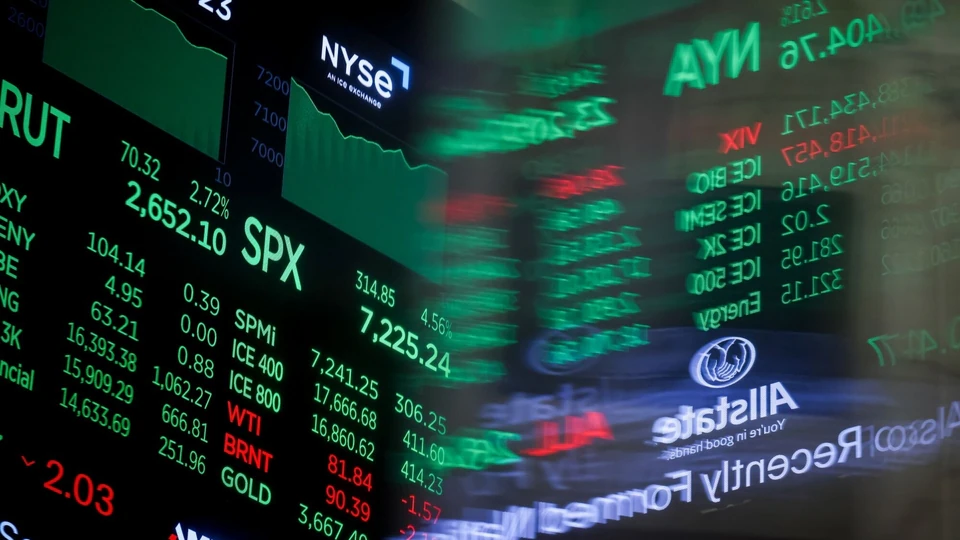
Nasdaq, NYSE Arca, Cboe EDGX, MEMX and 24X extend trading beyond traditional market hours. The Securities Information Processors (SIPs) will also operate overnight for the first time, which will create consolidated quotes and trade reporting throughout nearly the entire trading day.
Bloomberg said the shift represents more than just longer market hours because it fundamentally changes how investors react to overnight news and price movements.
Why overnight trading matters more than its volume suggests
Although overnight trading currently accounts for just 0.8% of US equity dollar volume, per the SEC staff data, those hours generate disproportionately large price moves.
Bloomberg analysis based on a decade of futures, news and event data found that the overnight session carries two to three times more price risk than its trading volume suggests.
The study found that trading between 9pm and 4am ET represents roughly 5% of S&P 500 futures trading volume but contributes 14% of daily price variance. Nasdaq-100 futures show a similar pattern, with around 6% of trading accounting for 12% of daily price movement.
That means relatively little money changes hands overnight, but prices often move sharply because major global developments occur while US stock exchanges remain closed.
Bloomberg noted that before Dec. 6, investors holding stocks overnight largely had two options. They could hedge exposure through futures markets or accept opening price gaps when Wall Street reopened. The introduction of exchange-based overnight trading adds a third option by allowing investors to trade stocks and ETFs as major news unfolds.
The Asia and Europe market
Overnight trading is being introduced at a times when there has been significant increase in global participation in US markets. International investors increasingly follow Wall Street from Asia and Europe, where key economic announcements and corporate earnings often occur during US nighttime hours.
According to Bloomberg, nearly 44% of weeknights see at least one major story involving a US-listed company break while regular US exchanges are closed.
For example, when compared, Bank of Japan decisions increase the Nasdaq-100 futures price variance by approximately three times in the hour following release, to any US election and referendum nights increase it by approximately 11 times.
Asian and European technology companies frequently release earnings while US markets are closed. Those announcements often trigger large moves in related American stocks.
Bloomberg cited ASML’s earnings release on Jan. 29, 2025, as an example. After the Dutch chip-equipment maker reported results during overnight US hours, its American-listed shares opened 6.4% higher. US semiconductor equipment companies including Lam Research, Applied Materials and KLA also posted gains between 2.6% and 4.1%, while broader market ETFs moved little.
Across 121 earnings releases from companies including TSMC, Samsung, SK Hynix, Tokyo Electron and ASML since 2016, Bloomberg found that US chip-equipment stocks experienced opening price swings roughly 2.6 times larger than normal.
Liquidity, spreads and what investors should watch after Dec. 6
While trading hours are expanding, institutional participation is expected to increase gradually.
According to Bloomberg, current overnight trading largely occurs through alternative trading systems instead of public exchanges. The launch of exchange-based overnight trading introduces consolidated pricing and market-wide price protections that have not previously existed during those hours.
Participants at a September SEC roundtable reportedly said institutions are likely to begin trading overnight during major events such as earnings, elections and geopolitical developments before expanding activity more broadly.
The SEC’s Office of Analytics and Research reported that the 10 most actively traded stocks currently account for 51% of overnight dollar volume, compared with 21% during regular market hours.
Trading costs and variations
Bloomberg's research found that overnight bid-ask spreads in S&P 500 futures have generally been only about 20% to 40% wider during the most volatile nights despite price variance increasing significantly. The exception was during extreme market shocks like March 2020 pandemic-driven sell-off.
Experts have said that investors should closely monitor whether exchange-traded overnight stocks develop similar liquidity after Dec. 6.
The transition also affects market data.
Bloomberg noted that volume-weighted average price (VWAP), trading volume and trade-date calculations will begin accumulating from approximately 9pm ET even for firms that choose not to participate in overnight trading.
That means execution desks, brokers and institutional investors will need to determine whether their benchmarks reflect the full trading session or only regular Wall Street hours.
Bloomberg recommends that firms initially monitor overnight prices, news flow and economic events before expanding trading activity as liquidity improves.





