
 E-Paper







Follow the latest breaking news, major developments and agenda-setting stories from India and around the world with the newsdesk at Hindustan Times. Operating round the clock, the desk brings together experienced editors, reporters and correspondents to deliver fast, accurate and contextual reporting across subjects that influence public policy, governance, business, society and international affairs. The HT News Desk covers politics, elections, government policies, the economy, business and markets, science and technology, the environment, law and order, infrastructure, education, climate issues and geopolitics, while closely tracking developments across states, institutions and global capitals. The team also leads coverage of major breaking news events, policy announcements, court proceedings, natural disasters, public emergencies and significant international developments. Reports published by the newsdesk are based on information gathered from reporters on the ground, official statements, government agencies, court records, regulatory filings, recognised institutions and other authoritative sources. Stories undergo editorial scrutiny and verification processes to ensure accuracy, fairness and relevance, and are updated as events evolve and additional information becomes available. Whether covering a key political decision in New Delhi, an economic policy shift affecting millions, a landmark court ruling or a major global event, the HT News Desk aims to provide readers with reliable, fact-based journalism that delivers not only the latest developments but also the context and analysis needed to understand their wider implications.
 Trending News
Trump calls off summit with Kim over 'anger and hostility' from North Korea
Trump also warned North Korea that the US military is “ready if necessary” to respond to a “foolish or reckless act” by Pyongyang.


US President Donald Trump on Thursday cancelled his upcoming summit with North Korean leader Kim Jong Un over what he said was “anger and open hostility” from the hermit nation.
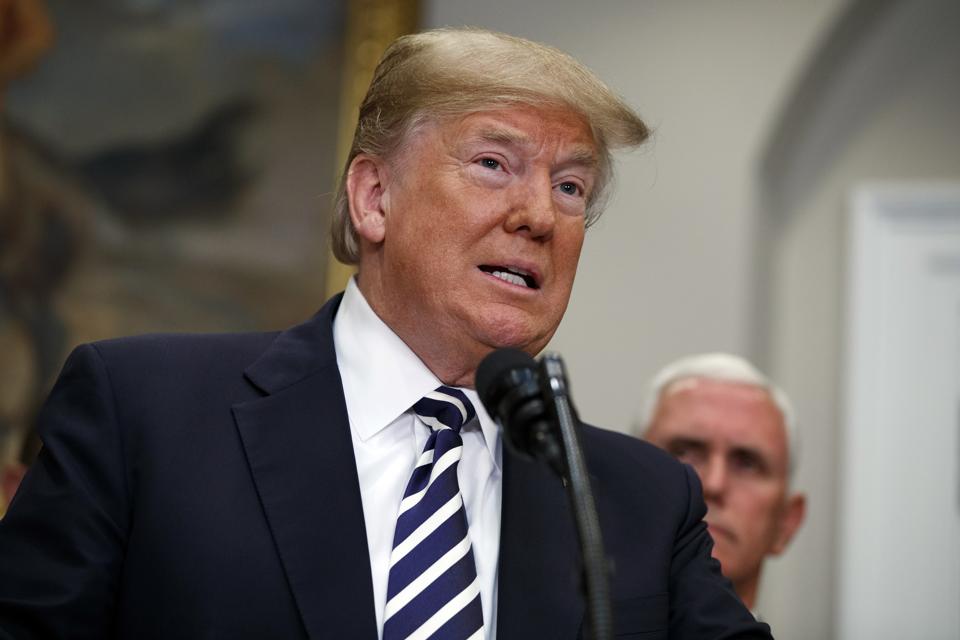
In a letter to Kim, Trump kept the door open for talks to take place on June 12 or later. “If and when Kim Jong-un chooses to engage in constructive dialogue and actions, I am waiting,” he wrote.
In a letter to Kim, Trump started by reminding him that it was North Korea that requested the meeting. He wrote: “I was very much looking forward to being there with you (in Singapore). Sadly, based on tremendous anger and open hostility displayed by in your recent statement, I feel it is inappropriate, at this time, to have this, long planned meeting.
“If you change your mind having to do with this most important meeting, please do not hesitate to call me or write.”
Trump’s reference of “anger and open hostility” was perhaps about a statement in which a senior North Korean official had called Vice-President Mike Pence a “political dummy” and “ignorant and stupid” on Wednesday.
He also cautioned Kim: “You speak about your nuclear capabilities, but ours are so massive and powerful that I pray to God they will never have to be used.”
There was no response from North Korea to the letter.
In later remarks, Trump also warned North Korea that the US military is “ready if necessary” to respond to a “foolish or reckless act” by Pyongyang, and that he has spoken to Japan and South Korea — the US’s allies in the region. He also said sanctions against North Korea would continue as part of the campaign of “maximum pressure”.
Earlier on Thursday, North Korean state media had announced that it had “completely shut down” its nuclear testing site in a remote part of the country as proof of its intent to denuclearise, a key demand by the Americans.
Sceptics, however, have pointed out that the site had been damaged in a recent incident and there were those who said North Korea did not need the site anymore, having wrapped up its nuclear programme already.
Trump and Kim were scheduled to meet in Singapore on June 12 for what was expected to be a historic and groundbreaking summit. Among the many objectives it sought was an end to the Korean War — Seoul and Pyongyang have only signed an armistice agreement — and the denuclearisation of the Korean peninsula.
However, prospects of the talks taking place as scheduled had become uncertain in recent days. Trump, at press conference with South Korea’s President Moon Jae-in on Monday, had said the summit could be cancelled or postponed. He had not cited any reasons but said he had noticed a change in the attitude of North Koreans after a recent, and second, visit by Kim to China.
Statements from North Korean officials had suddenly turned sharp and were marked by the kind of insulting tone language commonly used by them before the recent warming of ties. One official targeted national security adviser John Bolton by name for suggesting the Libyan Model for negotiations with North Korean. The official spoke of “feeling of repugnance towards him (Bolton)”.
On Thursday, they targeted Pence. “As a person involved in the US affairs, I cannot suppress my surprise at such ignorant and stupid remarks gushing out from the mouth of the US vice-president,” said Choe Son Hui, a vice foreign minister who previously handled ties with the US. She also called Pence a “political dummy”.
North Korea seemed annoyed by Trump administration officials’ talk of the so-called “Libyan model”. Libya’s Muammar Gaddafi gave up his nuclear weapons programme between 2003 and 2004 in return for relief from sanctions. In 2011, he was forced out of office during a NATO-led military intervention in 2011 and was killed by rebel forces while on the run.
First Bolton and then Pence had suggested that Libya was what could happen to North Korea if it did not go ahead with denuclearisation.





