E-Paper







Follow the latest breaking news, major developments and agenda-setting stories from India and around the world with the newsdesk at Hindustan Times. Operating round the clock, the desk brings together experienced editors, reporters and correspondents to deliver fast, accurate and contextual reporting across subjects that influence public policy, governance, business, society and international affairs. The HT News Desk covers politics, elections, government policies, the economy, business and markets, science and technology, the environment, law and order, infrastructure, education, climate issues and geopolitics, while closely tracking developments across states, institutions and global capitals. The team also leads coverage of major breaking news events, policy announcements, court proceedings, natural disasters, public emergencies and significant international developments. Reports published by the newsdesk are based on information gathered from reporters on the ground, official statements, government agencies, court records, regulatory filings, recognised institutions and other authoritative sources. Stories undergo editorial scrutiny and verification processes to ensure accuracy, fairness and relevance, and are updated as events evolve and additional information becomes available. Whether covering a key political decision in New Delhi, an economic policy shift affecting millions, a landmark court ruling or a major global event, the HT News Desk aims to provide readers with reliable, fact-based journalism that delivers not only the latest developments but also the context and analysis needed to understand their wider implications.
 Trending News
Trump again raises idea of separating US and Chinese economies
Trump, who long touted friendly ties with Chinese President Xi Jinping as he sought to make good on promises to rebalance a massive trade deficit, has made getting tough on China a key part of his campaign for re-election on November 3.


With the US election approaching, President Donald Trump on Monday again raised the idea of separating the US and Chinese economies, also known as decoupling, suggesting the United States would not lose money if the world’s two biggest economies no longer did business.
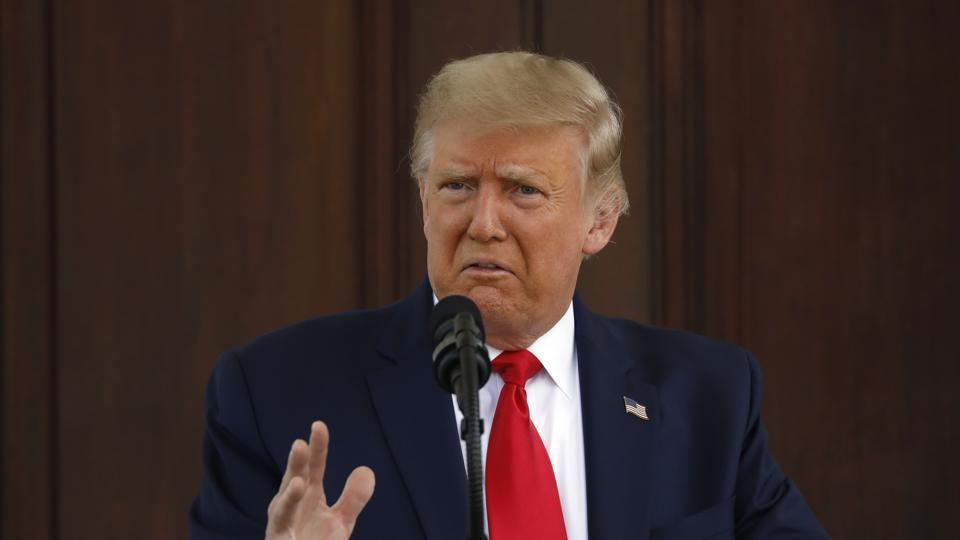
“So when you mention the word decouple, it’s an interesting word,” Trump told a Labor Day news conference at the White House in which he vowed to bring jobs back to America from China.
“We lose billions of dollars and if we didn’t do business with them we wouldn’t lose billions of dollars. It’s called decoupling, so you’ll start thinking about it,” Trump said.
Trump, who long touted friendly ties with Chinese President Xi Jinping as he sought to make good on promises to rebalance a massive trade deficit, has made getting tough on China a key part of his campaign for re-election on November 3. He has accused his Democratic opponent, Joe Biden, who leads in most opinion polls, of being soft toward Beijing.
Also read: Donald Trump hints at vaccine ‘surprise’ as Joe Biden demands transparency
“If Biden wins, China wins, because China will own this country,” he said.
Biden for his part has criticized Trump’s Phase 1 trade deal with China, saying it is “unenforceable,” and “full of vague, weak, and recycled commitments from Beijing.”
Trump vowed that in future his administration would prohibit federal contracts with companies that outsource to China and hold Beijing accountable for allowing the coronavirus, which began in China, to spread around the world.
“We will make America into the manufacturing superpower of the world and will end our reliance on China once and for all.Whether it’s decoupling, or putting in massive tariffs like I’ve been doing already, we will end our reliance in China, because we can’t rely on China,” Trump said.
“We will bring jobs back from China to the United States and we will impose tariffs on companies that desert America to create jobs in China and other countries,” he added.
US Treasury Secretary Steven Mnuchin said in June that a decoupling of the US and Chinese economies would result if US companies were not allowed to compete on a fair and level basis in China’s economy.
Other officials and analysts have said that the two countries’ economies are so intertwined as to make such a move impractical, but Washington would continue to pressure Beijing to level the playing field.