E-Paper







Follow the latest breaking news, major developments and agenda-setting stories from India and around the world with the newsdesk at Hindustan Times. Operating round the clock, the desk brings together experienced editors, reporters and correspondents to deliver fast, accurate and contextual reporting across subjects that influence public policy, governance, business, society and international affairs. The HT News Desk covers politics, elections, government policies, the economy, business and markets, science and technology, the environment, law and order, infrastructure, education, climate issues and geopolitics, while closely tracking developments across states, institutions and global capitals. The team also leads coverage of major breaking news events, policy announcements, court proceedings, natural disasters, public emergencies and significant international developments. Reports published by the newsdesk are based on information gathered from reporters on the ground, official statements, government agencies, court records, regulatory filings, recognised institutions and other authoritative sources. Stories undergo editorial scrutiny and verification processes to ensure accuracy, fairness and relevance, and are updated as events evolve and additional information becomes available. Whether covering a key political decision in New Delhi, an economic policy shift affecting millions, a landmark court ruling or a major global event, the HT News Desk aims to provide readers with reliable, fact-based journalism that delivers not only the latest developments but also the context and analysis needed to understand their wider implications.
 Trending News
Flower that smells like decaying rats blooms in California
Corpse flowers typically take 15 years to reach a mature blooming size, and blooms usually only last 24 hours.


Visitors were flocking to the Huntington Library in Southern California on Friday to get a whiff of a so-called corpse flower, known for the rotten stench it releases when it blooms.
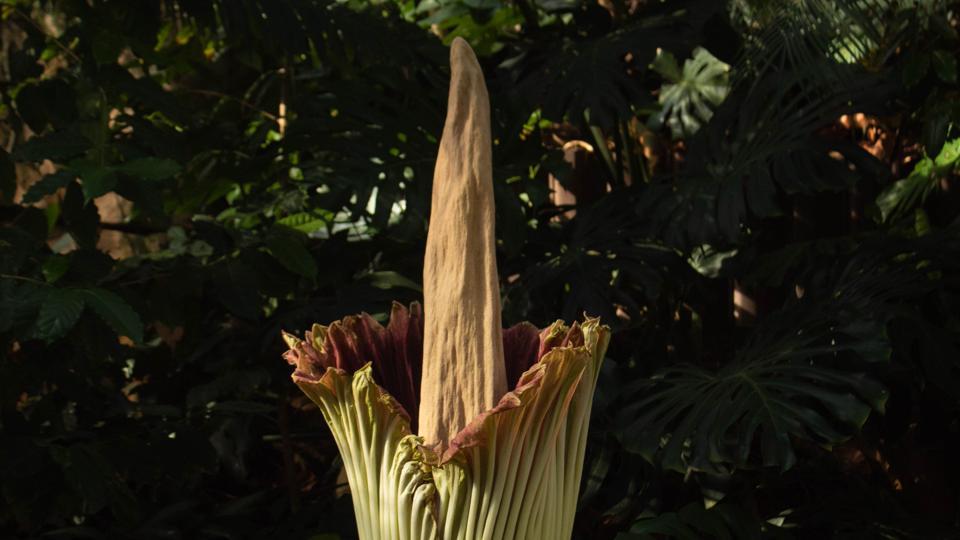
The flower, nicknamed “Stink,” began blooming unexpectedly on Thursday night, Huntington spokeswoman Lisa Blackburn said.
“We thought we had a few more days to go. But it was ready, and it was pretty spectacular,” she said. “The great thing about these flowers is they’re so unusual-looking and have this reputation for smelling really bad. It gets all kinds of people really interested in botanical science. It’s just a charismatic plant.”
Corpse flowers typically take 15 years to reach a mature blooming size, and blooms usually only last 24 hours.
The foul odour of the plants emit attracts insects for pollination. The plants don’t emit the foul odour until they bloom.
“It smelled like rotting meat or decaying rats or gym socks,” said Brandon Tam, an orchid specialist at the Huntington.
The scent decreased on Friday afternoon as the flower started to close back up. “But if you are close enough, you’ll be able to get a little whiff of it,” Tam said.
“Stink” is the sixth corpse flower to bloom at the institution in suburban San Marino. The last was on August 23, 2014.
The plant is one of the three corpse flowers expected to bloom within the next week. The two other flowers, nicknamed “Stunk” and “Stank,” should bloom in the next few days, Blackburn said.
“This is the first time the Huntington is going to bloom total of three in one season, which is quite rare,” Tam said. “It is a surprise to see we have three all at once.”
The Huntington is seeing more visitors than normal. More than 500 Huntington members flocked to the Huntington Library to view the blooming on Thursday night, Tam said.
“I’ve known about the corpse flower since the first time I saw it in 2009. So every time I hear about it about to bloom, I want to come and see it,” visitor Jeannette Hollyday said.