
 E-Paper






Follow the latest breaking news, major developments and agenda-setting stories from India and around the world with the newsdesk at Hindustan Times. Operating round the clock, the desk brings together experienced editors, reporters and correspondents to deliver fast, accurate and contextual reporting across subjects that influence public policy, governance, business, society and international affairs. The HT News Desk covers politics, elections, government policies, the economy, business and markets, science and technology, the environment, law and order, infrastructure, education, climate issues and geopolitics, while closely tracking developments across states, institutions and global capitals. The team also leads coverage of major breaking news events, policy announcements, court proceedings, natural disasters, public emergencies and significant international developments. Reports published by the newsdesk are based on information gathered from reporters on the ground, official statements, government agencies, court records, regulatory filings, recognised institutions and other authoritative sources. Stories undergo editorial scrutiny and verification processes to ensure accuracy, fairness and relevance, and are updated as events evolve and additional information becomes available. Whether covering a key political decision in New Delhi, an economic policy shift affecting millions, a landmark court ruling or a major global event, the HT News Desk aims to provide readers with reliable, fact-based journalism that delivers not only the latest developments but also the context and analysis needed to understand their wider implications.
 Trending News
China vows to hit back as Trump targets $200bn in imports with tariffs
Once the new round of tariffs takes effect on September 24, punitive duties will be in place on $250 billion in goods the US buys from China -- its largest source of imported merchandise.


China on Tuesday vowed to retaliate against the United States and warned of “uncertainty” in trade talks after president Donald Trump targeted another $200 billion in Chinese imports with tariffs starting next week.
Trump ratcheted up pressure on Beijing as the new round of levies will bring the amount of goods hit by duties to roughly half of Chinese exports to the US. He also threatened to go after all Chinese goods.
“For months, we have urged China to change these unfair practices and give fair and reciprocal treatment to American companies,” Trump said in a statement on Monday.
“These practices plainly constitute a grave threat to the long-term health and prosperity of the United States economy,” he said.
“But, so far, China has been unwilling to change its practices,” including theft and force transfer of technology.
Once the new round of tariffs takes effect on September 24, punitive duties will be in place on $250 billion in goods the US buys from China -- its largest source of imported merchandise.
The latest round of imports will face 10 percent tariffs through the end of the year, and then the rate will jump to 25 percent.
“In order to safeguard its legitimate rights and interests and the global free trade order, China has no choice but to take countermeasures in lockstep,” the Chinese commerce ministry said in a statement on Tuesday.
The statement did not mention Beijing’s earlier threat to add tariffs on $60 billion in US imports if Washington imposed this new wave of levies.
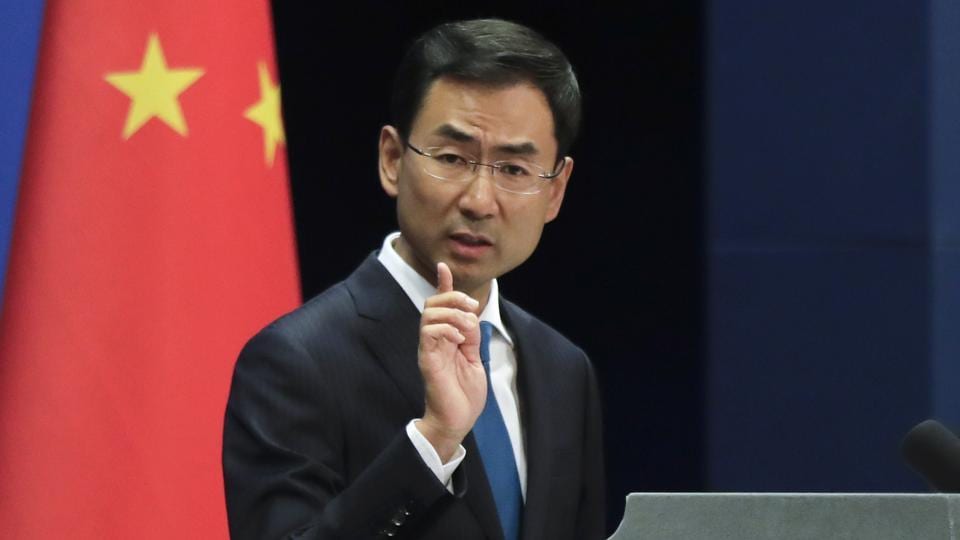
Foreign ministry spokesman Geng Shuang said at a regular briefing that China will announce details about its countermeasures “at the appropriate time,” adding that “the protectionist and unilateral measures taken by the US side are very unacceptable for us.”
Trump warned that “if China takes retaliatory action against our farmers or other industries, we will immediately pursue phase three, which is tariffs on approximately $267 billion of additional imports.”
That would mean imposing new taxes on all of the goods the US imports from China.
“Once again, I urge China’s leaders to take swift action to end their country’s unfair trade practices,” Trump said. “Hopefully, this trade situation will be resolved, in the end, by myself and president Xi of China, for whom I have great respect and affection.”
- Smart watches spared -
The new taxes will hit a broad swath of products, including billions in Chinese-made voice data receivers, computer memory modules, automatic data processors, and accessories for office equipment such as copiers and banknote dispensers -- instantly making widely used goods more expensive.
However, senior administration officials told reporters the initial list announced in July was reduced by 300 product lines after the administration received 6,000 written comments from consumers and businesses.
The products spared included consumer electronics like smart watches and Bluetooth devices, child safety products such as high chairs, car seats and playpens, and certain health-and-safety products such as bicycle helmets, the officials said.
The officials said China had been given “chance after chance” to change the trade practices considered unfair to US businesses, but “have remained obdurate.”
Only last week, Beijing said it welcomed overtures from US officials offering to restart trade talks, but the new tariffs could cause China to call off the negotiations.
The commerce ministry said the new tariffs “bring new uncertainty to the consultations between the two sides.”
“It is hoped that the US will recognise the possible negative consequences of such actions and take convincing means to correct them in a timely manner,” the ministry said, without directly addressing if the talks would go forward.
The escalating confrontation shook up global stock markets. Wall Street closed the day solidly in the red But Chinese stocks closed higher after Shanghai tumbled to its lowest level since 2014 in early trading.
While officials said the impact on the US economy has been minimal, firms across the country report lost businesses, layoffs and possible bankruptcies as input costs rise and exports fall.
They officials told reporters the lower initial tariff rate would give US businesses time to find new suppliers.
That could soften the blow to US consumers and manufacturers among others ahead of key US congressional elections in November.
Lobbying against the tariffs has risen sharply in Washington but Trump’s policy has left candidates in competitive races for November’s hard-fought midterm congressional elections in awkward positions.
Some Republicans in export-dependent areas have fallen silent on trade or sought to push back. But some Democrats, who broadly oppose the president’s agenda and are banking on his unpopularity, have adopted critical views of trade agreements and free trade.
rwm-hs/lth/amu





