
 E-Paper







Follow the latest breaking news, major developments and agenda-setting stories from India and around the world with the newsdesk at Hindustan Times. Operating round the clock, the desk brings together experienced editors, reporters and correspondents to deliver fast, accurate and contextual reporting across subjects that influence public policy, governance, business, society and international affairs. The HT News Desk covers politics, elections, government policies, the economy, business and markets, science and technology, the environment, law and order, infrastructure, education, climate issues and geopolitics, while closely tracking developments across states, institutions and global capitals. The team also leads coverage of major breaking news events, policy announcements, court proceedings, natural disasters, public emergencies and significant international developments. Reports published by the newsdesk are based on information gathered from reporters on the ground, official statements, government agencies, court records, regulatory filings, recognised institutions and other authoritative sources. Stories undergo editorial scrutiny and verification processes to ensure accuracy, fairness and relevance, and are updated as events evolve and additional information becomes available. Whether covering a key political decision in New Delhi, an economic policy shift affecting millions, a landmark court ruling or a major global event, the HT News Desk aims to provide readers with reliable, fact-based journalism that delivers not only the latest developments but also the context and analysis needed to understand their wider implications.
 Trending News
China may meet carbon emissions goal early, says new study
The study focused on 50 Chinese cities between 2000 and 2016, collating carbon dioxide emissions and per capita gross domestic product (GDP) data.


China, currently, the world’s largest carbon emitter, is on track to meet its emission goals up to a decade early, a new international study conducted over 16 years has found.
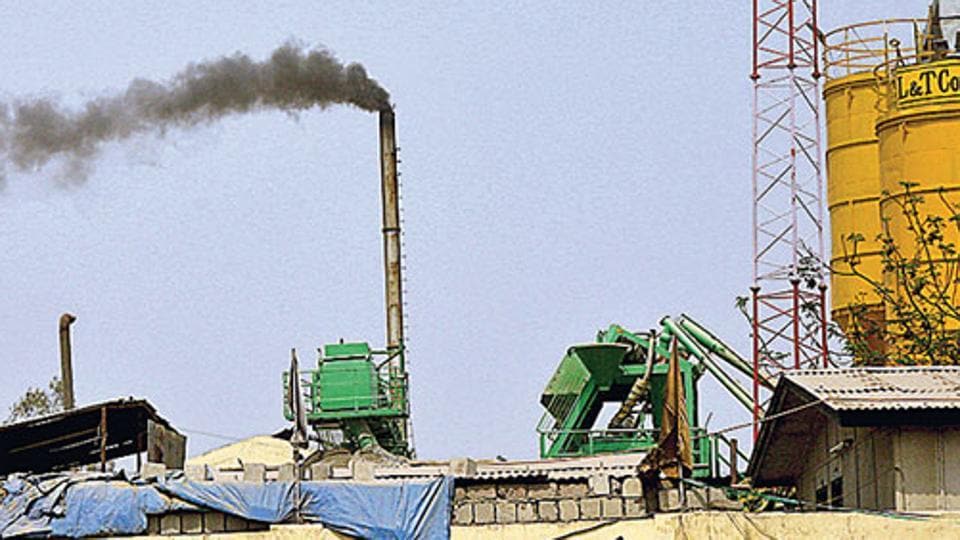
The study focused on 50 Chinese cities between 2000 and 2016, collating carbon dioxide emissions and per capita gross domestic product (GDP) data.
These 50 Chinese cities account for about 35 percent of China’s total carbon emissions and 51 percent of the country’s GDP.
There was a close relationship between per capita emissions and per capita GDP, the researchers from China’s Nanjing University, Beijing’s Tsinghua University, Chinese Academy of Sciences and the US’s Harvard University found.
“By examining the emissions from these cities from 2000 to 2016, the researchers found a close relationship between per capita emissions and per capita GDP. The team found that carbon emissions for most cities stop rising and then begin to decline when GDP reaches around US $ 21,000 per person,” a Harvard University article on the study said.
“Using data on future population size and level of economic development from the World Bank, the researchers suggest that the nation’s total emissions could peak between 2021 and 2025 at 13-16 giga tonnes of CO2, well ahead of the 2030 commitment made by China under the UN Paris Climate Agreement,” the article added.
“While China has a very long way to go to reduce its carbon emissions commensurate with the climate crisis, this paper shows that it appears on track to meet its formal obligations under the Paris Agreement, which remains in force despite a planned withdrawal by the US,” Chris Nielsen, executive director of the Harvard-China Project on Energy, Economy, and Environment and a co-author of the paper was quoted in the article as saying.
“Cities are a central front for global climate action and there is clear evidence of progress across Chinese urban areas, in part because this action can be integrated with China’s efforts to reduce conventional air pollution,” Nielson added.
The study also pointed out that different types of Chinese cities face different challenges in their carbon emissions reduction timetables, the official news agency, Xinhua said.
It added that cities like Beijing, Xi’an, and Hangzhou should focus on upgrading their infrastructure facilities to improve energy efficiency while emerging cities like Xiong’an New Area have the opportunity to leapfrog the period of carbon-intensive growth.
Beijing spent big on pollution control last year, according to the national final accounts report published in June.
“The central government allocated about 255.5 billion yuan (37.15 billion US dollars) in the field last year, up 13.9 percent year on year, with spending on pollution control and treatment of air, water and soil reaching record highs in recent years,” Chinese finance minister Liu Kun said in June.





