E-Paper







Follow the latest breaking news, major developments and agenda-setting stories from India and around the world with the newsdesk at Hindustan Times. Operating round the clock, the desk brings together experienced editors, reporters and correspondents to deliver fast, accurate and contextual reporting across subjects that influence public policy, governance, business, society and international affairs. The HT News Desk covers politics, elections, government policies, the economy, business and markets, science and technology, the environment, law and order, infrastructure, education, climate issues and geopolitics, while closely tracking developments across states, institutions and global capitals. The team also leads coverage of major breaking news events, policy announcements, court proceedings, natural disasters, public emergencies and significant international developments. Reports published by the newsdesk are based on information gathered from reporters on the ground, official statements, government agencies, court records, regulatory filings, recognised institutions and other authoritative sources. Stories undergo editorial scrutiny and verification processes to ensure accuracy, fairness and relevance, and are updated as events evolve and additional information becomes available. Whether covering a key political decision in New Delhi, an economic policy shift affecting millions, a landmark court ruling or a major global event, the HT News Desk aims to provide readers with reliable, fact-based journalism that delivers not only the latest developments but also the context and analysis needed to understand their wider implications.
 Trending News
A simple guide to US elections 2020
Democrats have accused Donald Trump of trying to sabotage the US Postal Service to help his re-election bid, while the president has already begun to try to sow public doubt about any outcome that results in a Joe Biden victory.


The race for the White House has begun and the outcome of the 2020 US general election will have an impact around the world. On November 3, 2020, Americans will head to the polls and render their verdict on the Donald Trump presidency. A record number of Americans are expected to cast mail-in ballots this year because of the pandemic. Democrats have accused Trump of trying to sabotage the US Postal Service to help his re-election bid, while the president has already begun to try to sow public doubt about any outcome that results in a Joe Biden victory.
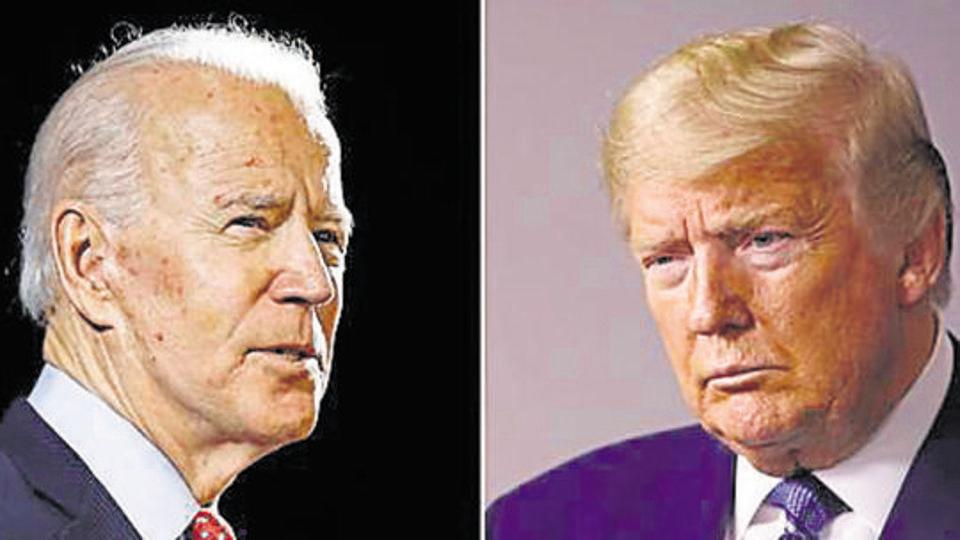
Here’s your quick guide to the US presidential election 2020:
•Election Day, as set by the US law, is always the first Tuesday after the first Monday in November. This year it is November 3. The presidential election starts with a primary process for the major political parties, Republicans and Democrats, to pick their nominees (Donald Trump and Joe Biden this year).
•Unlike many other countries, the US political system is dominated by just two parties, so the president always belongs to one of them. The Republicans are the conservative political party in the US and their candidate in this year’s election is President Donald Trump. The Democrats are the liberal political party and their candidate is Joe Biden.
•The winner is not always the candidate who wins most votes. The candidates compete to win electoral college votes. Each state gets a certain number of electoral college votes based on its population and there are a total of 538 up for grabs, so the winner is the candidate that wins 270 or more.
•Anyone who is a US citizen and 18 years of age or over, is eligible to vote in the presidential election. However, lots of states have passed laws requiring voters to show identification documents to prove who they are before they can vote.
•It can take several days for every vote to be counted, but it becomes clear who the winner is by the early hours of the following morning.
•The new president is officially sworn into office on January 20 in a ceremony known as the inauguration, which is held on the steps of the Capitol building in Washington DC. After the ceremony, the new president makes their way to the White House to begin their four-year term in office.
•Most Americans vote for president and Congress, but November ballots will also include state and local elections, so they will differ from city to city and state to state. Every person voting in a US state can vote for president. But the options will be different depending on the state. Joe Biden and Donald Trump will be on every ballot, but there will be other smaller party options that vary depending on a state’s rules.