
 E-Paper






A smartwatch is not always the best fitness tracker, and your workout routine should decide
Smartwatch or fitness band? Your workout routine, comfort preferences and the kind of health data you want to track should determine your next wearable.

 Prefer HTon Google


Our Picks
FAQs
Our Picks
| Product | Rating | Price |
|---|---|---|
OnePlus Watch 2R with Wear OS 4 by Google,Snapdragon W5 Chipset,Upto 100hrs Battery Life,1.43’’ AMOLED Display,100+ Sports Mode,Dual Frequency GPS,5 ATM,IP68 & BT Calling [Forest Green]View Details  | ₹15,490 | |
 | ||
Noise Endeavour Pro (Smartchoice) Outdoor Rugged Military Smart Watch, Dual-Band GPS, 164ft Water Resistance, 28 Days Battery on Standby, AI Companion, for iOS & Android (Carbon Black)View Details | ₹9,999 | |
| ||
Amazfit Balance (Smartchoice) 46mm AMOLED Smart Watch, Body Composition, 14 Days Battery, Dual-Band GPS, BT Calling, VO₂ Max, Aluminium Alloy Frame, Temperature Sensor, AI Zepp Coach(Sunset Grey)View Details | ₹12,999 | |
| ||
Huawei Watch FIT 4 smartwatch, 1.82" Large Display, Up to 10-Day Battery Life, Dual Band GPS, 100+ Sports Modes, Fitness Health Tracker, Emotional Assistant, Compatible with Android iOS, WhiteView Details | ₹14,999 | |
| ||
Amazfit Active 2 Square Smartchoice, 2000 Nits Bright AMOLED Display, Built in GPS, 10Day Battery, Android & iPhone, Accurate Readings, BT Call, Sleep Monitor, 5ATM Water Resistant, Black LeatherView Details | ₹13,999 | |
| ||

Research-Backed Choices
Every product we recommend is chosen through a combination of Primary Research and Secondary Research.
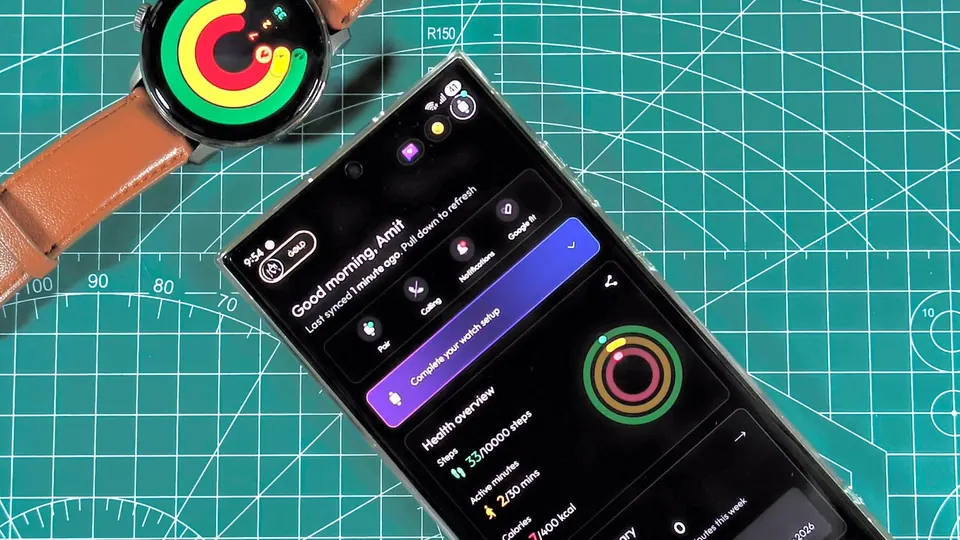

I have always preferred smartwatches over fitness bands, mainly because of their larger displays and the amount of information they can show during a workout. Being able to glance at your wrist and check your heart rate, calories, workout duration and other metrics makes the experience more convenient. However, that does not mean a smartwatch is the right choice for everyone.
Your workout routine and tracking preferences should play a bigger role in this decision. Someone who regularly runs outdoors has different requirements from someone who spends an hour lifting weights at the gym. And if you simply want to monitor your sleep, recovery and daily activity without distractions, a screenless fitness tracker might make more sense.
Smartwatch vs fitness band vs screenless tracker
| Wearable | Best suited for | Biggest advantage |
|---|---|---|
| Smartwatch | Gym, running and mixed workouts | Large display and real-time workout data |
| Fitness band | Walking, basic exercise and daily activity | Lightweight design and simpler tracking |
| Screenless tracker | Sleep, recovery and continuous monitoring | Distraction-free and comfortable tracking |
Choose a smartwatch if you want more information during workouts
This is probably the biggest reason I prefer smartwatches. Their larger displays make it easier to view multiple fitness metrics without having to reach for your smartphone. During a run, for instance, you can check your pace, distance, heart rate and workout duration with a quick glance. Similarly, during gym sessions, you can monitor your heart rate and calories burned while keeping track of your exercise duration.
Most modern smartwatches also offer dedicated workout modes, GPS tracking, heart rate monitoring and automatic activity detection. Some advanced models provide additional metrics such as training load, recovery estimates and heart rate zones, which can help you understand how your body responds to exercise.
Another advantage is that smartwatches have become more versatile. You can use them for music controls, notifications, calls and navigation, apart from fitness tracking. So, if you want one wearable that handles your everyday requirements alongside workouts, a smartwatch is a sensible choice.
Fitness bands make sense if you prefer something lightweight
Not everyone wants a relatively large watch strapped to their wrist throughout the day. If you find smartwatches uncomfortable during exercise or simply prefer a smaller wearable, a fitness band is worth considering.
Fitness bands generally have slimmer designs and are lightweight, making them convenient for walking, cycling, light gym sessions and everyday activity tracking. Their smaller displays also mean fewer distractions, although modern bands can still show notifications and basic workout information.
There is another consideration here. The fitness band segment has become a smaller part of the mainstream wearable conversation, with many popular consumer brands concentrating more on smartwatches. However, dedicated fitness trackers have not disappeared. Brands such as Fitbit and Xiaomi continue to offer products for people who prefer this form factor.
I would recommend a fitness band if your requirements are relatively straightforward. You want to count steps, monitor heart rate, track sleep and record basic workouts without spending too much on features you might never use.
Consider screenless trackers if sleep and recovery matter more
This is an interesting category that deserves more attention. Screenless fitness trackers, such as WHOOP-style bands, are designed around collecting health and activity data rather than displaying information on your wrist.
Their biggest advantage is that they can be worn throughout the day and night without a bright display, notifications or constant interaction. If you regularly track sleep, recovery, resting heart rate and heart rate variability (HRV), this approach can be particularly useful.
For people who follow structured training routines, recovery data can provide additional context about how their bodies are responding to exercise. You can use these insights to understand sleep patterns, monitor changes in resting heart rate and decide when to take it easy.
However, there is a trade-off. You cannot glance at your wrist to check workout statistics, and you will generally have to open the companion smartphone app to view detailed information. Some screenless trackers also rely on paid subscriptions for their advanced insights, so check the long-term cost before purchasing one.
Runners and cyclists should prioritise GPS and heart rate tracking
If running or cycling is your primary workout, do not buy a wearable simply because it advertises hundreds of sports modes. Look for built-in GPS, reliable heart rate tracking and useful workout metrics.
Built-in GPS is particularly important if you want to leave your smartphone behind while recording your route, distance and pace. Some affordable smartwatches use connected GPS, which relies on your phone for location tracking. This is worth checking before buying.
You should also consider heart rate zones, pace tracking and recovery information if you follow a structured training programme. More serious runners and cyclists may benefit from dedicated sports watches with advanced training metrics rather than basic fitness bands.
Check comfort, battery life and sensor capabilities
A wearable is only useful if you are comfortable wearing it regularly. This becomes especially important if you want to track sleep alongside workouts. A large smartwatch might offer more information, but its weight and size could make overnight wear uncomfortable.
Battery life is another important consideration. Screenless trackers and basic fitness bands generally have an advantage here, while feature-rich smartwatches with always-on displays and frequent GPS usage may require more regular charging.
Most importantly, look beyond the number of health features advertised. Check the quality of heart rate monitoring, GPS performance, water resistance and compatibility with your smartphone. Not every wearable offers the same tracking accuracy, and having more sensors does not automatically mean better results.
Similar articles for you
MacBook Neo is back in stock during the Great Indian Festival, making this a good time to upgrade
₹60,000 for everyday productivity, with lightweight designs and useful features
Disclaimer: At Hindustan Times, we help you stay up-to-date with the latest trends and products. Hindustan Times has an affiliate partnership, so we may get a part of the revenue when you make a purchase. We shall not be liable for any claim under applicable laws, including but not limited to the Consumer Protection Act, 2019, with respect to the products. The products listed in this article are in no particular order of priority.