
 E-Paper







Pankaj Jaiswal is Bureau Chief, Uttar Pradesh. He covers-analyses politics, and assists Hindustan Times reporters across the state. He has 30 years of experience in print media reporting. Based in Lucknow, he started his journalism career at a national English daily in Kanpur after graduating from Christ Church College. He joined Hindustan Times, Lucknow edition, as part of the launch team in 1997. He’s covered everything from rural distress to science, environment, wildlife, and crime. He has travelled extensively in Uttar Pradesh for rural, development, political, and election reporting. His continued interest in rural issues, rural distress, and development journalism has fetched him a handful of prestigious awards and fellowships. Pankaj is a photojournalist too. He clinched the Statesman Award for Rural Reporting—First Prize in 2009 and Third Prize in 2006—for exposing Bundelkhand’s devastating drought and distress: crop failures, farm suicides, migration, debt, and the injustice of meagre compensation cheques between Rs 10 and Rs 20 to farmers by the government from crop loss. He also has been awarded with Hindustan Times internal 'Journalist of the Month' citation over half a dozen times. His relentless reporting in Hindustan Times pulled the Bundelkhand crisis out of obscurity and forced it into the national spotlight, prompting media and government action on one of India’s most neglected regions. Over a decade, he filed hundreds of hard-hitting stories, travelling repeatedly from Lucknow deep into Bundelkhand. He also received the Special Mention KC Kulish International Award 2009. Pankaj also did long-haul political reporting on the most intense political family feud—’The Yadav Family Feud’—between 2016 and 2022.
Blazing a new Swachh trail with uniform approach
As many as 1,500 district administration staffers in Firozabad, which is known as the bangle and glasswork capital of India, are taking the ‘uniform route’ to achieve their Swachh Bharat Mission and Open Defecation Free (ODF) targets.


As many as 1,500 district administration staffers in Firozabad, which is known as the bangle and glasswork capital of India, are taking the ‘uniform route’ to achieve their Swachh Bharat Mission and Open Defecation Free (ODF) targets.
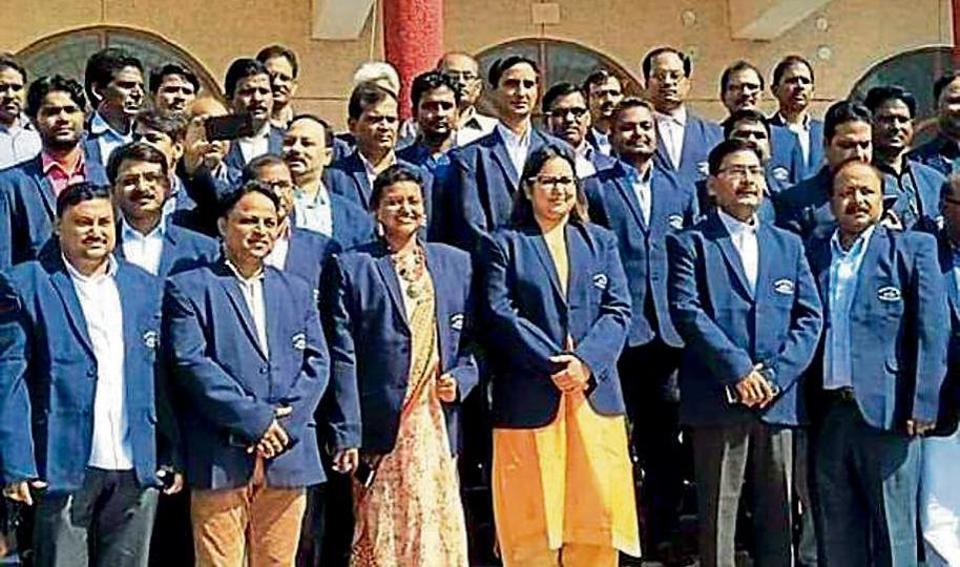
All of them go to work wearing a navy blue blazer with the slogan ‘Swachh Firozabad--Ek Kadam Swachata Ki Ore’ (Clean Firozabad--a step towards cleanliness) emblazoned on the monogram. The purpose: to foster team spirit among the staff and propagate the cleanliness message.
Those donning such apparel include the district magistrate, the chief development officer, district development officers, panchayat secretaries, sanitary staff, and Swachh Bharat staff. They do so even though, unlike the police, the district administration is not bound by a dress or uniform code.
When asked what use the uniform had for the officers and the staff, district magistrate Neha Sharma said: “Many. It is going a long way in inculcating a work culture: discipline, a sense of belonging and devotion towards work objectives.”
“There is no compulsion on wearing the blazer every day. Most of the 1,500 people wear it every day, while others don’t. But all do (wear it) whenever there are any important official occasions, meetings, or VIP visits the district,” Sharma said.
“It feels like a team. The blazer has added to team spirit among the district staff,” said Prabhat Mishra, the assistant director, National Savings, Firozabad, with an additional charge of block development officer.
Even if the staff are working on assignments unrelated to ODF or cleanliness goals, they all become walking billboards and ambassadors for these goals because of the ‘Swachh Firozabad’ monogram on the blazers. To another question, the district magistrate said: “The district administration through an e-tender, got 1,500 blazers made in different sizes. All of the same quality, design, colour (navy blue), using the IEC (information, education, communication) fund. Often, IEC fund either goes unutilised or gets used for less efficient things like caps, t-shirts and pamphlets. This way, utilisation of the fund became long-term.”





