
 E-Paper







Brajendra K Parashar is a Senior Journalist with the Hindustan Times, based in Lucknow, with nearly three decades of experience covering governance, public policy, politics and development in Uttar Pradesh. Over the years, he has reported extensively on key sectors, including energy and renewable power, mobility and transport, road safety, agriculture and allied sectors and issues related to farmers, rural development, taxation under the Goods and Services Tax (GST) and public administration. A seasoned political correspondent, Parashar closely tracks the Bharatiya Janata Party (BJP) and has covered every major election in Uttar Pradesh right from three-tier panchayat elections and urban local body polls to Assembly and Lok Sabha elections. He also reports regularly on the proceedings of the Uttar Pradesh Legislature, bureaucracy, governance, policy decisions and administrative developments with focus on their impact on public life. His reporting is known for its strong analytical approach, extensive use of official data. His areas of interests include investigative journalism, long-form political and policy analysis, data-driven reporting, elections and institutional reforms. Parashar holds a postgraduate degree in Political Science with First Division from Aligarh Muslim University (AMU), followed by a Diploma in Journalism and Mass Communication from the same university. His inclination towards journalism began during his student days, when he regularly contributed letters to editors and articles to newspapers and magazines. In the mid-1990S, his essay, “Should India Switch Over to the Presidential Form Of Government?”, published in Politics India magazine edited by noted constitutional expert Subhash C Kashyap, was adjudged the best entry in a national competition. His work has received professional recognition, including the Hindustan Times Journalist of the Month Award for an impactful series on drinking water issues during the 2010 Lok Sabha election campaign. Originally from Kasganj in western Uttar Pradesh, Parashar is currently based in Lucknow where continues to report on politics, governance and public policy.
Lok Sabha elections 2019: Temple stir era leaders not in poll fray
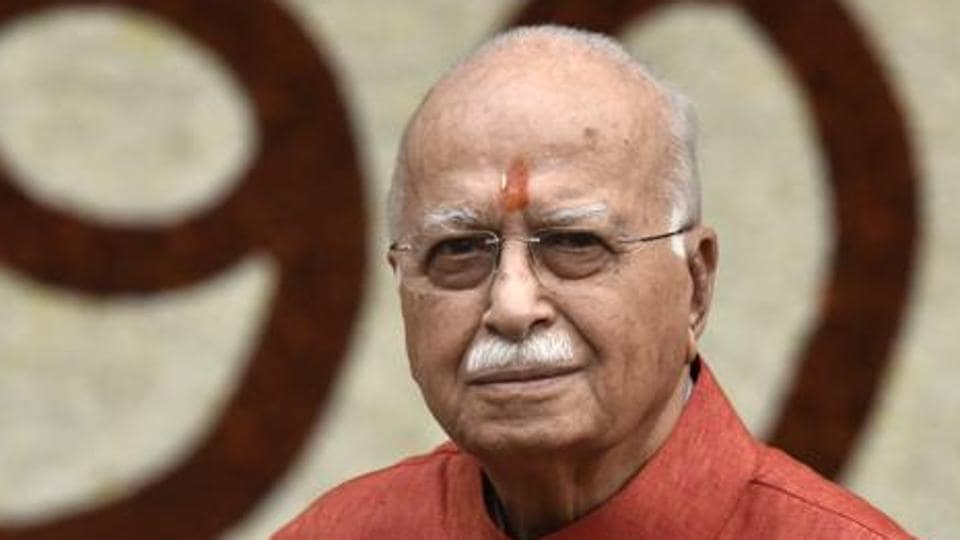
Once called an “iron man” by the party, former deputy PM Advani will not contest the election this time. A former party president, Advani led a Rath Yatra in September-October 1990 to demand the construction of a grand temple at the site of the Babri mosque that was razed on December 6, 1992.


Bharatiya Janata Party (BJP) leaders such as Lal Krishna Advani, Murli Manohar Joshi, Uma Bharti, Kalyan Singh and Vinay Katiyar, who led the Ram Janmabhoomi movement in the late 1980s and the early 1990s, are absent from the electoral race this time.
While some of them have been denied tickets by the party, others have decided not to contest the upcoming Lok Sabha polls, or are serving in constitutional positions.
“The forthcoming Lok Sabha will be bereft of the Ram temple movement heroes, probably for the first time in the last three decades,” Vishwa Hindu Parishad (VHP) leader Sharad Sharma said. VHP is one of the outfits that spearheaded the Ayodhya movement. “But it is the BJP’s internal matter...,” he said.
Once called an “iron man” by the party, former deputy PM Advani will not contest the election this time. A former party president, Advani led a Rath Yatra in September-October 1990 to demand the construction of a grand temple at the site of the Babri mosque that was razed on December 6, 1992.
Former HRD minister Joshi, who was closely associated with the Ram temple movement, has also been dropped this time. Joshi led the BJP as its president between 1991 and 1993, the period when the country was on the boil because of the temple agitation that culminated into the demolition of the Babri mosque.
Union minister Uma Bharti, who was indicted by the Liberhan Commission for her alleged presence during the demolition of the disputed structure in Ayodhya, offered not to contest the election.
Barjrang Dal founder-president Vinay Katiyar, also a BJP leader, has been denied ticket. Katiyar has always been very vocal about Ram temple construction in Ayodhya and played a key role in kar seva in the 1990s.
Former Uttar Pradesh chief minister Kalyan Singh, who was a Lok Sabha member from 2009 to 2014, will not contest the election this time as he is currently serving as the Rajasthan governor.
The BJP played down the issue. “This is party’s prerogative to choose candidates. But a more important issue is that all party leaders and other Ram Bhakts are working in tandem to make Narendra Modi the PM prime minister once again,” Uttar Pradesh BJP spokesperson Chandramohan said.
Congress leader Ajay Kumar claimed the BJP is not serious about the Ram temple issue. “The BJP has forgotten the temple issue; so has its leaders associated with the temple agitation.”
Echoing similar sentiments, Samajwadi Party (SP) leader and spokesman, Sunil Kumar, said, “The BJP has an uncanny tendency of forgetting anything for political expediency. They have forgotten all their promises...”
Prof SK Sharma, who teaches political science at Chaudhary Charan Singh University, Meerut said, “The shape of politics and the leaders have all changed with the change of time . The temple agitation belonged the 1990s while today, development is the main issue.”





