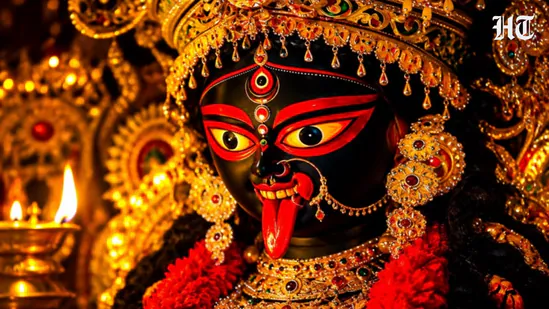
It is a tradition across India to worship Goddess Lakshmi on the night of Diwali. However, Bengal takes a different approach to this night, as they worship Maa Kali on the night of Amavasya.
Kali Puja is the second most popular Hindu festival among Bengalis after Durga Puja. Maa Kali is a powerful form of Goddess Durga, and according to Hindu legend, the Goddess took this form to defeat the terrifying demon Raktabija, who could multiply himself with every drop of blood that fell to the ground. To stop him from multiplying, the Goddess consumed every drop of his blood and eventually defeated him.
Kali Puja 2026 date and time
According to Drik Panchang, this year, Kali Puja is on Sunday, November 8, 2026.
{{/usCountry}}According to Drik Panchang, this year, Kali Puja is on Sunday, November 8, 2026.
{{/usCountry}}Kali Puja Nishita Time - 11:39 PM to 12:31 AM, Nov 09
Duration - 00 Hours 53 Mins
Amavasya Tithi Begins - 11:27 AM on Nov 08, 2026
Amavasya Tithi Ends - 12:31 PM on Nov 09, 2026
In the 16th century, a sage named Krishnananda Agamavagisha is believed to have dreamt of the Goddess, who instructed him to worship her in this form. The tradition later became more widespread and popular in the 19th century, with the devotion of Shri Ramakrishna Paramahamsa, a legendary devotee of the Goddess.
Maa Kali is worshipped on the new moon night, or Amavasya. Her fierce form is associated with the destruction of evil and the protection of her devotees. This darkest night of the lunar month also coincides with Diwali. In some years, Kali Puja falls a day before Diwali.
Kali represents Kaal, or time, which can devour everything but can also bring enlightenment. On Amavasya, the darkest night, devotees invoke Maa Kali to awaken their inner spiritual light. Her worship is also associated with overcoming negative tendencies and the obstacles that hold you back.
Through her, you are reminded of three important lessons:
- Darkness can be a part of the journey toward light.
- You can begin again with courage and fearlessness whenever you stumble on your spiritual path.
- When you overcome the obstacles within yourself, you make space for the grace and abundance associated with Goddess Lakshmi.
While many parts of India worship Goddess Lakshmi during Diwali, Bengalis traditionally observe Lakshmi Puja on Sharad Purnima, five days after Vijayadashami, on the brightest full moon night. This celebration, known as Kojagori Lokkhi Pujo, is also observed in Assam and Odisha.
Disclaimer: This article explores religious beliefs, traditions and spiritual interpretations associated with Maa Kali and Kali Puja. The views expressed are rooted in faith and cultural practices and should be understood in that context.
