
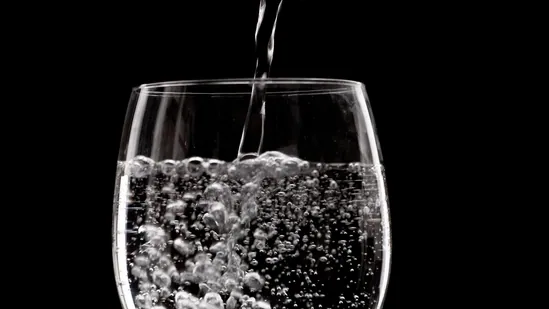
Sparkling water gets its characteristic fizz from dissolved carbon dioxide, which creates bubbles when the bottle is opened and the pressure changes. However, the moment you pour it into a glass, the drink begins to lose some of that carbonation. In this edition of Everyday Explained, HT Lifestyle, Chef Muskan Ajmani in Bangalore, explained the science of bubbles and why sparkling water goes flat after pouring.
Why does sparkling water lose its fizz faster after being poured into a glass?
According to Ajmani, sparkling water loses its fizz after being poured into a glass because the carbon dioxide dissolved in the water begins escaping as soon as the pressure surrounding it changes. Inside a sealed bottle, carbon dioxide is held under pressure, allowing more of the gas to remain dissolved in the water. The moment you open the bottle and pour it into a glass, that pressure drops, and the carbon dioxide starts escaping into the atmosphere.
“From a chef's perspective, the glass itself plays a surprisingly important role. When sparkling water is poured into a glass, tiny imperfections, scratches, and microscopic particles on its surface act as nucleation points,” said Ajmani. These provide places for dissolved carbon dioxide to form bubbles and escape. If the glass has more such nucleation points, the fizz can dissipate faster.
{{/usCountry}}“From a chef's perspective, the glass itself plays a surprisingly important role. When sparkling water is poured into a glass, tiny imperfections, scratches, and microscopic particles on its surface act as nucleation points,” said Ajmani. These provide places for dissolved carbon dioxide to form bubbles and escape. If the glass has more such nucleation points, the fizz can dissipate faster.
{{/usCountry}}Ajmani highlighted that the shape and cleanliness of the glass also influence how carbonation behaves. A glass with scratches, detergent residue, or microscopic deposits can encourage bubble formation. Tall, narrow glasses generally help retain carbonation for longer because they expose less surface area to the air compared with wider glasses, although the glass material and surface condition also matter.
Temperature matters
Temperature is another major factor. “Cold water holds carbon dioxide more effectively than warm water. This is why sparkling water served chilled tends to retain its carbonation for longer, while water that warms up loses its fizz more rapidly,” said Ajmani. Pouring aggressively also accelerates carbonation loss because it introduces turbulence and increases the release of carbon dioxide.
In a restaurant setting, we pay attention to how sparkling water is served because carbonation is part of the overall sensory experience. The bubbles influence how the water feels on the palate, its perceived sharpness, and even how refreshing it tastes. A gentle pour into a clean, chilled glass helps preserve the effervescence.
ABOUT THE AUTHOR
Anukriti Srivastava thrives at the intersection of words and voice, where journalism meets storytelling. A digital editor and journalist with over 5 years of experience, she has written across lifestyle, women issues, relationships, entertainment, fashion, and travel. She did her Masters in Broadcast Journalism and has published more than 500+ lifestyle content pieces across platforms. As a former Sub-Editor at HerZindagi, she produced engaging digital content, interviews, and event coverage for a wide audience. She has also contributed as a Webstory Producer with Travel + Leisure, transforming travel experiences into immersive stories for readers who love exploring the world. Beyond writing, Anukriti’s storytelling extends to the microphone. As a voice-over artist, her warm and expressive voice has brought scripts to life across audio platforms, turning simple words into immersive experiences. Her work reflects a deep interest in people, culture, and everyday stories that resonate with readers and listeners alike. She enjoys crafting content that informs, inspires, and sparks curiosity. Away from screens and studios, you’ll find her reading self-help books, listening to music, getting lost in romantic novels, and playing the guitar for a creative reset. For Anukriti, storytelling isn’t just a profession—it’s a way of seeing and sharing the world.
