Dim sum can be a complicated business. Classic dim sum used to be distinguished by the quality of the wrapper: Was it translucent? Was it delicate enough?
In China the making of dim sum is almost a traditional craft: Vast dim sum houses are institutions and dim sum chefs are hugely respected. It was that tradition that inspired Alan Yau, the British restaurateur, to launch a dim sum lunch at his trendsetting Hakkasan restaurant in London in 2001. Two years after Hakkasan opened, I ran into Yau in the bar at the restaurant and told him how much I enjoyed the dim sum, which were far better than the dim sum in London’s Chinatown restaurants.
He seemed pleased by the compliment and said he was opening a tea house (the Chinese characterisation of a dim sum restaurant) in Soho and was optimistic about its prospects. He opened Yauatcha in 2004. It was an instant success because, not only was the food very good, the menu included such unusual dim sum as his baked venison puff, which became a classic. Both Hakkasan and Yauatcha won Michelin stars and it seemed like Yau could do no wrong.
But he could. It transpired that his group had not met its revenue targets at least partly because Yau had overspent massively on design and construction (this was to become a pattern with him) and the group was sold in 2008 to Abu Dhabi interests. The new owners embarked on a massive global expansion, and the first Indian Yauatcha opened in Mumbai in 2011 and one in Bengaluru followed two years later, with Delhi and Kolkata opening a little later.
Globally, Yauatcha and Hakkasan have both lost their lustre (and their Michelin stars in London) over the last decade, and I have stopped going to them. But last week in Bengaluru, I decided to see if any Yauatcha had held its own. The Bengaluru version is near the top of a mid-priced mall and Yau may pass out if he visits it. I went on a Sunday when it resembled a park for unruly children. Kids ran around the restaurant, shouting, while their indulgent parents beamed. It did not matter too much because no conversation was possible at my table anyway. The restaurant has a semi-open kitchen and they were using a machine that rumbled loudly like a garbage compacter or a cement mixer, which drowned out our voices. Presumably, the waiters couldn’t hear much either, because they got our order wrong. If there was a manager on duty, I did not see them and so, could not ask where the chef was from.
{{/usCountry}}Globally, Yauatcha and Hakkasan have both lost their lustre (and their Michelin stars in London) over the last decade, and I have stopped going to them. But last week in Bengaluru, I decided to see if any Yauatcha had held its own. The Bengaluru version is near the top of a mid-priced mall and Yau may pass out if he visits it. I went on a Sunday when it resembled a park for unruly children. Kids ran around the restaurant, shouting, while their indulgent parents beamed. It did not matter too much because no conversation was possible at my table anyway. The restaurant has a semi-open kitchen and they were using a machine that rumbled loudly like a garbage compacter or a cement mixer, which drowned out our voices. Presumably, the waiters couldn’t hear much either, because they got our order wrong. If there was a manager on duty, I did not see them and so, could not ask where the chef was from.
{{/usCountry}}The Indian Yauatchas used to rely on chefs from Malaysia, which meant the food was sweeter than it would be on the mainland. And in Bengaluru too, the one acceptable dish, a prawn cheung fun was almost ruined by a sauce that was more sugary than umami. The dim sum had leathery skins, almost as if they had been reheated, though, given that one was served cold, this seemed unlikely. The Kung Pao chicken was completely inauthentic (perhaps that’s how they make it in Penang), and a dish of stir-fried vegetables was dire.
But maybe that’s what works in Bengaluru. Over half the restaurant was full (families with young children) so they are clearly not losing money. I don’t know what the Mumbai Yauatcha is like these days but the Bengaluru version would not survive in India’s commercial capital, where new, good restaurants keep opening.
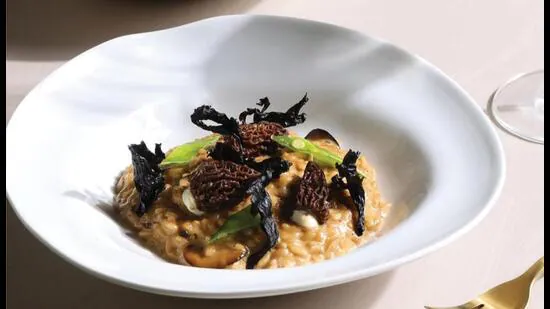
I went to the second La Panthera (after BKC) in the Eros cinema building in Mumbai, where the beautiful people kept streaming in but kitchen standards held firm. La Panthera is the Spanish chef Manuel Olveira’s non-Spanish brand. (La Loca Maria is his original Spanish restaurant.) I have known Manuel for nearly two decades, from the time he ran the Mumbai outpost of the famous Spanish chef Sergi Arola, but it always surprises me to see how good his non-Spanish food is. At La Panthera, he made an astonishingly delicious risotto (white truffles optional) and an outstanding pizza.
Mumbai has been good to Manuel, who runs his restaurants with the true passion of a chef-patron, and he is repaying the city by using the best ingredients even when he has no commercial reasons for doing so. Which of his guests cares that he is importing expensive boquerones (anchovies in vinegar) or that his olive oil is of high quality? But Manuel cares. And that’s what makes the difference.
Maybe these authentic touches only work in Mumbai. I went to Nam-Modern Thai, a new ‘Thai restaurant’ in Delhi that’s packing the punters in. I liked only one of the many dishes we ordered: A creative take on a Thai fish cake that is inspired by the medu vada. The rest of the food was as inauthentic as the Thai vada, which is fine by me. Except that it wasn’t particularly tasty; which is not fine.
I spoke to the young owner, who told me that he didn’t know Thai food well but said it didn’t matter. He had opened a Thai place before and it had bombed so he was now giving free rein to his imagination. Fair enough. The restaurant’s name is a little misleading, though, because it is modern Thai only in the sense that it boldly goes where no Thai has ever gone before. But hey! This is Punjabi Delhi and this kind of thing works.
Authenticity of any kind is a problem at a mid-priced restaurant in North India, but some people are trying. I went to the newly opened Dodicci at the Ashoka hotel (though the restaurant is not run by the Ashoka), where the consultant chef Gurdev Ahluwalia makes a spirited attempt to keep the food real. I liked her trout, and a dish of prawns with olives showed promise. So did the desserts, especially a firm but trembling Crème Caramel.
I met the owner who owns many other restaurants, none of which is noted for the quality of the food. He seemed cheerful enough, and when my wife who speaks Italian questioned him about the restaurant’s name, he said candidly that he had no clue what it meant. And as for the unusual spelling of that name, he was as candid: They had mangled the word for numerological reasons.
But at least they are trying. I went to Lizzu in Delhi’s Lodhi Colony Market, and wondered if they had an actual chef in the kitchen, because none of the food required much cooking: Avocado toast, a cold mezze selection etc. They swore that there was a real chef, so I ordered a dish they had to cook. It involved prawns, which may have been fresh once upon a time but now gave off a powerful odour. I sent them back, and the serving staff (who were very helpful, by the way) assured me that the chef thought they were fine.
So perhaps there wasn’t a proper chef in the kitchen after all.
From HT Brunch, November 21, 2026
Follow us on www.instagram.com/htbrunch
