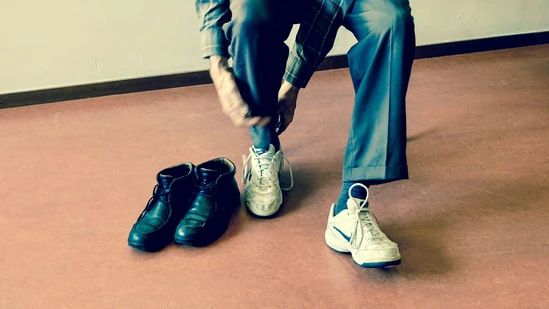
Buying a new pair of shoes is always exciting, but the experience can quickly turn uncomfortable when they start causing painful blisters. In this edition of HT Lifestyle’s ‘Everyday Explained’ series, we spoke to Avi Kumar, founder and CEO of footwear brand House of Avi and Jaya Tahilramani, director of London Rag, to understand what makes new footwear uncomfortable and why our feet need time to adjust.
Why does your perfect new pair still bite?
You spent 40 minutes in the store pacing up and down the carpeted aisle. The toe box felt roomy, the heel stayed put, and the salesman assured you the size was absolutely spot-on. Yet, 4 hours into your daily commute, you are limping back through your front door with fiery red hotspots throbbing across your heels. It remains one of life’s most frustrating retail paradoxes: if a shoe fits correctly, why does it still bite?
“The short answer is that static fit is an illusion, while walking is dynamic biomechanical warfare,” said Kumar. When you stand still on a showroom floor, your foot occupies a fixed three-dimensional space. The instant you stride onto the pavement, your foot changes shape entirely. It lengthens under your body weight, broadens across the metatarsal heads, and the arch collapses slightly to absorb shock before springing back. If a brand-new shoe does not flex in complete unison with that complex kinetic chain, friction immediately takes over.
Friction
{{/usCountry}}“The short answer is that static fit is an illusion, while walking is dynamic biomechanical warfare,” said Kumar. When you stand still on a showroom floor, your foot occupies a fixed three-dimensional space. The instant you stride onto the pavement, your foot changes shape entirely. It lengthens under your body weight, broadens across the metatarsal heads, and the arch collapses slightly to absorb shock before springing back. If a brand-new shoe does not flex in complete unison with that complex kinetic chain, friction immediately takes over.
Friction
{{/usCountry}}“Friction is one of the most common reasons why new shoes cause blisters,” said Tahilramani. Footwear that repeatedly rubs against the skin, especially at the back of your ankles, sides of your feet or around the toes and heels, can cause friction. The feet often take time to adapt to the firmer materials, structured panels and stiff edges of the shoe.
According to Kumar, blisters are not caused merely by direct pressure; they are born from micro-shear forces. New footwear, particularly structured sneakers or genuine leather styles crafted with stiff heel counters, is completely unyielding straight out of the box.
The materials have not yet softened to mirror your unique foot mechanics. As your heel elevates during the toe-off phase of every single stride, an unbroken shoe resists. This resistance causes a fraction-of-a-millimetre lag where your heel lifts while the stiff shoe counter stays anchored, repeatedly dragging against delicate skin.
Over several thousand steps, that relentless shear stress tears the epidermis from the dermis below. Your body rapidly floods the damaged pocket with clear interstitial serum to cushion underlying nerve endings.
Then comes the unforgiving Indian climate factor: ambient heat and oppressive humidity. Sweat drastically increases the coefficient of friction. While a dry foot might slip harmlessly across a firm lining, a damp heel sticks and tugs violently at skin tissue. Cheap synthetic linings and non-porous uppers only exacerbate this painful greenhouse effect.
How to prevent shoe bites?
“Preventing the bite never means sizing up, which only introduces reckless heel slippage. Instead, respect the break-in ritual. Condition stiff leather to accelerate suppleness, pair new footwear with moisture-wicking socks, and apply anti-chafe tape to vulnerable spots before stepping outside,” said Kumar. Comfort is ultimately an earned, patient negotiation between stubborn leather and living bone. Treat initial outings as brief test runs rather than demanding marathons.
According to Tahilramani, here are other ways to prevent shoe bites:
- It is a smart idea to wear new shoes for short periods before using them for an extended duration.
- Always ensure that the fit is right. The toe area, sides and back should offer adequate room to avoid friction.
- Perspiration is one of the reasons behind shoe discomfort. Opt for breathable materials and wear moisture-wicking socks where appropriate.
- Protect your skin during the first few wears with blister-prevention patches or protective dressings on the areas where your skin is prone to rubbing.
Note to readers: This article is for informational purposes only and not a substitute for professional medical advice. Always seek the advice of your doctor with any questions about a medical condition.
