
 E-Paper







Follow the latest breaking news, major developments and agenda-setting stories from India and around the world with the newsdesk at Hindustan Times. Operating round the clock, the desk brings together experienced editors, reporters and correspondents to deliver fast, accurate and contextual reporting across subjects that influence public policy, governance, business, society and international affairs. The HT News Desk covers politics, elections, government policies, the economy, business and markets, science and technology, the environment, law and order, infrastructure, education, climate issues and geopolitics, while closely tracking developments across states, institutions and global capitals. The team also leads coverage of major breaking news events, policy announcements, court proceedings, natural disasters, public emergencies and significant international developments. Reports published by the newsdesk are based on information gathered from reporters on the ground, official statements, government agencies, court records, regulatory filings, recognised institutions and other authoritative sources. Stories undergo editorial scrutiny and verification processes to ensure accuracy, fairness and relevance, and are updated as events evolve and additional information becomes available. Whether covering a key political decision in New Delhi, an economic policy shift affecting millions, a landmark court ruling or a major global event, the HT News Desk aims to provide readers with reliable, fact-based journalism that delivers not only the latest developments but also the context and analysis needed to understand their wider implications.
Video-conference, a short sitting mark last working day for Gogoi
Gogoi did not speak to the media or at the farewell organised by SC Bar association, becoming possibly the only chief justice not to have spoken at the farewell for a CJI


For a judge who claimed to have “discharged his debt to the nation” by taking on then Chief Justice of India (CJI) Dipak Misra, and becoming part of an unprecedented press conference by four senior judges who were critical of Misra’s functioning last year, Ranjan Gogoi’s last working day as the CJI was unusually muted.
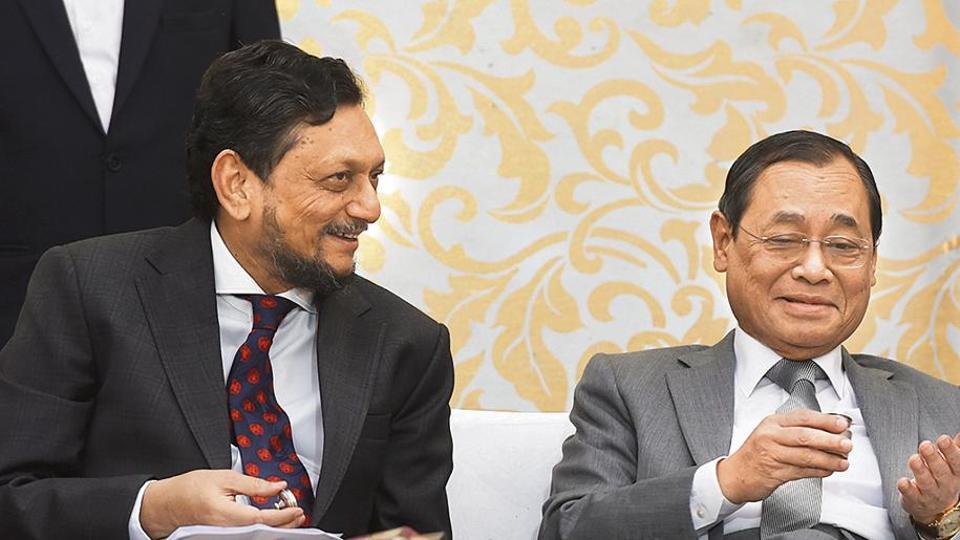
Gogoi, 64, did not speak to the media or at the farewell function organized by the Supreme Court Bar Association on Friday.
He is the possibly the only chief justice not to have spoken at the farewell function organised by the bar association for a CJI.
Although justice Gogoi’s 13-month tenure as the CJI comes to an end when he demits his office on Sunday, he attended the Supreme Court for the last time on Friday.
Justice Gogoi presided over Court 1 with the CJI-designate S A Bobde. He dealt with 10 cases in a little less than five minutes and retired to his chambers.
Justice Gogoi signed off on the day by holding a video conference with 650 high court judges and 15,000 district and taluka judges across the country.
According to people aware of the content of the video conference, justice Gogoi thanked all judges for supporting him and for working towards reducing the backlog of cases in the courts.
“It was more like a pep talk to the judges. He said that the institution was facing problems but despite that judges have to keep working,” one judge of a high court said on condition of anonymity. “I think it was a good gesture on the part of justice Gogoi.”
Earlier in the day, Gogoi went to Rajghat, the memorial dedicated to Mahatma Gandhi, like he did on the day he took over as CJI.
Justice Gogoi will be remembered as one who was responsible for delivering and being part of some landmark verdicts in cases including the Ayodhya title dispute and the Rafale fighter jet deal. He was part of the benches that referred the Sabrimala case to a seven-judge bench and brought the office of the CJI under Right to Information Act.
Justice Ranjan Gogoi was also singly responsible for judicially pushing the National Register of Citizens for Assam.
His term was marred by allegations of sexual harassment against him by a staffer at his home office although he was eventually given a clean chit after an enquiry by three sitting judges of the Supreme Court.
Senior advocate Jaideep Gupta described Gogoi as a “no-nonsense kind of judge”. “Work was done, judgments delivered, no one complained.”





