
 E-Paper







Follow the latest breaking news, major developments and agenda-setting stories from India and around the world with the newsdesk at Hindustan Times. Operating round the clock, the desk brings together experienced editors, reporters and correspondents to deliver fast, accurate and contextual reporting across subjects that influence public policy, governance, business, society and international affairs. The HT News Desk covers politics, elections, government policies, the economy, business and markets, science and technology, the environment, law and order, infrastructure, education, climate issues and geopolitics, while closely tracking developments across states, institutions and global capitals. The team also leads coverage of major breaking news events, policy announcements, court proceedings, natural disasters, public emergencies and significant international developments. Reports published by the newsdesk are based on information gathered from reporters on the ground, official statements, government agencies, court records, regulatory filings, recognised institutions and other authoritative sources. Stories undergo editorial scrutiny and verification processes to ensure accuracy, fairness and relevance, and are updated as events evolve and additional information becomes available. Whether covering a key political decision in New Delhi, an economic policy shift affecting millions, a landmark court ruling or a major global event, the HT News Desk aims to provide readers with reliable, fact-based journalism that delivers not only the latest developments but also the context and analysis needed to understand their wider implications.
Shooting for movies, TV shows to restart but with riders: Govt
According to the SOP, actors facing the camera will be exempt from wearing masks. All remaining crew members will have to adhere to the guidelines of the health ministry.


After an almost five-month halt, production of films and television programmes can resume with all essential health protocols in place to prevent the spread of the coronavirus disease (Covid-19), information and broadcasting minister Prakash Javadekar said on Sunday, as the government spelled out strict do’s and don’ts for film and television shoots.
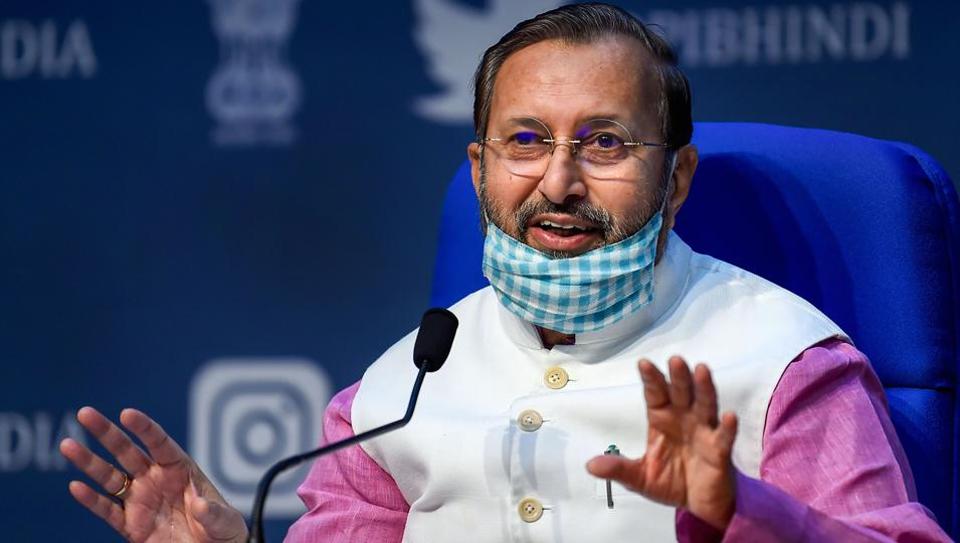
After consultation with the home ministry and the health ministry, a standard operating procedure (SOP) has been firmed up for the production of films and television programmes, including adherence to social distancing, respiratory etiquette and use of face masks, Javadekar said in an announcement cheered by the vast entertainment industry based in Mumbai.
According to the SOP, actors facing the camera will be exempt from wearing masks. All remaining crew members will have to adhere to the guidelines of the health ministry.
Production of films and television programmes ground to a hall on March 25, when a nationwide lockdown was imposed in the aftermath of the outbreak of Covid-19. After 68 days of stringent curbs, the government initiated the “Unlock” process starting in June, gradually relaxing curbs.
The entertainment industry had demanded that be allowed to resume work. Some states have allowed resumption of shooting of films and television programmes with many riders. In some cases, people aged over 60 years --- considered a high-risk group --- are not allowed on the sets.
“It’s great news because it means we are moving towards starting shoots on a full-fledged basis,” said Nikkhil Advani, the filmmaker who owns the production house Emmay Entertainment. “Since we are either already working or are in the process of starting to work in Maharashtra, Uttar Pradesh and Rajasthan, we have to go through the MIB {ministry of information and broadcasting} guidelines in detail to see as to if they differ from various state-specific guidelines. But it’s great news for everyone including the daily-wage labourers who have had no work for over five months now. So, I welcome the move by MIB.”
As per the guidelines announced on Sunday, high-risk employees will have to take extra precautions; they are advised not be exposed to frontline work requiring contact with public. Masks will be mandatory for all, sanitisation norms will have to be adhered to, respiratory etiquette will be strictly followed, and the use of the Aarogya Setu app will be advised
“We, as the film fraternity, welcome the ministry’s move as the work has been stuck for a really long time. And everyone is tired of sitting at home, especially those whose livelihoods are directly dependent on film/TV shoots. So, I am happy that we, slowly but surely, are moving towards normalcy again,” said filmmaker Anees Bazmee, whose next film, Bhool Bhulaiyaa 2, is due to restart filming in Lucknow soon.
Thermal screening at entry points will be mandatory and only asymptomatic persons will be allowed on the premises of shooting. A physical distance of six feet has to be maintained at all times as far as feasible Crowd management in parking lots outside the premises to ensure physical distancing is also part of the guidelines that will need to be followed.
The guidelines also call for ensuring that the temperature setting of all air conditioning devices should be in the range of 24-30°C. Recirculation of air has to be to be avoided to the extent possible and cross-ventilation ensured.
Production houses have also been asked to ensure visitors and audience are not allowed on the sets; for outdoor shooting, coordination with the local authorities will have to be ensured to minimise and manage spectators, Staggered call and pack-up timings have to be ensured or different production by studios having multiple sets.
“Common locations such as sets, cafeteria, make-up rooms, edit rooms, vanity vans, washrooms, etc. shall be sanitized regularly. Sensitive equipment, while keeping in consideration the delicate nature and technical feasibility, shall be sanitized, to the extent possible, before and after the shoot. Adequate provisions for rational use of gloves, boots, masks, PPE {personal protection equipment} etc. shall be undertaken,” the guidelines said.
The new dos and don’ts also forbid sharing of costumes, hair wigs, makeup items, equipment, and use of PPEs by make-up artists and hair stylists.
The guidelines have a specific provision for anti-stigma behaviour and said stigmatisation or unruly behaviour shall be dealt with strictly in coordination with the local authorities.
“Suitable provisions may be made for temporary isolation of any suspect case that may get reported,” the guidelines said.





