E-Paper




Security expenses on BJP chief Amit Shah can’t be disclosed: CIC
The information was denied by the home ministry citing Section 8(1)(g) that exempts from disclosure information that would endanger the life or physical safety of any person.

 Prefer HTon Google


Expenses incurred on the security cover of BJP president Amit Shah cannot be disclosed, the Central Information Commission (CIC) has held citing RTI Act exemption clauses of “personal information” and “safety”.
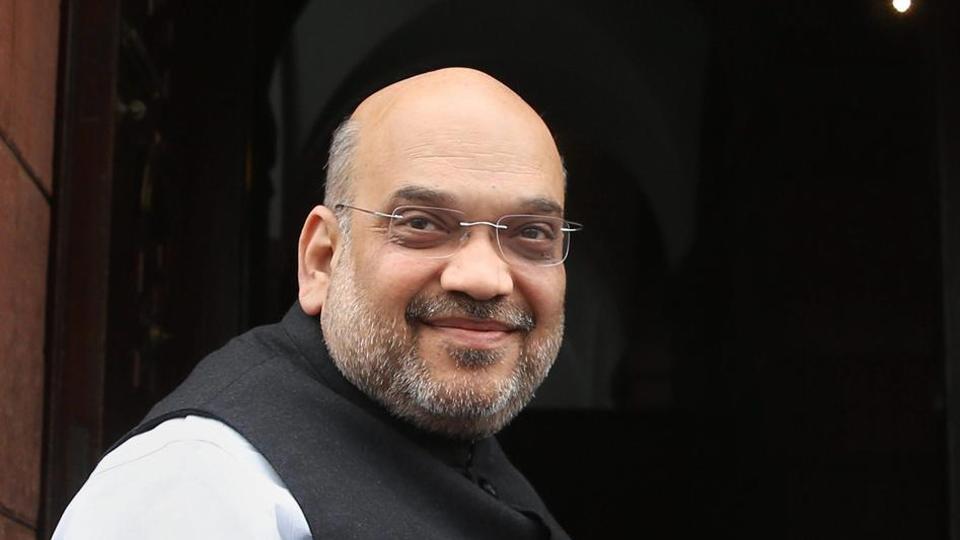
The commission has denied the appeal of a petitioner who had also sought to know the rules governing extension of security cover to a private individual and the authorities, which foot the bill of such cover to a private individual.
The application was filed by Deepak Juneja on July 5, 2014, when Shah was not a member of the Rajya Sabha.
He had also sought to know the list of people who have been given security by the government.
The information was denied by the home ministry citing Section 8(1)(g) that exempts from disclosure information that would endanger the life or physical safety of any person.
The ministry had also cited Section 8(1)(j) of the RTI Act, which exempts information that is personal, would cause unwarranted invasion of privacy and is not linked to any “public activity”.
In its previous order in the matter, the CIC had upheld denial of information as it was not disclosed before Parliament.
Juneja challenged the CIC order in the Delhi high court where Justice Vibhu Bakhru set aside the transparency panel’s order stating that the commission was first required to examine whether information sought by the petitioner was exempted under clauses (g) and (j) of Section 8(1) of the RTI Act.
It lobbed the matter before the CIC again to consider private contentions in the light of the exemption clauses of Section 8(1) of the act.
The commission again heard Juneja and the home ministry in the matter.
Juneja submitted that the grant of security cover to eminent persons under threat is the duty of the state in cases where the beneficiary holds a high office as they cannot perform their vital functions while reeling under threat, Information Commissioner Yashovardhan Azad noted in the order.
However, the appellant submits that defraying cost of elite Z+ security cover to private persons must not be from the state exchequer, Azad pointed out.
“Amit Shah, who happens to be the national president of the Bhartiya Janta Party (BJP) has been granted Z+ security cover by the MHA since July 2014 despite him not being holding any constitutional or statutory office,” Juneja said, adding that since it was public money he has the right to know.
The ministry said the respondent’s contention is that revelation of expenses incurred in providing security cover would reveal the intricacies, and magnitude and rigour of security cover.
It said rules governing the entitlement of grant of security cover and process of threat assessment among others are framed in consultation with central security agencies, which are exempted from the purview of the RTI Act, and disclosure would nullify the exemptions.
“Judicial notice can be taken of the fact that the protectees are already facing the highest level of threat and that is why they have been accorded with the highest level of security cover,” Azad, a former IB special director, held.
He said revelation of names of protectees if not adding on to the danger to their life or physical safety would be counterproductive to the efficacy of security cover.
The names of private Z+ protectees are personal since they do not owe the security cover to their public office but private position in life, the information commissioner said.
“The public eminence of the private person, threat perception and the potential harm... are key determinative factors while granting security cover,” he said.
He said the identity, specific threat perception analysis among other factors are personal information of a protectee who does not hold a public office.
“The right to know, in such a case, must make way for the right to privacy of the individual and the efficiency of governance since the same furthers the concept of ‘practical regime’ of the RTI as conceptualised in the preamble of the RTI Act,” Azad said.
He also cited last year’s Supreme Court order on Right to Privacy to buttress his argument.
On December 9, 2015, the list of protectees in political and judicial field was disclosed in a Rajya Sabha question by the Home Ministry, hence making a further case for not disclosing it, Azad said.