
 E-Paper







Follow the latest breaking news, major developments and agenda-setting stories from India and around the world with the newsdesk at Hindustan Times. Operating round the clock, the desk brings together experienced editors, reporters and correspondents to deliver fast, accurate and contextual reporting across subjects that influence public policy, governance, business, society and international affairs. The HT News Desk covers politics, elections, government policies, the economy, business and markets, science and technology, the environment, law and order, infrastructure, education, climate issues and geopolitics, while closely tracking developments across states, institutions and global capitals. The team also leads coverage of major breaking news events, policy announcements, court proceedings, natural disasters, public emergencies and significant international developments. Reports published by the newsdesk are based on information gathered from reporters on the ground, official statements, government agencies, court records, regulatory filings, recognised institutions and other authoritative sources. Stories undergo editorial scrutiny and verification processes to ensure accuracy, fairness and relevance, and are updated as events evolve and additional information becomes available. Whether covering a key political decision in New Delhi, an economic policy shift affecting millions, a landmark court ruling or a major global event, the HT News Desk aims to provide readers with reliable, fact-based journalism that delivers not only the latest developments but also the context and analysis needed to understand their wider implications.
SC to decide today if ‘privileged’ Rafale papers can be used as evidence
The Centre had claimed privilege over documents pertaining to the Rafale fighter jet deal with France and said those documents cannot be considered in evidence as per Section 123 of the Indian Evidence Act.


The Supreme Court will Wednesday pronounce verdict on the preliminary objections raised by the Centre that the documents on which it was claiming “privilege” cannot be relied upon to re-examine the verdict in the Rafale fighter jet deal with France.
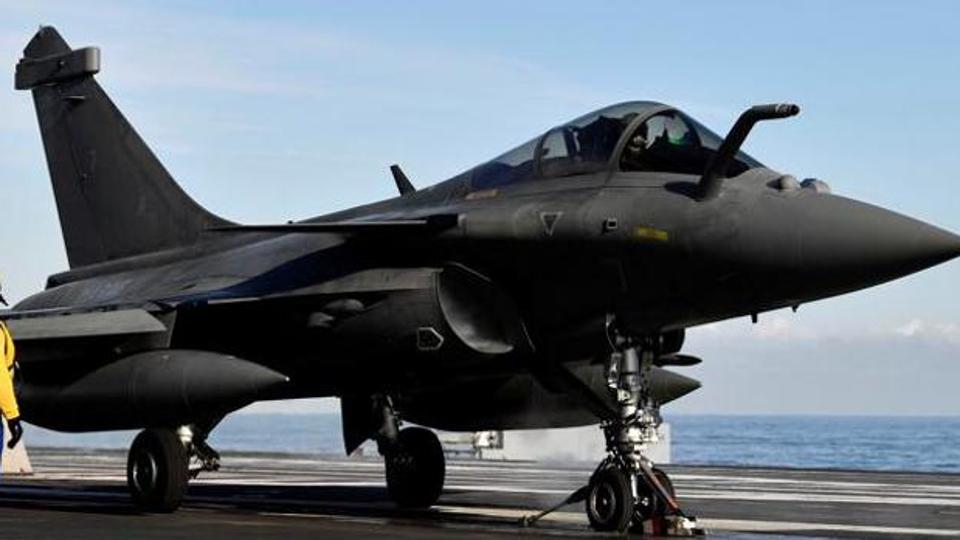
A bench headed by Chief Justice Ranjan Gogoi will pronounce the verdict.
On March 14, the apex court had reserved verdict on the preliminary objections raised by the Centre on admissibility of privileged documents annexed by former Union ministers Yashwant Sinha and Arun Shourie as also activist lawyer Prashant Bhushan in their review petition against the top court’s December 14 judgment that dismissed all petitions against the Rafale jet deal.
“Only after we decide the preliminary objection raised by the Centre, we will go into other aspect of the review petitions,” the bench said, adding that “only if we overrule the preliminary objection, we will go into other details”.
The Centre had claimed privilege over documents pertaining to the Rafale fighter jet deal with France and said those documents cannot be considered in evidence as per Section 123 of the Indian Evidence Act.
Attorney General K K Venugopal, appearing for the Centre had contended that no one can produce them in the court without the permission of the department concerned as those documents are also protected under the Official Secrets Act and their disclosure is exempted under the Right to Information Act as per Section 8(1)(a).
Bhushan had contended that the Centre’s objections were “mala fide and totally untenable arguments”.
The top court had further noted that according to the AG’s submissions “there are three Rafale documents whose publication comes under Official Secrets Act, 1923. These documents were unauthorisedly published. You claim privilege under section 123 of Evidence Act. You want us to adjudicate and strike down the review on this basis”.
Bhushan had submitted a note countering the preliminary objections raised by the centre on maintainability of the review petitions, stating that “preliminary objection are mala fide and totally untenable arguments”.
He had said government cannot claim privilege over the documents which are already published and is in public domain.
Bhushan had said that Section 123 Indian Evidence Act only protected “unpublished documents”.
While the Centre was making submission that the documents can be withheld from disclosure under the RTI Act in view of the national security, the top court said Section 22 of the RTI Act gave it an overriding effect over the Official Secrets Act.
It also said that under Section 24 of the RTI Act even security and intelligence establishments are not exempted from disclosing information in relation to corruption and human rights violations.
“The RTI Act brought a revolution. In 2009, your own government said file notings can be made available under the RTI. Let us not go back now,” the bench has said.
Bhushan further said that provisions of the RTI Act say public interest outweighs other things and no privilege can be claimed except for documents which pertain to intelligence agencies.
He also said that there is no government-to-government contract in purchasing Rafale jets as there is no sovereign guarantee extended to India by France in the ₹58,000 crore deal.
He had submitted why the government didn’t lodge any FIR when these documents started coming out in November 2018.
He had further said that the government has itself filed a detailed CAG report regarding as many as 10 defence purchases and it is untenable on their part to now claim privilege.





