
 E-Paper






Follow the latest breaking news, major developments and agenda-setting stories from India and around the world with the newsdesk at Hindustan Times. Operating round the clock, the desk brings together experienced editors, reporters and correspondents to deliver fast, accurate and contextual reporting across subjects that influence public policy, governance, business, society and international affairs. The HT News Desk covers politics, elections, government policies, the economy, business and markets, science and technology, the environment, law and order, infrastructure, education, climate issues and geopolitics, while closely tracking developments across states, institutions and global capitals. The team also leads coverage of major breaking news events, policy announcements, court proceedings, natural disasters, public emergencies and significant international developments. Reports published by the newsdesk are based on information gathered from reporters on the ground, official statements, government agencies, court records, regulatory filings, recognised institutions and other authoritative sources. Stories undergo editorial scrutiny and verification processes to ensure accuracy, fairness and relevance, and are updated as events evolve and additional information becomes available. Whether covering a key political decision in New Delhi, an economic policy shift affecting millions, a landmark court ruling or a major global event, the HT News Desk aims to provide readers with reliable, fact-based journalism that delivers not only the latest developments but also the context and analysis needed to understand their wider implications.
Rs 8,000 cr package for sugar industry will soon be announced, says Ram Vilas Paswan
The proposed Rs 8,000-crore package include creation of sugar buffer stock of 3 million tonnes, interest subsidy on Rs 4,500 crore loan to mills for expansion and creation of new ethanol capacity among others


The government will soon announce a bailout package of Rs 8,000 crore to sugar industry to ensure the cash-starved mills clear cane dues of Rs 22,000 crore, Food Minister Ram Vilas Paswan said on Tuesday.
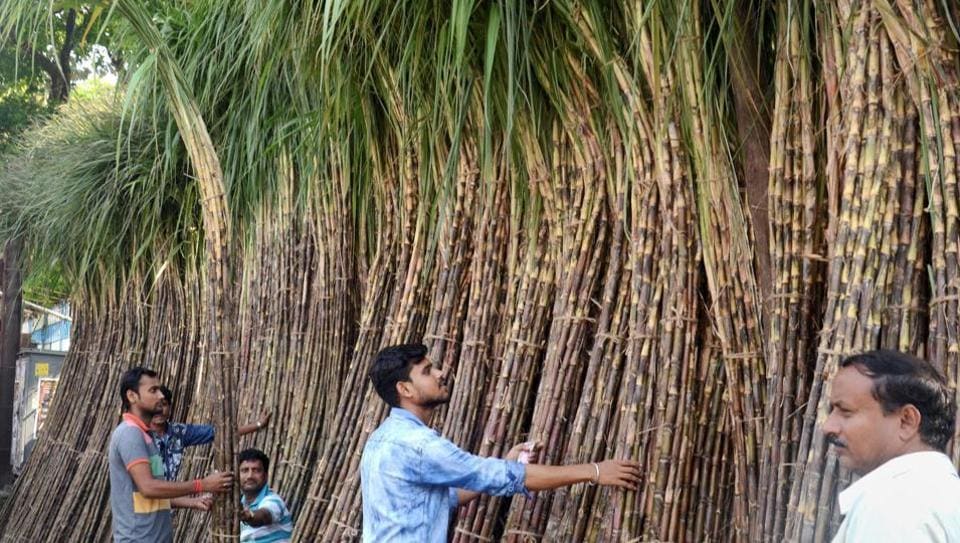
A bailout package has been worked out days after the BJP lost Lok Sabha by-poll in Kairana constituency in Uttar Pradesh, the country’s largest sugarcane producing state.
“A proposal of Rs 8,000 crore has been sent to the Cabinet. Cabinet will take a decision,” Paswan told reporters while highlighting his ministry’s achievements in the last four years.
The minister added that a decision in this regard may be taken very soon. He, however, did not give details.
Paswan also refuted suggestions that the package is linked to results faced by the ruling party in recent by-elections, especially in Uttar Pradesh.
As per sources, the Union Cabinet is scheduled to meet tomorrow.
A bailout package has been worked out as sugar mills’ financial health has worsened due to sharp fall in prices following a record sugar production of over 31.6 million tonnes so far in the 2017-18 marketing year (October-September).
The proposed Rs 8,000-crore package include creation of sugar buffer stock of 3 million tonnes, interest subsidy on Rs 4,500 crore loan to mills for expansion and creation of new ethanol capacity among others.
Last month, the government had announced a Rs 1,500 crore production-linked subsidy for sugarcane farmers to help millers pay cane payments.
Presently, the average ex-mill price of sugar is in the range of Rs 25.60-26.22 per kg, which is below the cost of production.
The Centre has already doubled sugar import duty to 100 per cent and scrapped export duty to check sliding domestic prices. It has also asked mills to export 2 million tonnes of sugar.





