
Islamabad has ‘shut down’ the Samjhauta Express train service between India and Pakistan, its railway minister Sheikh Rasheed announced on Thursday. Indian officials, however, say no formal notification to this effect was issued by Islamabad.
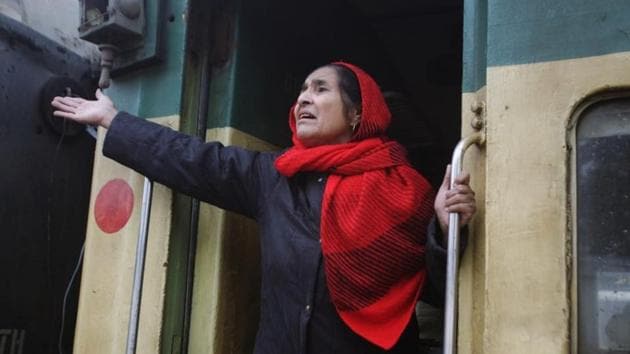
Indian Railway said that the train was stopped at Wagah border and arrangements were being made to bring the stranded passengers to India.
“#Samjhautaexpress. Train will run. Train is being moved from Wagah and it will come to Attari,” said an official tweet from Indian railway ministry. Reuters quoted Pakistan Minister Sheikh Rasheed as saying, “We have decided to shut down Samjhauta Express,” he was further quoted suggesting the services will not be resumed any time soon, “As long as I am railways minister, Samjhauta Express can’t operate,” Reuters quoted Rasheed telling journalists. Samjhauta Express plies twice a week.
Also watch: Article 370 | Samjhauta Express services shut down by Pakistan
Before Pakistan Minister’s tweet surfaced, an Indian Railway official, Deepak Kumar said, “Pakistan had raised issues regarding security of the train’s crew and guard. We have told them that the situation this side was perfectly normal.”
Station master of Attari railway station close to border with Pakistan, Arvind Kunar Gupta said, “We got a message from Pakistan railways that the crew members and guards of Samjhauta Express refused to take the train into Indian territory. They allowed us to send our driver and staff to take the train from Wagah.”
He added that a train engine from Amritsar was being sent for this purpose, “We have called a train engine, its driver and other staff members from Amritsar railway station. The staff will go to Wagah for bringing the train into India.”
As per information, Samjhauta Express was stuck at Wagah railway station on the Pakistan side since 9:30 am.
{{/usCountry}}As per information, Samjhauta Express was stuck at Wagah railway station on the Pakistan side since 9:30 am.
{{/usCountry}}There are about 110 passengers on board the train stuck at Wagah and about 70 waiting to board the train to Pakistan on its return journey, said the railway source quoted above.
The move comes after Indian Parliament okayed scrapping of Article 370 in Jammu and Kashmir and dividing the state into two Union Territories. This was strongly criticised by Pakistan, which held a special session of its Parliament to condemn the issue and later decided to downgrade ties with New Delhi.
Also read: PM Modi to address the nation at 8 pm today
ABOUT THE AUTHOR
Follow the latest breaking news, major developments and agenda-setting stories from India and around the world with the newsdesk at Hindustan Times. Operating round the clock, the desk brings together experienced editors, reporters and correspondents to deliver fast, accurate and contextual reporting across subjects that influence public policy, governance, business, society and international affairs. The HT News Desk covers politics, elections, government policies, the economy, business and markets, science and technology, the environment, law and order, infrastructure, education, climate issues and geopolitics, while closely tracking developments across states, institutions and global capitals. The team also leads coverage of major breaking news events, policy announcements, court proceedings, natural disasters, public emergencies and significant international developments. Reports published by the newsdesk are based on information gathered from reporters on the ground, official statements, government agencies, court records, regulatory filings, recognised institutions and other authoritative sources. Stories undergo editorial scrutiny and verification processes to ensure accuracy, fairness and relevance, and are updated as events evolve and additional information becomes available. Whether covering a key political decision in New Delhi, an economic policy shift affecting millions, a landmark court ruling or a major global event, the HT News Desk aims to provide readers with reliable, fact-based journalism that delivers not only the latest developments but also the context and analysis needed to understand their wider implications.
