E-Paper







Follow the latest breaking news, major developments and agenda-setting stories from India and around the world with the newsdesk at Hindustan Times. Operating round the clock, the desk brings together experienced editors, reporters and correspondents to deliver fast, accurate and contextual reporting across subjects that influence public policy, governance, business, society and international affairs. The HT News Desk covers politics, elections, government policies, the economy, business and markets, science and technology, the environment, law and order, infrastructure, education, climate issues and geopolitics, while closely tracking developments across states, institutions and global capitals. The team also leads coverage of major breaking news events, policy announcements, court proceedings, natural disasters, public emergencies and significant international developments. Reports published by the newsdesk are based on information gathered from reporters on the ground, official statements, government agencies, court records, regulatory filings, recognised institutions and other authoritative sources. Stories undergo editorial scrutiny and verification processes to ensure accuracy, fairness and relevance, and are updated as events evolve and additional information becomes available. Whether covering a key political decision in New Delhi, an economic policy shift affecting millions, a landmark court ruling or a major global event, the HT News Desk aims to provide readers with reliable, fact-based journalism that delivers not only the latest developments but also the context and analysis needed to understand their wider implications.
Two newborn tiger cubs bring good news for Sariska National Park
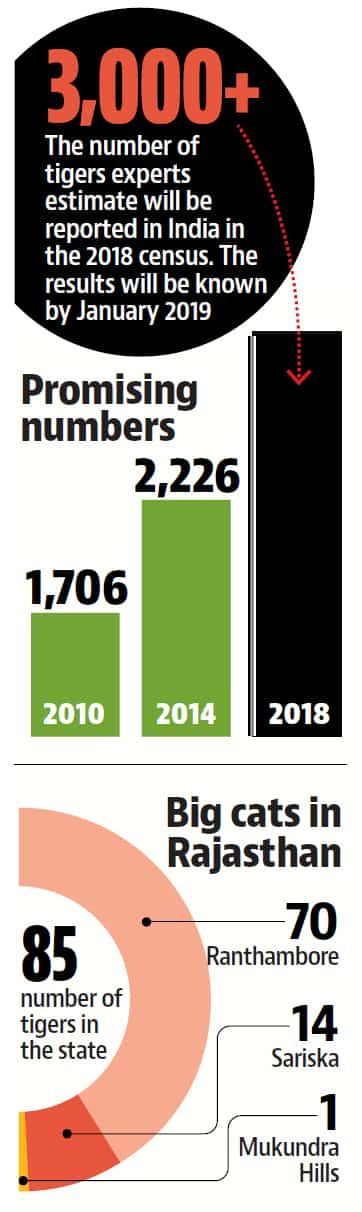
The Sariska Tiger Reserve, struggling with loopholes in security and upkeep, now has something to cheer about. With the birth of two cubs, the number of tigers at the reserve in Rajasthan has risen to 14 from zero in 2005


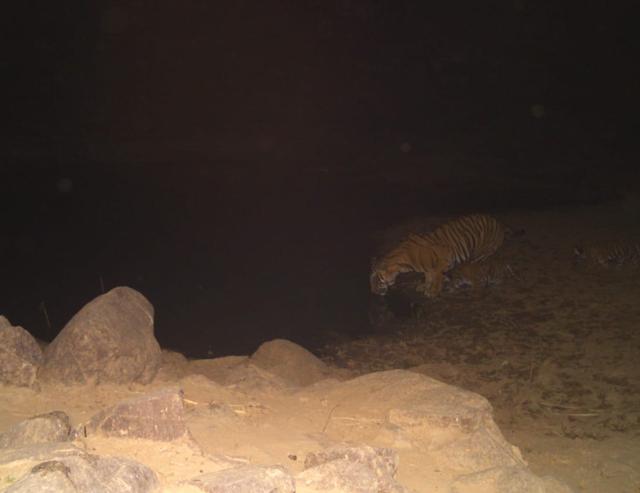
A tigress named ST-14 has given birth to two cubs, first spotted by cameras on Saturday night, in the Sariska National Park in Rajasthan’s Alwar. The cubs are two-months-old.
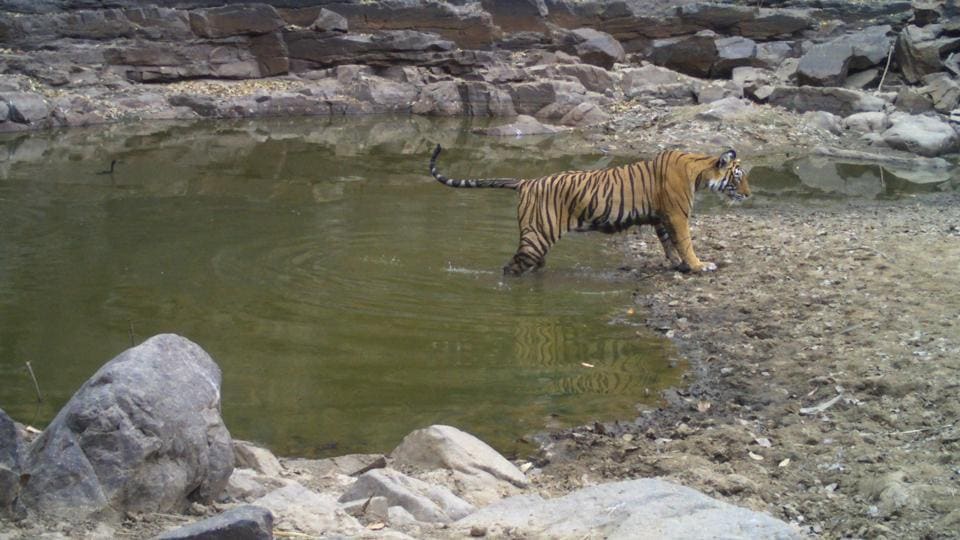
The cubs have taken the number of tigers in Sariska to 14.
The father of the cubs, officially identified as ST-11, died on March 19 after getting entangled in a barbed-wire fence.
Cubs were born in Sariska after more than two years. Tigress ST-9 had given birth to ST-15 in 2016.
“A forest tracker spotted the tigress with her two cubs on Saturday morning. He was there for 20 minutes for confirmation. Later, he shared the news with us,” said Sariska Tiger Reserve deputy conservator of forest Balaji Kari.
Sariska’s chief conservator of forest GS Bhardwaj said the cubs were seen in camera traps on April 6. “On Saturday morning, forest tracker and other department employees physically saw the tigress with the litter. We have beefed up security in the Sadar Range forest area where the newborns are with their mother,” he said.
Another tigress, ST-5, went missing on February 21 and is yet to be located.
The reserve had lost all its tigers in 2005, largely because of poaching. A re-population plan was started in 2008, with eight tigers being brought in from Ranthambore. One of these tigers was poisoned in 2010. Tigress ST-2, ST-9 and ST-10 have given birth to seven cubs between 2012 and 2017
A standing committee of the State Board for Wildlife recently recommended the immediate replacement of existing collars of the big cats with advanced GPS-enabled collars. It also suggested round-the-clock monitoring of the tigers by separate teams working in shifts to prevent poaching.
The panel said a Sariska Strike Force, pending for 10 years, should be created to prevent snaring and poaching.