
 E-Paper







Follow the latest breaking news, major developments and agenda-setting stories from India and around the world with the newsdesk at Hindustan Times. Operating round the clock, the desk brings together experienced editors, reporters and correspondents to deliver fast, accurate and contextual reporting across subjects that influence public policy, governance, business, society and international affairs. The HT News Desk covers politics, elections, government policies, the economy, business and markets, science and technology, the environment, law and order, infrastructure, education, climate issues and geopolitics, while closely tracking developments across states, institutions and global capitals. The team also leads coverage of major breaking news events, policy announcements, court proceedings, natural disasters, public emergencies and significant international developments. Reports published by the newsdesk are based on information gathered from reporters on the ground, official statements, government agencies, court records, regulatory filings, recognised institutions and other authoritative sources. Stories undergo editorial scrutiny and verification processes to ensure accuracy, fairness and relevance, and are updated as events evolve and additional information becomes available. Whether covering a key political decision in New Delhi, an economic policy shift affecting millions, a landmark court ruling or a major global event, the HT News Desk aims to provide readers with reliable, fact-based journalism that delivers not only the latest developments but also the context and analysis needed to understand their wider implications.
‘Pak’s Kashmir policy at a decisive point’: Imran Khan in address to nation
Tensions between India and Pakistan spiked after India abrogated provisions of Article 370 of the Constitution, evoking strong reactions from Pakistan.


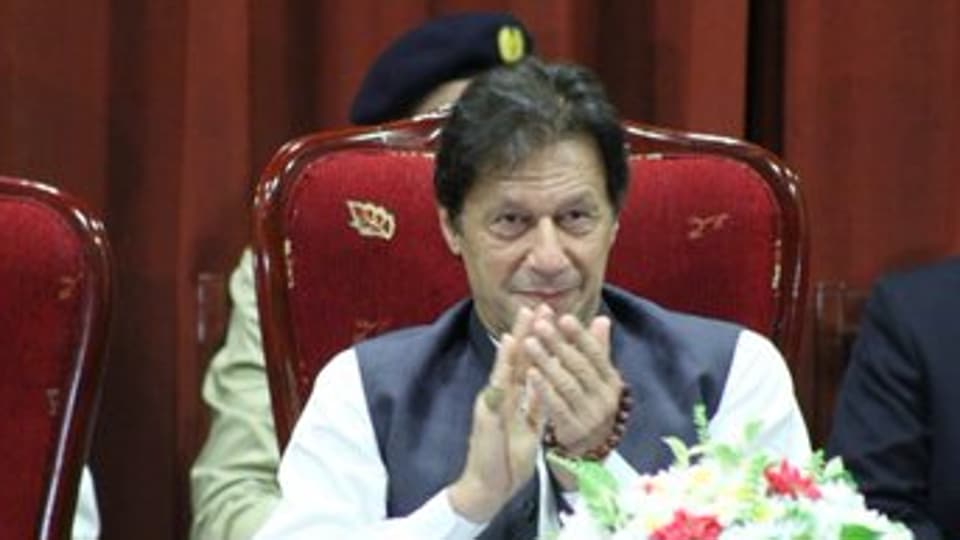
Pakistan prime minister Imran Khan, in a special address to the nation, on Monday declared that Islamabad’s Kashmir policy was at a “decisive” point. He said he wanted to let citizens know what is Pakistan’s plan going forward after India scrapped Article 370, which provided for Jammu and Kashmir’s special status.
New Delhi through a Presidential order on August 5 abrogated Article 370 and further divided the erstwhile state into two Union territories: Jammu and Kashmir and Ladakh.
“Pakistan’s Kashmir policy is at a decisive point. So I have decided to take the nation into confidence over Kashmir issue.
My dear Pakistanis, today I only want to talk on Kashmir; what the issue is, what we have done so far and what is the way forward,” said Imran Khan, addressing his people.
The Pakistan PM said he will speak at the UN General Assembly on September 27 and highlight the Kashmir issue on world stage.
“We have succeeded in internationalising the issue of Kashmir, we talked to world leaders and embassies. UN for the first time since 1965, convened a meeting on Kashmir issue. Even international media has picked it up,” said Khan.
Imran Khan alleged that India’s decision of ending J&K’s special status runs counter to UN resolutions on Kashmir. He said it is even against India’s own Constitution, and the promises made by India’s first Prime Minister Jawaharlal Nehru and father of the nation Mahatma Gandhi.
The Pakistan PM further alleged that New Delhi tried to blacklist Pakistan in FATF. Pakistan has been moved to a list that entails close monitoring by the global terror financing watchdog FATF after Islamabad was found to have failed to deliver on most compliance parameters set for it.
Imran Khan said that he tried to “dialogue” with India several times but had to wait as New Delhi was going through an election phase.
“We tried engaging India to a dialogue several times. But India was also going through the election phase so we waited that to end. Just then Pulwama happened and they instantly pointed fingers towards Pakistan,” said Khan.
Earlier, speaking to students in Khyber Pakhtunkhwa, Khan said that he will fight the case for “freedom of Kashmir” till the very end. He even nominated himself the “ambassador” for the said cause.
“I have nominated myself as the Ambassador of Kashmir, and will fight the case for freedom of Kashmir till the very end,” said Khan.
Tensions between India and Pakistan spiked after India abrogated provisions of Article 370 of the Constitution, evoking strong reactions from Pakistan.
India has categorically told the international community that the scrapping of Article 370 was an internal matter and also advised Pakistan to accept the reality.
In a 45-minute long meeting with US president Donald Trump, who had offered to mediate on the Kashmir issue, PM Modi said: “India and Pakistan were together before 1947 and I am confident that we can discuss and solve our problems together.”





