
 E-Paper







Follow the latest breaking news, major developments and agenda-setting stories from India and around the world with the newsdesk at Hindustan Times. Operating round the clock, the desk brings together experienced editors, reporters and correspondents to deliver fast, accurate and contextual reporting across subjects that influence public policy, governance, business, society and international affairs. The HT News Desk covers politics, elections, government policies, the economy, business and markets, science and technology, the environment, law and order, infrastructure, education, climate issues and geopolitics, while closely tracking developments across states, institutions and global capitals. The team also leads coverage of major breaking news events, policy announcements, court proceedings, natural disasters, public emergencies and significant international developments. Reports published by the newsdesk are based on information gathered from reporters on the ground, official statements, government agencies, court records, regulatory filings, recognised institutions and other authoritative sources. Stories undergo editorial scrutiny and verification processes to ensure accuracy, fairness and relevance, and are updated as events evolve and additional information becomes available. Whether covering a key political decision in New Delhi, an economic policy shift affecting millions, a landmark court ruling or a major global event, the HT News Desk aims to provide readers with reliable, fact-based journalism that delivers not only the latest developments but also the context and analysis needed to understand their wider implications.
‘My Uttarakhand no longer exists’: A poet rues the changing landscape of his state
“Every time I go to Uttarakhand, I have a feeling that it’s not my Uttarakhand. There has been a great change in the demographic profile. People have moved from hills to plains. It’s depopulating the hills,” writes poet Pushpesh Pant.


The Uttarakhand that I could call ‘my Uttarakhand’ no longer exists. I was born in a village near Nainital in Kumaon. I was educated in Nainital till my master’s. I have very vivid memories of Uttarakhand. I miss the unpolluted atmosphere, the tranquility, the sight of hills, the security — I never have to lock my house if I am crossing the road to buy a cigarette. There were orchards where I grew up. You ate a wide variety of apples: black delicious, red delicious, golden, mother pumpkin, King Kong, number 22. You had Alexander pear, you had black cherries, you had morpankh apricot, you had jagnel nashpati, you name it.
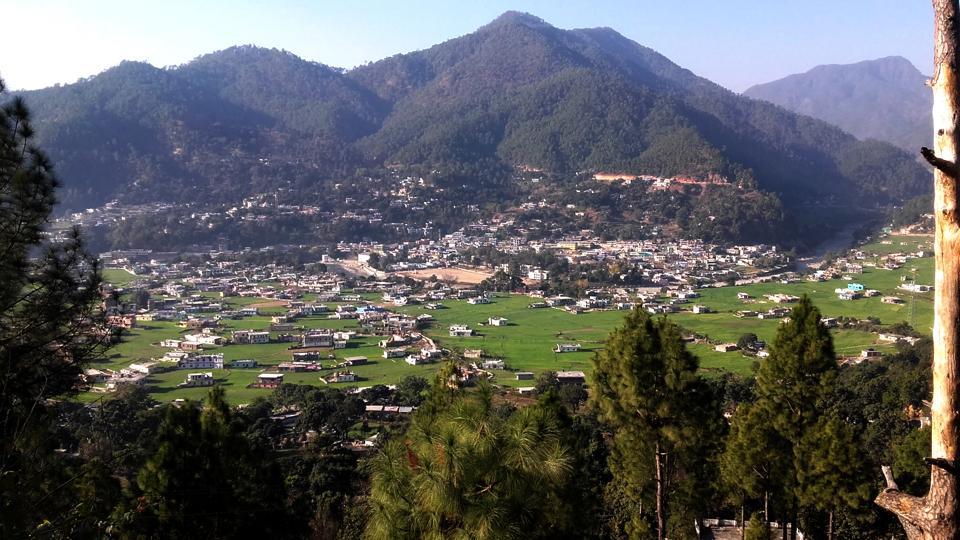
I still treat myself as a refugee from Uttarakhand in Delhi. I spend, on an average, half-a-year in Uttarakhand. But every time I go to Uttarakhand, I have a feeling that it’s not my Uttarakhand. There has been a great change in the demographic profile. People have moved from hills to plains. It’s depopulating the hills.
People are developing Uttarakhand for tourism: spas, resorts, hotels, cottages. The large-scale real estate development is ruining Uttarakhand to my mind. Where I remember a hilltop covered by pine forest, you suddenly see a jungle of concrete. Where you remember a beautiful walk through oak trees, you find there is a gated colony. But this physical change has implications for state parties, for state elections. If there is so much building, there has to a building mafia, a land mafia, a transport mafia, and once you promote tourism, you have an alcohol mafia, a flesh trade mafia. Both Congress and BJP are crooked parties gaining from this. A classic example of this was when the central government and the green tribunal had issued a diktat that there should be no construction in the fragile economic zone in Gangotri; the current Congress chief minister and the former BJP chief minister jointly petitioned the Prime Minister against the ban. In the context of Uttarakhand, especially in the current election, it’s extremely difficult to make a distinction between Congress and BJP because of the number of people who have switched from one party to another.
My prescription to save Uttarakhand would be to take away a lot of authority from the hands of the state government. In a remote, ecologically fragile state, a chief minister should not have the power that he does in a big, heartland state. A place like Uttarakhand needs decentralisation. In Niyamgiri, you can’t operate a construction project unless two thirds of a panchayat approves. There should also be a strict monitoring by the central government — if it makes an environmentally safe law, the state government shouldn’t be allowed to violate it. Look at the Kedarnath disaster. Twice in two years, you have had a natural calamity and the government has not learnt anything.
People are profiting from a model of development that doesn’t suit Uttarakhand. Why do you have a capital city? Why can’t you have different offices of the government spread through the state? The way to save Uttarakhand is to think small.
(As told to Snigdha Poonam. Pushpesh Pant is a noted Indian academic and food historian)





