
The Maharashtra government is considering action against wealthy individuals and businesspersons who have acquired large tracts of agricultural land to create land banks but have left them uncultivated for years, a state minister indicated, sparking a row which prompted him to issue a clarification later.
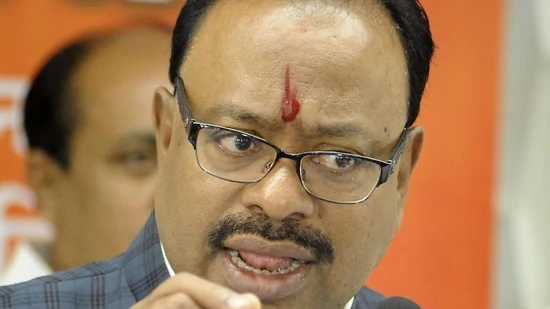
The state revenue minister, Chandrashekhar Bawankule, said that such landowners could be given three to five years to bring their holdings under cultivation, failing which the government may invoke the provisions of the Maharashtra Tenancy Act, 1948, to take over their management.
The minister's remarks sparked controversy, prompting him to issue a clarification stating that his statement had been taken out of context. He maintained that the proposed action was directed only at large landowners who had purchased agricultural land as an investment and left it uncultivated for years, and not at ordinary farmers cultivating their own holdings.
What the minister said
Speaking to reporters at Koradi in Nagpur district on Saturday (November 21), Bawankule said several wealthy traders and businesspersons had been purchasing large tracts of agricultural land, ranging from 100 to 200 acres and even up to 400 acres, without undertaking any farming.
Instead, these properties were being treated as long-term investments and kept uncultivated, he said.
{{/usCountry}}Instead, these properties were being treated as long-term investments and kept uncultivated, he said.
{{/usCountry}}Bawankule said that while leaving agricultural land fallow due to drought or inadequate rainfall could be understandable, the same could not be justified when rainfall was sufficient.
“If people purchase large tracts of agricultural land from farmers but do not use them for cultivation, they must bring the land under agricultural use within three years. Otherwise, the government may have to consider introducing a law to take over such land,” Bawankule had said.
The clarification
Following the controversy, the minister clarified on Monday that ordinary farmers had nothing to fear and that the government had no intention of taking over land belonging to those who cultivate their own holdings.
Referring to section 65 of the Maharashtra Tenancy and Agricultural Lands Act, 1948, Bawankule said the provision allows the government to take over the management of agricultural land if it remains uncultivated for three consecutive years. However, he stressed that this provision would not be used against ordinary farmers and small landholders.
“Land owned by ordinary farmers in Maharashtra will not be brought under the government's management under the Tenancy Act. There will be no interference with the holdings of farmers who cultivate their own land. Not even an inch of land belonging to an ordinary farmer will be taken over,” he said in a statement issued on Monday.
He clarified that his remarks were specifically directed at wealthy individuals who had purchased 50, 100 or even 200 acres from farmers to create land banks but had subsequently left the properties fallow. While some had constructed farmhouses on these holdings, actual agricultural activity was largely absent.
He said that the state could not afford to have large tracts of agricultural land lying idle, particularly when increasing agricultural output was essential to boosting the state's and the country's economy.
Bawankule said large landowners should bring their holdings under cultivation over the next three to five years. They could grow fodder, bamboo or other agricultural crops instead of keeping the land idle. Even those who had purchased land for investment or constructed farmhouses should ensure that some portion of their holdings was put to productive agricultural use, he added.
“It is acceptable if they have not undertaken farming so far, but they should start cultivating at least some crops on these lands within the next three years. My suggestion and appeal is that there is no objection to purchasing agricultural land or constructing farmhouses, but such land should not be left fallow,” he insisted.
Bawankule further stressed that the revenue department's responsibility was to protect the land ownership and rights of ordinary farmers, rather than take away their holdings. He urged farmers across Maharashtra not to harbour any apprehensions about the security of their land.
Government monitoring alleged illegal agricultural land transactions
The government has also been closely monitoring alleged illegal agricultural land transactions, particularly in Sindhudurg district. Bawankule had earlier warned that agricultural land could not be diverted for residential purposes in violation of the applicable provisions and that action would be taken against those found indulging in such transactions.
The Registration Act, 1908, governs land transactions in Maharashtra, along with the Maharashtra Stamp Act, 1958, and the Maharashtra Registration Rules, 1961. The registration process involves scrutiny of permissions from competent authorities, No Objection Certificates (NOCs) and proof of the prospective buyer's farmer status.
The government is also monitoring purchases of agricultural land by non-farmers. Bawankule had earlier clarified in the state legislature that even people from outside Maharashtra would have to furnish proof of their farmer status to purchase agricultural land in the state. Without such proof, they would not be permitted to acquire agricultural land in Maharashtra.
ABOUT THE AUTHOR
Faisal Malik is a senior journalist with over two and a half decades of experience covering Maharashtra’s politics, governance and public policy with a deep understanding of the state’s political landscape. He is a Senior Assistant Editor at Hindustan Times and has been associated with its Mumbai edition for more than a decade. Based in Mumbai, Faisal currently covers three major political parties in Maharashtra — Congress, Nationalist Congress Party (NCP) and NCP (Sharad Pawar). Over the years, he has extensively reported on major political developments, combining investigative insights with in-depth field reporting. His coverage has spanned a wide range of issues, from drought, farmer suicides, major development projects and grassroots challenges to major electoral battles, including three Lok Sabha and Maharashtra Assembly elections — 2014, 2019 and 2024. Before joining Hindustan Times, he worked with ‘The Asian Age’ and ‘Dainik Bhaskar’. An avid tea enthusiast, he enjoys reading history, Urdu literature and classical poetry. When away from the newsroom, he writes Urdu poetry inspired by human emotions, life's experiences, meaningful reflections and relationships. An amateur photographer, Faisal is passionate about capturing moments that often go unnoticed by the naked eye.
