

Sign in

The doomed coalition governments of Jammu and Kashmir

A timeline of the coalition governments that have ruled Jammu and Kashmir and their fate.

Updated on: Jun 19, 2018, 23:32:27 IST
Hindustan Times, New Delhi | By
Share
Share via
  • facebook
  • twitter
  • linkedin
Copy link
  • copy link

Of five coalition governments in Jammu and Kashmir since 1947, only the National Conference-Congress alliance (2009-2015) lasted a full term. Others collapsed mid-way, triggering instability. A timeline:
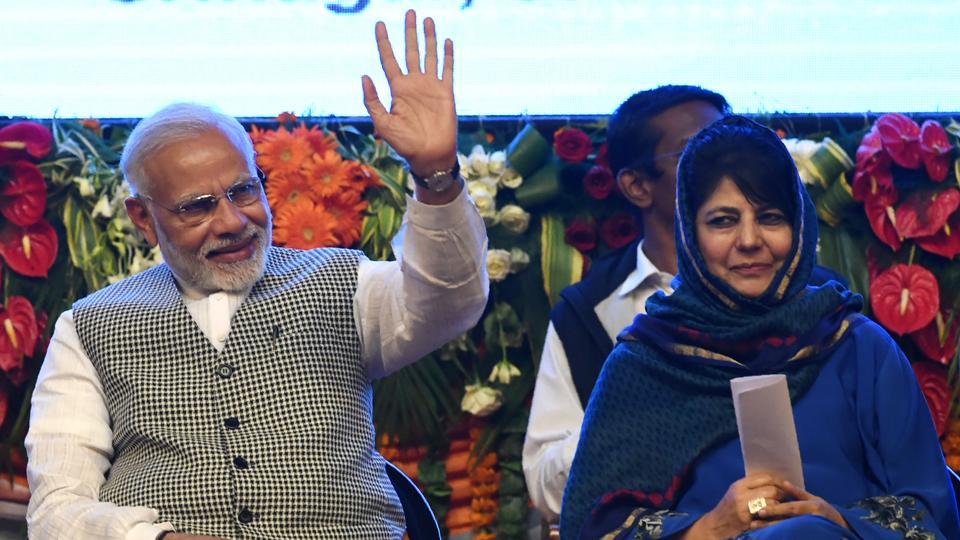
The BJP and PDP stitched up a power-sharing pact in 2015 but cracks surfaced soon after. (AFP)

2015-2018: PDP- BJP form a coalition of two parties that are ideologically poles apart but brought together by a hung assembly. While the PDP got all of its 28 seats in Muslim-majority Kashmir, the BJP romped home to an unprecedented victory in Hindu-dominated Jammu. The two stitched up a power-sharing pact but cracks surfaced soon after.

2009-2015: National Conference and Congress form an alliance government and take turns for the chief minister’s post.

2002-2008: The PDP and Congress stitch up a coalition government with rotational chief ministership of three years each. Mufti Mohammad Sayeed is at the helm upto November 2006 and paves the way for Ghulam Nabi Azad of Congress. But the coalition collapses after PDP pulls out in 2008 over the allotment of Kashmir land to the Amarnath Shrine Board.

1982-86: After the death of his father Sheikh Abdullah, National Conference president Farooq Abdullah wins elections and gets a majority. The Congress engineered defections in NC and topples the Farooq government. His brother-in-law Ghulam Ahmad Shah is propped up as chief minister with the backing of Congress. But, the government fails to complete its tenure.

1975-77: The year 1975 is witness to an accord between National Conference leader Sheikh Abdullah and prime minister Indira Gandhi allowing the former to become chief minister after more than two decades. In 1977, the Congress withdraws support to Sheikh, leading to dissolution of assembly.

  • HT News Desk
    ABOUT THE AUTHOR
    HT News Desk

    Follow the latest breaking news, major developments and agenda-setting stories from India and around the world with the newsdesk at Hindustan Times. Operating round the clock, the desk brings together experienced editors, reporters and correspondents to deliver fast, accurate and contextual reporting across subjects that influence public policy, governance, business, society and international affairs. The HT News Desk covers politics, elections, government policies, the economy, business and markets, science and technology, the environment, law and order, infrastructure, education, climate issues and geopolitics, while closely tracking developments across states, institutions and global capitals. The team also leads coverage of major breaking news events, policy announcements, court proceedings, natural disasters, public emergencies and significant international developments. Reports published by the newsdesk are based on information gathered from reporters on the ground, official statements, government agencies, court records, regulatory filings, recognised institutions and other authoritative sources. Stories undergo editorial scrutiny and verification processes to ensure accuracy, fairness and relevance, and are updated as events evolve and additional information becomes available. Whether covering a key political decision in New Delhi, an economic policy shift affecting millions, a landmark court ruling or a major global event, the HT News Desk aims to provide readers with reliable, fact-based journalism that delivers not only the latest developments but also the context and analysis needed to understand their wider implications.Read More