
 E-Paper







Follow the latest breaking news, major developments and agenda-setting stories from India and around the world with the newsdesk at Hindustan Times. Operating round the clock, the desk brings together experienced editors, reporters and correspondents to deliver fast, accurate and contextual reporting across subjects that influence public policy, governance, business, society and international affairs. The HT News Desk covers politics, elections, government policies, the economy, business and markets, science and technology, the environment, law and order, infrastructure, education, climate issues and geopolitics, while closely tracking developments across states, institutions and global capitals. The team also leads coverage of major breaking news events, policy announcements, court proceedings, natural disasters, public emergencies and significant international developments. Reports published by the newsdesk are based on information gathered from reporters on the ground, official statements, government agencies, court records, regulatory filings, recognised institutions and other authoritative sources. Stories undergo editorial scrutiny and verification processes to ensure accuracy, fairness and relevance, and are updated as events evolve and additional information becomes available. Whether covering a key political decision in New Delhi, an economic policy shift affecting millions, a landmark court ruling or a major global event, the HT News Desk aims to provide readers with reliable, fact-based journalism that delivers not only the latest developments but also the context and analysis needed to understand their wider implications.
Prakash Javadekar urges farmers to plant trees on agricultural land
The Union environment ministry had released Rs 47,436 crore to 27 states for compensatory afforestation and other forest conservation work last August.


Union environment minister Prakash Javadekar on Monday encouraged farmer to plant trees on their lands which can be sold and transported when ready.
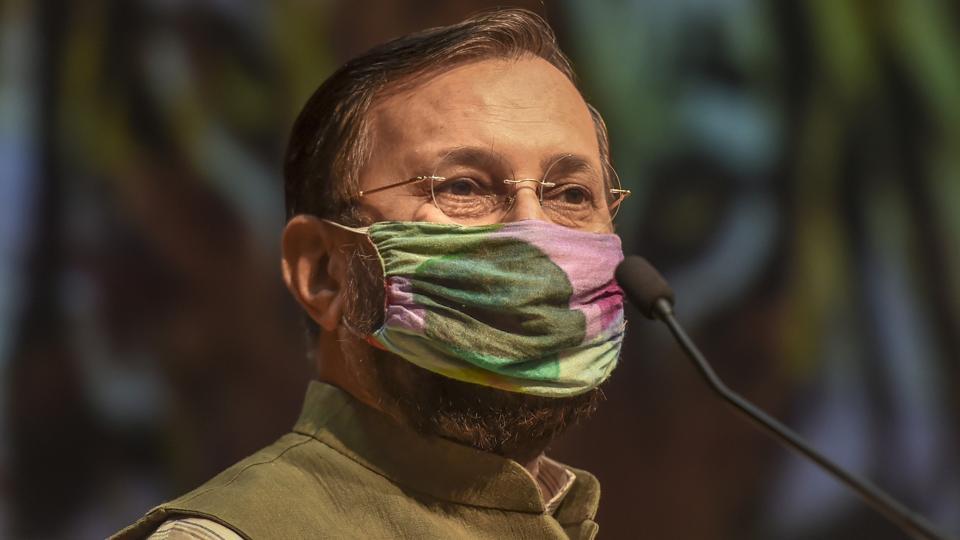
Addressing a virtual meeting with forest ministers of all states and Union territories, Javadekar said, “Farmers shouldn’t fear that their land will become forest land. The land will remain theirs. They can sell the trees when needed and transport them.”
With the Compensatory Afforestation Fund money available with states, water and fodder augmentation projects will have to be taken up in one forest in each state; afforestation of river banks and floodplains of all major rivers will be taken up; school nurseries will be developed in 2000 schools across the country and urban forestry projects will also be taken up with private participation, he added.
The Union environment ministry had released Rs 47,436 crore to 27 states for compensatory afforestation and other forest conservation work last August.
“At least 80% of the compensatory afforestation funds are to be utilised only for afforestation and rest of the 20% can be utilised for capacity and infrastructure development like buildings or vehicles. The money should not be used for payment of salaries, traveling allowances and medical expenses,” he said.
Javadekar also asked states to come up with an outline of Project Dolphin (which was announced by PM Modi on Independence Day) within a fortnight. The project will involve long-term conservation of Gangetic dolphins and dolphins in the sea along the coasts.
Sanjay Kumar, director general of forests, said there is a sub-mission on agroforestry under the ministry of agriculture which provides 50% subsidy to farmers for plantation. The environment ministry is also considering making common lands accessible to private parties with an arrangement of benefit sharing with locals. “An arrangement has to be developed which is friendly and acceptable to local people because common lands provide various benefits to locals. We have received a number of suggestions and requests on this matter. But it’s a complex matter and the policy is in conceptual stage,” he said.
“The Environment Ministry had put out a draft Forest Policy in 2019. The policy had aimed to take us back to the 1980s when state forest departments were basically operating as commercial plantation growing agencies with no care for India’s forest diversity or the relationships between communities and forests. The 2019 policy was heavily criticised by many for various reasons and it never got finalised. This new announcement by the minister reflects this draft policy and it may take us back to those years of heavily funded plantation forestry. The policy is completely unsuitable for the new ecological realities we are in today,” said Manju Menon, senior fellow, Centre for Policy Research.





