E-Paper







Follow the latest breaking news, major developments and agenda-setting stories from India and around the world with the newsdesk at Hindustan Times. Operating round the clock, the desk brings together experienced editors, reporters and correspondents to deliver fast, accurate and contextual reporting across subjects that influence public policy, governance, business, society and international affairs. The HT News Desk covers politics, elections, government policies, the economy, business and markets, science and technology, the environment, law and order, infrastructure, education, climate issues and geopolitics, while closely tracking developments across states, institutions and global capitals. The team also leads coverage of major breaking news events, policy announcements, court proceedings, natural disasters, public emergencies and significant international developments. Reports published by the newsdesk are based on information gathered from reporters on the ground, official statements, government agencies, court records, regulatory filings, recognised institutions and other authoritative sources. Stories undergo editorial scrutiny and verification processes to ensure accuracy, fairness and relevance, and are updated as events evolve and additional information becomes available. Whether covering a key political decision in New Delhi, an economic policy shift affecting millions, a landmark court ruling or a major global event, the HT News Desk aims to provide readers with reliable, fact-based journalism that delivers not only the latest developments but also the context and analysis needed to understand their wider implications.
J-K briefing: Foreign minister S Jaishankar meets US special envoy
Khalilzad, who is in Delhi on a two-day trip to forge consensus on US’ efforts to end the fighting in Afghanistan, is the senior-most American official to visit India after New Delhi’s surprise move to end Kashmir’s special status and split it into two union territories — Jammu & Kashmir and Ladakh.


United States special envoy for Afghan reconciliation Zalmay Khalilzad was on Tuesday briefed by Indian interlocutors on New Delhi’s decision to revoke the special status of Jammu and Kashmir, people familiar with developments said.
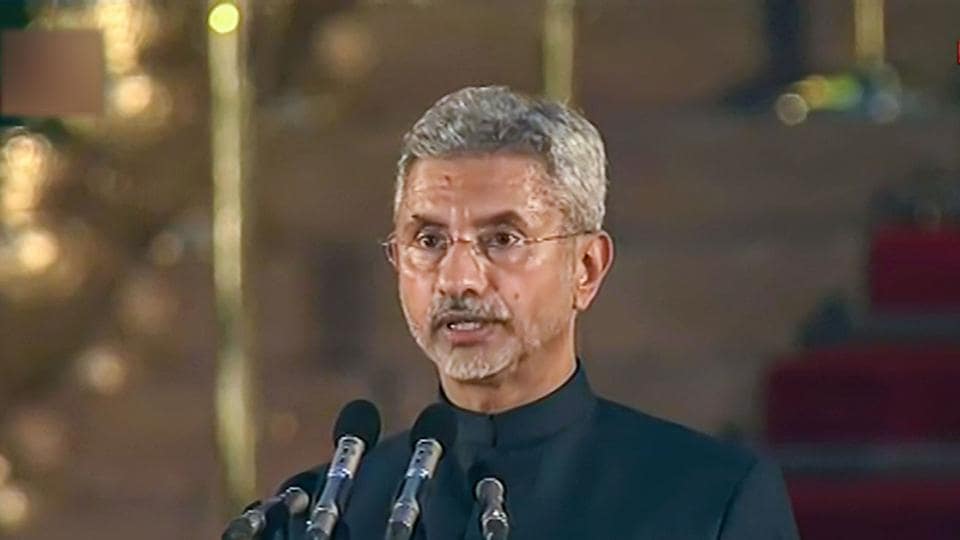
Khalilzad, who is in Delhi on a two-day trip to forge consensus on US’ efforts to end the fighting in Afghanistan, is the senior-most American official to visit India after New Delhi’s surprise move to end Kashmir’s special status and split it into two union territories — Jammu & Kashmir and Ladakh.
There was no official readout on the meeting between Khalilzad and external affairs minster S Jaishankar, who only tweeted he had “useful discussions” with the US special envoy. “Provided a comprehensive update on the situation in Afghanistan. Shared views on how we could work together effectively,” Jaishankar wrote.
When Khalilzad questioned whether the repeal of special constitutional provisions on Kashmir would be beneficial, he was told by the interlocutors that this was an internal matter and that the changes were aimed at the development of the region, the people cited above said. “He didn’t say anything negative about the developments and heard our views,” said a person who declined to be identified.
With reports suggesting that the US and the Taliban are very close to a deal on the withdrawal of foreign forces from Afghanistan and a counterterrorism guarantee that Afghan soil won’t be used by terror groups, Khalilzad briefed the Indian side on the reasons behind Washington’s efforts to hasten the drawdown of forces.
Khalilzad indicated the two sides were moving towards an agreement that could be concluded by September 1 or earlier, and this could be followed by discussions on a ceasefire and intra-Afghan dialogue to find a political settlement, the people said.
The Indian side raised several “pointed questions” about the Taliban’s proximity to the Pakistani military establishment and the implications for Afghanistan, but Khalilzad said this was less an issue of “trusting Pakistan or the Taliban” and more about ending the war as there were no returns for the US even after spending about $45 billion a year in Afghanistan, the person cited above said.
The people said Khalilzad believed the US and India should focus on peace in Afghanistan because of their common stake in achieving stability in the war-torn country. Khalilzad also suggested that India could a channel of communication with the Taliban, they added.
New Delhi has so far held off on holding direct talks with the Taliban even though the Indian Army chief had said earlier this year that the government should consider the possibility of such talks. India has aligned its position with that of the Afghan government on this issue and called for an Aghan-led, Afghan-owned and Afghan-controlled peace process.