
 E-Paper







Follow the latest breaking news, major developments and agenda-setting stories from India and around the world with the newsdesk at Hindustan Times. Operating round the clock, the desk brings together experienced editors, reporters and correspondents to deliver fast, accurate and contextual reporting across subjects that influence public policy, governance, business, society and international affairs. The HT News Desk covers politics, elections, government policies, the economy, business and markets, science and technology, the environment, law and order, infrastructure, education, climate issues and geopolitics, while closely tracking developments across states, institutions and global capitals. The team also leads coverage of major breaking news events, policy announcements, court proceedings, natural disasters, public emergencies and significant international developments. Reports published by the newsdesk are based on information gathered from reporters on the ground, official statements, government agencies, court records, regulatory filings, recognised institutions and other authoritative sources. Stories undergo editorial scrutiny and verification processes to ensure accuracy, fairness and relevance, and are updated as events evolve and additional information becomes available. Whether covering a key political decision in New Delhi, an economic policy shift affecting millions, a landmark court ruling or a major global event, the HT News Desk aims to provide readers with reliable, fact-based journalism that delivers not only the latest developments but also the context and analysis needed to understand their wider implications.
Indian Railway to become world first ‘net-zero’ carbon emitter by 2030: Piyush Goyal
As per the NITI Aayog data, Carbon Dioxide emission from Indian Railway was around 6.84 million tons in 2014. Amid global concern over climate change, Indian railways is also working to reduce the carbon emission.


Indian Railways will become the world first “net-zero” carbon emitter by 2030, said Railway Minister Piyush Goyal on Tuesday.
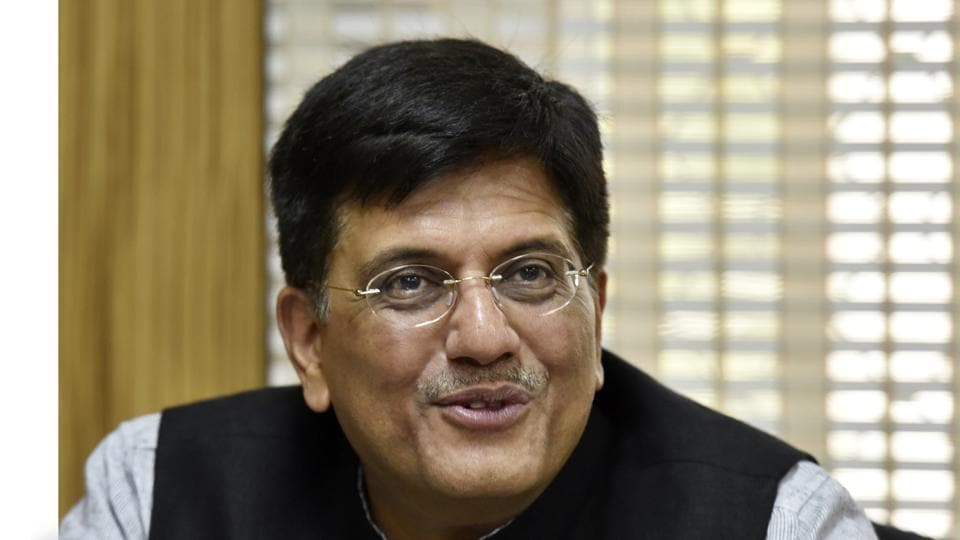
“By 2030, we are working to make the Indian railways the world’s first net-zero railway. The Government is phasing out the old coal plants, which is going to help reduce environmental pollution, and will also create the demand for new plants and spur the investment cycle,” Goyal said while speaking at third India Energy Forum CERAWeek 2019.
As per the NITI Aayog data, Carbon Dioxide emission from Indian Railway was around 6.84 million tons in 2014. Amid global concern over climate change, Indian railways is also working to reduce the carbon emission.
Goyal said that the Indian railways will be 100 percent electrically run by 2023. “By the year 2023, Indian railways will be the first railways of the size and scale that we have to be 100 percent electrically run.”
“We will demonstrate to the world, the path PM Narendra Modi ji has shown to the world, the path towards climate justice and everybody contributing to make the world a better place to live in,” he added.
While talking about the energy sector, Goyal said that India is willing to engage with modern technology and is looking at self-sufficiency in domestic production.
“The energy sector is on the verge of a revolution in the country. We are willing to engage with modern technology and are looking at self-sufficiency in domestic production,” Goyal said.
“India has opened up its Foreign Direct Investment to almost all sectors, except for those which are a Security Concern or a National Policy concern,” he added.
India is the third-largest energy consumer in the world in absolute terms, after the United States, but per capita, energy consumption is very low. There is a need for a healthy mix of all commercial energy sources.





