
 E-Paper







Follow the latest breaking news, major developments and agenda-setting stories from India and around the world with the newsdesk at Hindustan Times. Operating round the clock, the desk brings together experienced editors, reporters and correspondents to deliver fast, accurate and contextual reporting across subjects that influence public policy, governance, business, society and international affairs. The HT News Desk covers politics, elections, government policies, the economy, business and markets, science and technology, the environment, law and order, infrastructure, education, climate issues and geopolitics, while closely tracking developments across states, institutions and global capitals. The team also leads coverage of major breaking news events, policy announcements, court proceedings, natural disasters, public emergencies and significant international developments. Reports published by the newsdesk are based on information gathered from reporters on the ground, official statements, government agencies, court records, regulatory filings, recognised institutions and other authoritative sources. Stories undergo editorial scrutiny and verification processes to ensure accuracy, fairness and relevance, and are updated as events evolve and additional information becomes available. Whether covering a key political decision in New Delhi, an economic policy shift affecting millions, a landmark court ruling or a major global event, the HT News Desk aims to provide readers with reliable, fact-based journalism that delivers not only the latest developments but also the context and analysis needed to understand their wider implications.
India suggests voting to break UNSC reform deadlock
The reform process has stalled during almost ten rounds of negotiations primarily because ‘United for Consensus’, a 12-member group that opposes adding permanent members, has used the procedural gambit of preventing the adoption of a negotiating text to be the basis of the talks and move it forward.


To break the decade-long deadlock in the negotiations for Security Council reform, India has suggested adopting the General Assembly’s rules of procedure with voting to deny “naysayers” their virtual veto under the current process.
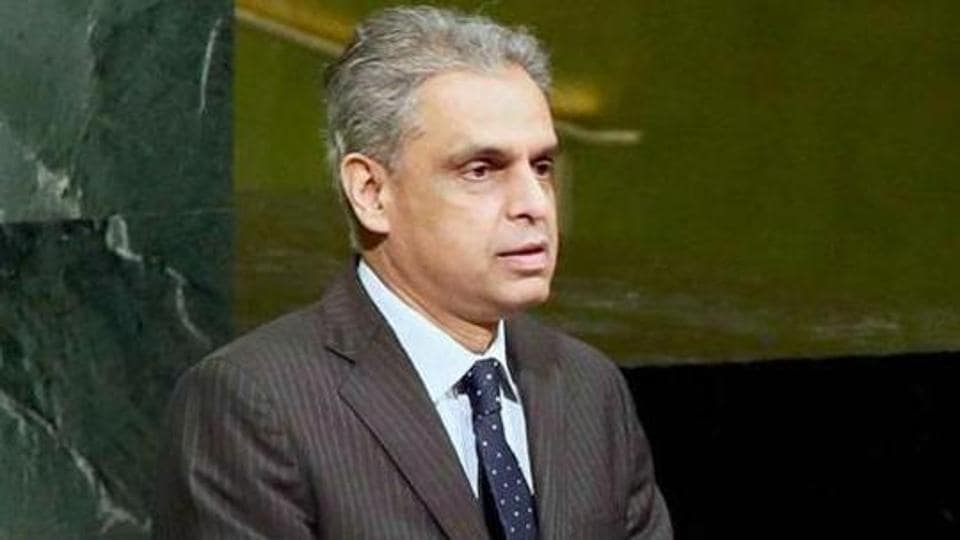
India’s Permanent Representative Syed Akbaruddin told the General Assembly on Tuesday: “Naysayers cannot be allowed to cast a dark shadow over the entire membership and hold the overwhelming majority back.
“Some amongst us cannot hold the entire process hostage by bending the rules of negotiations.”
The reform process has stalled during almost ten rounds of negotiations primarily because ‘United for Consensus’, a 12-member group that opposes adding permanent members, has used the procedural gambit of preventing the adoption of a negotiating text to be the basis of the talks and move it forward.
It is led by Italy and includes Pakistan.
To overcome this hurdle, Akbaruddin said that the Inter-Governmental Negotiations (IGN), as the reform process is known, should operate under normal rules of procedure like all other General Assembly processes.
“In the General Assembly, all a naysayer can do is, at best, cast a negative vote,” he said.
After a vote, the majority prevails in the Assembly.
The General Assembly works on the basis of “give and take negotiations, focused on a document with the co-chairs or facilitators, acting as agents, for facilitating dialogue,” Akbaruddin said.
During the meeting of the General Assembly on Security Council reform, he was speaking on behalf of the G-4, which is made up of India, Brazil, Japan and Germany that advocate for increasing the number of permanent members in the Council and mutually support their candidacies for those seats.
A majority of the countries that spoke during the meeting supported expanding the permanent membership of the Council.
To help move the negotiations along, Akbaruddin suggested that the negotiations should continue throughout the year.
During the last Assembly session, the IGN met only between January and June and voted in July.
“The more opportunities for dialogue, the greater the chances for making progress,” he said.
“Taking the cue from success stories of the past session, we suggest that our discussions on Security Council reforms should begin at the earliest, and there should not be any artificial deadlines to end discussions prematurely in June,” he added.
During the meeting, Portugal explicitly came out in support of India’s permanent membership in the Council.
Permanent Representative Francisco Duarte Lopes said: “A more representative Security Council requires, at the very least, the presence of the African continent, Brazil and India.”
A majority of the countries endorsed increasing the number of permanent members in the Security Council to give Asia, Africa and Latin America a determining voice.
Sierra Leone’s Permanent Representative Francis Mustapha Kai-Kai, who spoke on behalf of the 54 nations of the African group, said that his continent demanded two permanent seats to “redress the historical injustice”.
Representing the 22-member Arab group, Kuwait’s Permanent Representative Mansour Ayyad Al-Otaibi called for Arab representation in the ranks of permanent members.
The 15-member Caribbean group represented by Guyana’s Permanent Representative Rudolph Michael Ten-Pow said that almost half the world’s population in Africa, Latin America and the Caribbean has been denied permanent representation on the Council and this should be remedied.
US Mission’s Political Coordinator Rodney Hunter said Washington supported a “modest” increase in the number of permanent members.
But there were discordant voices, too.
Pakistan’ Permanent Representative Maleeha Lodhi opposed increasing the number of permanent members, and said: “If the Council cannot reconcile the interests of its five permanent members, how will it cope with the interests of a bigger membership?”
China’s Permanent Representative Ma Zhaoxu opposed setting timelines for reforms or “arbitrarily launching text-based negotiations”.





