
 E-Paper







Follow the latest breaking news, major developments and agenda-setting stories from India and around the world with the newsdesk at Hindustan Times. Operating round the clock, the desk brings together experienced editors, reporters and correspondents to deliver fast, accurate and contextual reporting across subjects that influence public policy, governance, business, society and international affairs. The HT News Desk covers politics, elections, government policies, the economy, business and markets, science and technology, the environment, law and order, infrastructure, education, climate issues and geopolitics, while closely tracking developments across states, institutions and global capitals. The team also leads coverage of major breaking news events, policy announcements, court proceedings, natural disasters, public emergencies and significant international developments. Reports published by the newsdesk are based on information gathered from reporters on the ground, official statements, government agencies, court records, regulatory filings, recognised institutions and other authoritative sources. Stories undergo editorial scrutiny and verification processes to ensure accuracy, fairness and relevance, and are updated as events evolve and additional information becomes available. Whether covering a key political decision in New Delhi, an economic policy shift affecting millions, a landmark court ruling or a major global event, the HT News Desk aims to provide readers with reliable, fact-based journalism that delivers not only the latest developments but also the context and analysis needed to understand their wider implications.
India has culture of living in harmony with nature: Prakash Javadekar at UN
Since time immemorial, India has a culture of not just conserving and protecting nature, but living in harmony with it, Minister of Environment, Forest and Climate Change Prakash Javadekar said on Thursday.


Since time immemorial, India has a culture of not just conserving and protecting nature, but living in harmony with it, Minister of Environment, Forest and Climate Change Prakash Javadekar said on Thursday.
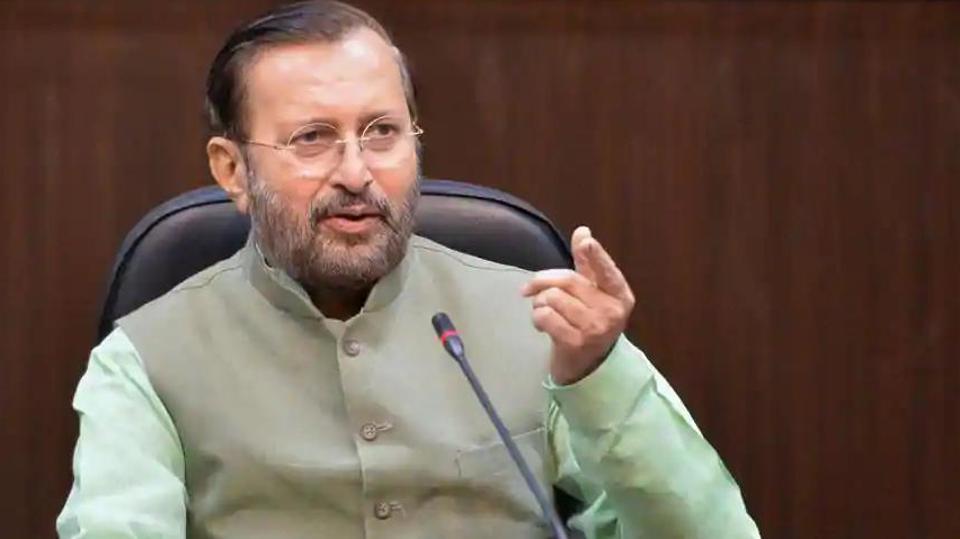
Speaking at the Biodiversity Summit at United Nations, he said, “the emergence of Covid-19 has emphasized the fact that unregulated exploitation of natural resources coupled with unsustainable food habits and consumption patterns lead to destruction system that supports human life.”
“As enshrined in our Vedic scripts ‘Prakriti Rakshati Rakshita’ that is if you protect nature, nature will protect you,” he added.
Javadekar said that India has enhanced the forest and tree cover to 24.56 per cent in the last decade.
“In the course of last decade, India has enhanced the combined forest and tree cover to 24.56 per cent of the total geographical area of the country,” he said.
India has the highest number of tigers in the wild and the number has doubled ahead of the 2022 deadline, the Union Minister stated.
Prime Minister Narendra Modi on August 15 this year had announced two projects, Project Lion and Project Dolphin, to preserve the biodiversity of the nation.
He further said India aims to restore 26 million hectares of degraded and deforested land and achieve land-degradation neutrality by 2030.
“India has operationalized a system for access and benefit-sharing provisions of the Convention on Biological Diversity through a national network of 250,000 Biodiversity Management Committees across the country involving locals and 170,000 Peoples Biodiversity Registers for documentation of biodiversity,” he said.
The post-2020 global biodiversity framework that will be adopted at the 15th Conference of Parties to the CBD in 2021 provides a good opportunity to enhance efforts to conserve and protect nature, the Union Minister said.
“India has already taken a leadership role in order to conserve biodiversity by organizing two Conference of Parties (CoPs) within a span of less than a year,” he said. “We organized CoP 14 of UNCCD during September 2019 in New Delhi, followed by CoP 13 of the Convention on Migratory Species (CMS) in Gandhinagar during February 2020.”
Javadekar said that India has been championing the cause of “climate action” through conservation, sustainable lifestyle, and green development model.





