
 E-Paper






Utkarsh Anand is the National Legal Editor at Hindustan Times, where he leads the newspaper's coverage of the Supreme Court, constitutional law, the judiciary and the Union law ministry. He joined Hindustan Times in 2020 after stints at Press Trust of India (PTI), The Indian Express and CNN-News18, and has over two decades of experience reporting on law, governance and public policy. His work has focussed on some of India's most consequential constitutional and legal developments, including the Supreme Court's judgments on Article 370, marriage equality, decriminalisation of homosexuality, the Babri Masjid dispute, electoral reforms and judicial appointments. He specialises in making complex legal proceedings and judgments accessible to readers while examining their wider social and political impact. Beyond daily reportage, Utkarsh has led investigative projects and enterprise reporting that have shaped public debate and prompted institutional responses. His work has received several journalism awards, including the Ramnath Goenka Excellence in Journalism Award. As National Legal Editor, he has also played a key role in expanding Hindustan Times' legal journalism footprint, mentoring reporters and strengthening coverage across platforms. A Chevening South Asia Journalism Programme Fellow, Utkarsh regularly writes analyses on the judiciary and constitutional issues, and his reporting is widely followed by lawyers, judges, policymakers, academics and readers seeking clarity on India's evolving legal landscape.
In a first, retired Supreme Court judge Rohinton Nariman sets up YouTube channel
The channel, called ‘Justice Nariman Official Channel’, went live on April 16 showcasing 48 full-length videos of his lectures on law, history, religion, music, spirituality among several other topics


New Delhi: The pace of developments in technology and the ability of social media to bring the world closer have transcended professional disciplines and stereotypes. Justice Rohinton F Nariman has created a classic example of embracing this rapid innovation by becoming the first retired Supreme Court judge to start an official YouTube channel.
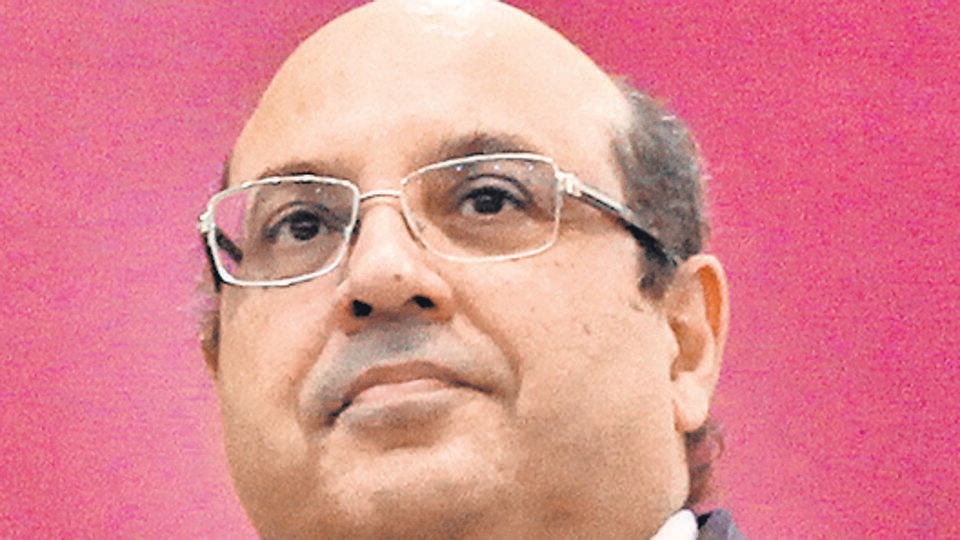
The channel, called ‘Justice Nariman Official Channel’, went live on April 16 showcasing 48 full-length videos of his lectures on law, history, religion, music, spirituality among several other topics. Most of these lectures were delivered during his tenure as a Supreme Court judge.
According to people familiar with the development, starting a YouTube channel was justice Nariman’s idea that he nurtured with a lawyer friend, and worked on it for almost a month before making it live on Saturday last week. As of Monday evening, the channel had about 1.37k followers.
Ordained a Parsi priest at the age of 12, justice Nariman left the Supreme Court in August 2021 following an eventful tenure of seven years.
There are a number of firsts one can associate with justice Nariman. His trajectory as a lawyer and as a judge has been exceptional from the word go. No less than the then Chief Justice of India had to make sure he donned the twin coat with gown. In 1993, then CJI MN Venkatachaliah amended the rules to designate him as a senior advocate at the young age of 37 against the mandatory 45.
He was appointed Solicitor General of India in July 2011 and served till February 2013 when he resigned from the post reportedly due to difference of opinion with then Union law minister, Ashwani Kumar, on certain crucial cases pending before the top court.
In July 2014, he was elevated to the Supreme Court as a judge, earning yet another distinction of becoming only the fifth lawyer in the judicial history to be directly appointed from the bar.
As a judge, justice Nariman was associated with several path-breaking verdicts. Some of his landmark verdicts include quashing the much-abused Section 66A of the Information Technology Act that authorised police to arrest people for social media posts construed offensive; expediting the trial in the Babri demolition case; declaring privacy as a fundamental right; striking down Section 377 of the Indian Penal Code that criminalised homosexuality and holding instant triple talaq as null and void.
Son of eminent jurist Fali S Nariman, justice Nariman is a prominent scholar of Zoroastrianism and comparative religion. He has delivered various lectures on religion and spirituality across the world. Having studied the Gathas, he produced a comprehensive analysis of the scriptures in his book, “The Inner Fire: Faith, Choice and Modern Day Living in Zoroastrianism.”





