
 E-Paper







Follow the latest breaking news, major developments and agenda-setting stories from India and around the world with the newsdesk at Hindustan Times. Operating round the clock, the desk brings together experienced editors, reporters and correspondents to deliver fast, accurate and contextual reporting across subjects that influence public policy, governance, business, society and international affairs. The HT News Desk covers politics, elections, government policies, the economy, business and markets, science and technology, the environment, law and order, infrastructure, education, climate issues and geopolitics, while closely tracking developments across states, institutions and global capitals. The team also leads coverage of major breaking news events, policy announcements, court proceedings, natural disasters, public emergencies and significant international developments. Reports published by the newsdesk are based on information gathered from reporters on the ground, official statements, government agencies, court records, regulatory filings, recognised institutions and other authoritative sources. Stories undergo editorial scrutiny and verification processes to ensure accuracy, fairness and relevance, and are updated as events evolve and additional information becomes available. Whether covering a key political decision in New Delhi, an economic policy shift affecting millions, a landmark court ruling or a major global event, the HT News Desk aims to provide readers with reliable, fact-based journalism that delivers not only the latest developments but also the context and analysis needed to understand their wider implications.
Govt seeks to make FCRA laws more stringent
The legislation seeks to prohibits transfer of foreign funds to a third party and designates State Bank of India, New Delhi, as the only bank where such funds can be received.


The Centre on Sunday sought to make the Foreign Contribution Regulation Act (FCRA) – the law that governs foreign funding -- more stringent through a bill which proposes to bar public servants from receiving any money from abroad and makes Aadhar registration mandatory for non-government organisations (NGOS) to get such funding.
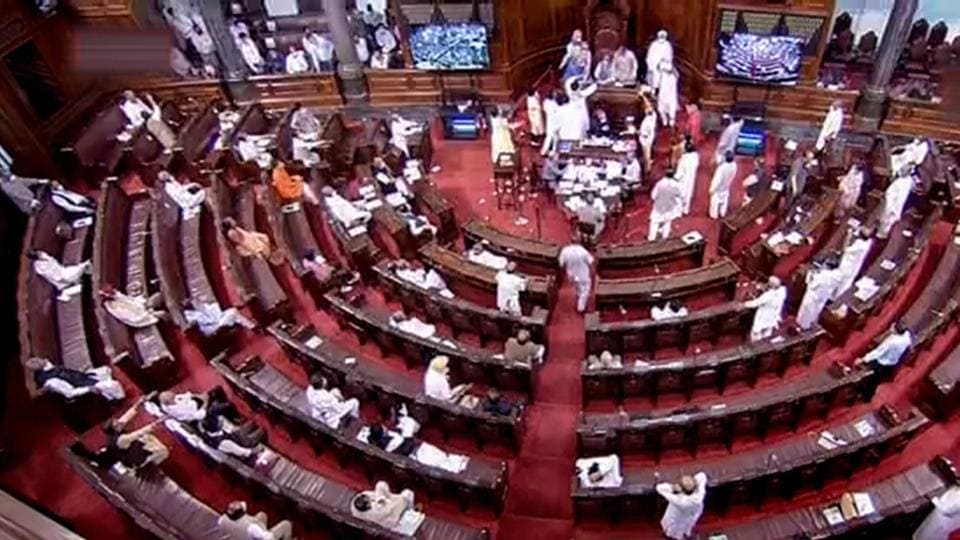
The legislation seeks to prohibits transfer of foreign funds to a third party and designates State Bank of India, New Delhi, as the only bank where such funds can be received.
Union minister of state for home (MoS) Nityanand Rai introduced the Foreign Contribution (Regulation) Amendment Bill, 2020 in the Lok Sabha, where it is likely to be taken up in the coming week.
Significantly, if the law is amended, organizations receiving foreign funds won’t be able to use more than 20% of the money for administrative purposes. This limit hitherto has been 50%. The ministry of home affairs (MHA) has often alleged that office bearers of NGOs misuse foreign funds, actually meant for social work, by spending it on their personal travel, shopping or office furniture.
A key change proposed in the new bill, which gives sweeping powers to the Centre, says that licence of any NGO can now be suspended for more than 180 days in case of any violations. According to section 13 of FCRA, MHA had the powers to suspend the licence of an organization for only 180 days during which no foreign funding could be received.
The period is when an inquiry is conducted by concerned FCRA department officials and an appeal is heard. “This means MHA can keep any licence under suspension till it wants without cancelling it,” said an officer who didn’t wish to be named.
The bill also gives considerable powers to the Centre as it will be able to cease the use of foreign funds by conducting just a “summary inquiry” instead of “found guilty” previously.
Apart from barring public servants including judges from receiving any funds from abroad, the proposed bill says that no organisation will be able to transfer foreign contribution to any association/person under Section 7 of the FCRA.
It also makes Aadhar mandatory for all office bearers of NGOs and other organisations which are seeking foreign contributions.
“Every person who has been granted certificate or prior permission for foreign funding shall receive foreign contribution only in an account designated as ‘FCRA Account’ which shall be opened by him in such branch of the State Bank of India at New Delhi, as the Central Government may, by notification, specify and for other consequential matters relating thereto”, the bill says.
Tanveer Ahmed Mir, a criminal lawyer who specialises in FCRA and money laundering, said:“The provisions in the bill give unbridled powers to the executive and officials to take action unreasonably and arbitrarily and there will be no checks and balances. Government is geared to demolish the due process in India. By making SBI, New Delhi as the designated bank, are they trying to say that other banks are crooks or that only SBI will survive in this country in future?”
According to the government, the proposed amendments “seek to streamline the provisions of the FCRA by strengthening the compliance mechanism, enhancing transparency and accountability in the receipt and utilisation of foreign contribution worth thousands of crores of rupees every year”.
The need to amend the law was felt after it was found that “the annual inflow of foreign contribution has almost doubled between the years 2010 and 2019, but many recipients of foreign contribution have not utilised the same for the purpose for which they were registered or granted prior permission under the said Act. Many of them were also found wanting in ensuring basic statutory compliances such as submission of annual returns and maintenance of proper accounts,” according to the government statement.
“This has led to a situation where the central government had to cancel certificates of registration of more than 19,000 recipient organisations, including non-governmental organisations, during the period between 2011 and 2019. The criminal investigations also had to be initiated against dozens of such non-governmental organisations which indulged in outright misappropriation or mis-utilisation of foreign contribution,” it adds.
Over Rs 58,000 crore of foreign funds were received by NGOs registered under the FCRA between 2016-17 and 2018-19. India has around 22,400 NGOs.
Amitabh Behar, CEO of Oxfam India, tweeted: “Devastating blow. Red carpet welcome for foreign investments for businesses but stifling and squeezing the nonprofit sector by creating new hurdles for foreign aid which could help lift people out of poverty, ill health and illiteracy”.
“This will further stifle the space for non-profit sector and affect the smaller organisations working on the ground,” he told HT.





