
 E-Paper






Follow the latest breaking news, major developments and agenda-setting stories from India and around the world with the newsdesk at Hindustan Times. Operating round the clock, the desk brings together experienced editors, reporters and correspondents to deliver fast, accurate and contextual reporting across subjects that influence public policy, governance, business, society and international affairs. The HT News Desk covers politics, elections, government policies, the economy, business and markets, science and technology, the environment, law and order, infrastructure, education, climate issues and geopolitics, while closely tracking developments across states, institutions and global capitals. The team also leads coverage of major breaking news events, policy announcements, court proceedings, natural disasters, public emergencies and significant international developments. Reports published by the newsdesk are based on information gathered from reporters on the ground, official statements, government agencies, court records, regulatory filings, recognised institutions and other authoritative sources. Stories undergo editorial scrutiny and verification processes to ensure accuracy, fairness and relevance, and are updated as events evolve and additional information becomes available. Whether covering a key political decision in New Delhi, an economic policy shift affecting millions, a landmark court ruling or a major global event, the HT News Desk aims to provide readers with reliable, fact-based journalism that delivers not only the latest developments but also the context and analysis needed to understand their wider implications.
‘Disappointed’: Prashant Kishor after JD(U) backs citizenship bill
In a tweet late in the night when the Bill was put to vote and passed by the Lok Sabha with a resounding majority, Kishor sought to underscore that the Bill was “incongruous” with the constitution of the party, headed by Bihar Chief Minister Nitish Kumar, which swore by secularism and Gandhian ideals.


JD(U) national vice-president Prashant Kishor on Monday expressed disappointment over his party supporting the Citizenship Amendment Bill (CAB) in the Lok Sabha, holding that the legislation discriminates against people “on the basis of religion”.
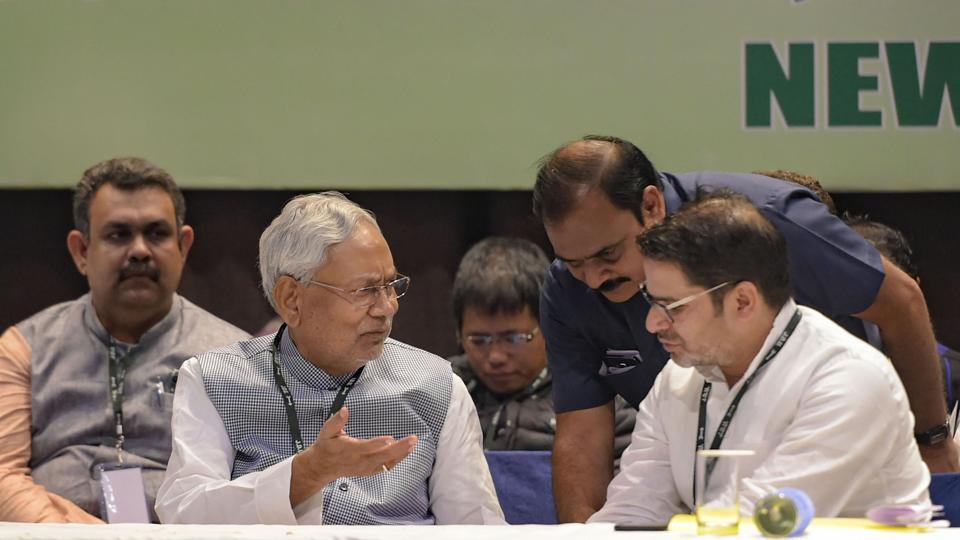
In a tweet late in the night when the Bill was put to vote and passed by the Lok Sabha with a resounding majority, Kishor sought to underscore that the Bill was “incongruous” with the constitution of the party, headed by Bihar Chief Minister Nitish Kumar, which swore by secularism and Gandhian ideals.
“Disappointed to see JDU supporting #CAB that discriminates right of citizenship on the basis of religion. It’s incongruous with the party’s constitution that carries the word secular thrice on the very first page and the leadership that is supposedly guided by Gandhian ideals,” the poll strategist-turned-politician tweeted.
Participating in the debate on the Bill, the party’s leader in the Lok Sabha, Rajiv Ranjan alias Lalan Singh, said on the floor of the House that the JD(U) was supporting the legislation since it was “not against secularism”.
Notably, the JD(U) had till recently been in opposition to the National Register for Citizens (NRC) and the CAB, notwithstanding its alliance with the BJP, holding that the moves discriminated against the Muslim population and could trigger massive unrest in the north-east.
Kishor had last month also lashed out at the BJP on his twitter handle, seeking to know chief ministers of how many of the “15 plus states with 55 per cent of population” – not belonging to the saffron party – were consulted over NRC in respective provinces, in what was seen as a rebuttal to Union Home Minister Amit Shah’s assertion that the National Register for Citizens should be implemented across the country.
Kishor, who is known to speak his mind and often cause embarrassment to the leadership of the party, which has in the recent past made many about turns, was made a primary member of the JD(U) in September last year and elevated to the top post within a few weeks. After an over seven-hour-long debate, the Citizenship (Amendment) Bill, 2019 was passed in the Lok Sabha, with 311 members favouring it and 80 voting against it.
Several amendments brought by opposition members, including one by Shiv Sena MP, were defeated either by voice vote or by a division.
According to the proposed legislation, members of Hindu, Sikh, Buddhist, Jain, Parsi and Christian communities, who have come from Pakistan, Bangladesh and Afghanistan, till December 31, 2014 and facing religious persecution there, will not be treated as illegal immigrants and will be given Indian citizenship





