
 E-Paper






Follow the latest breaking news, major developments and agenda-setting stories from India and around the world with the newsdesk at Hindustan Times. Operating round the clock, the desk brings together experienced editors, reporters and correspondents to deliver fast, accurate and contextual reporting across subjects that influence public policy, governance, business, society and international affairs. The HT News Desk covers politics, elections, government policies, the economy, business and markets, science and technology, the environment, law and order, infrastructure, education, climate issues and geopolitics, while closely tracking developments across states, institutions and global capitals. The team also leads coverage of major breaking news events, policy announcements, court proceedings, natural disasters, public emergencies and significant international developments. Reports published by the newsdesk are based on information gathered from reporters on the ground, official statements, government agencies, court records, regulatory filings, recognised institutions and other authoritative sources. Stories undergo editorial scrutiny and verification processes to ensure accuracy, fairness and relevance, and are updated as events evolve and additional information becomes available. Whether covering a key political decision in New Delhi, an economic policy shift affecting millions, a landmark court ruling or a major global event, the HT News Desk aims to provide readers with reliable, fact-based journalism that delivers not only the latest developments but also the context and analysis needed to understand their wider implications.
Delete ‘secular’, ‘socialist’ words from the Constitution: Plea in Supreme Court
The petition has sought deletion of the words “secular” and “socialist” from the Preamble of the Constitution, inserted in 1976 by the 42nd Constitution Amendment passed by Parliament.


A petition in the Supreme Court (SC) has triggered a legal debate on whether citizens of India can be compelled to be secular, when the Constitution permits them the right to practice, profess and propagate their own religion under Article 25.
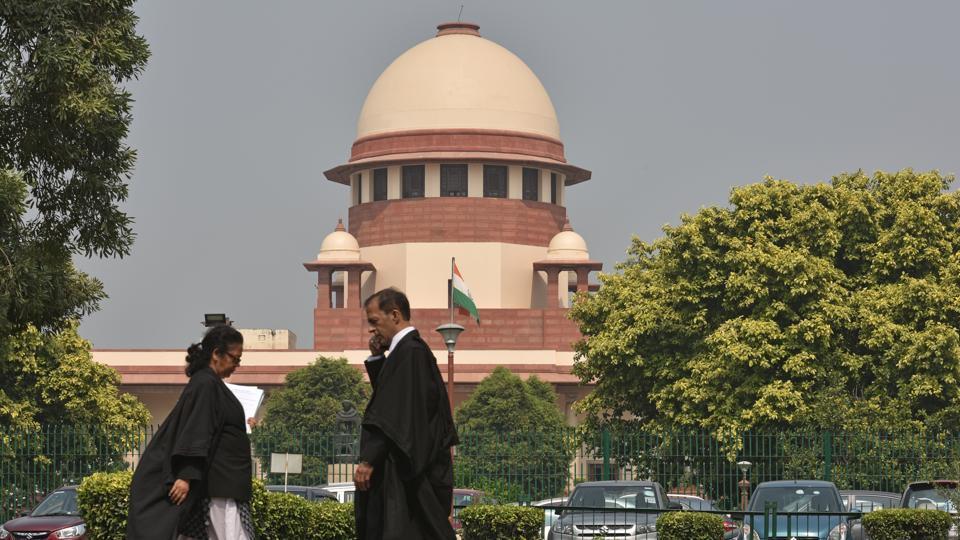
The petition has sought deletion of the words “secular” and “socialist” from the Preamble of the Constitution, inserted in 1976 by the 42nd Constitution Amendment passed by Parliament.
The three petitioners – two advocates and a social worker – who moved a common petition claimed that they intend to launch a political party.
One of the conditions to register a political party with the Election Commission of India (ECI) requires them to compulsorily follow principles of socialism and secularism.
This was added to Section 29-A (5) of the Representation of People Act, 1951, by an amendment in 1989.
The petitioners – Balram Singh, Karunesh Kumar Shukla, Pravesh Kumar – have challenged the validity of this law and have also sought ECI and the Central government to respond to their petition.
Advocate Vishnu Shankar Jain, who filed the petition, told HT, “In a democratic setup, the citizens cannot be bound to accept a particular ideology and the application of the ideology depends on the will of the people to be reflected through votes from time to time. In this case, the petitioners have said that ‘socialist’ and ‘secular’ concepts are political thoughts and seen in the light of right to practice religion (Article 25), right to free speech (Article 19(1)(a)), and these principles are against the principle of democracy.”
The petition further argues that the original Constitution makers deliberately chose to keep these concepts out of the Preamble.
On November 15, 1948, Professor KT Shah had proposed adding the words “Secular, Federal and Socialist Nation”, but the Constituent Assembly (CA) had rejected it after a lengthy discussion.
Again, on November 25, 1948, a second amendment was introduced and discussed on incorporating the word ‘secular’ in the draft Constitution. That, too, was rejected.
On December 3 that same year, a third attempt was made to include ‘secular’ in the Article 18 of the Constitution, which was also dismissed by the CA.
The petition demanded the top court to examine that given this position, how could Parliament go against the solemn declaration by the CA, and modify or add ‘secular’ and ‘socialist’ words to the text of the Preamble by way of an amendment in 1976.
The plea tries to examine the roots of secularism and socialism as a concept prevailing across the globe and dubs them as a “political thought” which has little relevance for the country.
It states that the historical and cultural theme of Bharat is based on the concept of “Dharma”, which is different from the concept of religion and the communist theory of state cannot be applied to the Indian context.
Going by the prevailing foreign concept of secularism, where state/government has no religion, the petition cited examples of how in India, state grants aid to minority religious institutions, enacts law relation to pilgrimages outside the country, has power to make laws related to charitable and religious endowment and religious institutions falling in Item 28 of the Concurrent List and has power under Article 25(2) to make law regulating or restricting any economic, financial, political or other secular activity associated with religious practice.
“In view of the fact that states have power to indulge in religious matters, though in limited sense, and can give grant to religious minorities, the state as a political entity cannot be a secular republic in strict sense,” the petition stated.





