E-Paper







Follow the latest breaking news, major developments and agenda-setting stories from India and around the world with the newsdesk at Hindustan Times. Operating round the clock, the desk brings together experienced editors, reporters and correspondents to deliver fast, accurate and contextual reporting across subjects that influence public policy, governance, business, society and international affairs. The HT News Desk covers politics, elections, government policies, the economy, business and markets, science and technology, the environment, law and order, infrastructure, education, climate issues and geopolitics, while closely tracking developments across states, institutions and global capitals. The team also leads coverage of major breaking news events, policy announcements, court proceedings, natural disasters, public emergencies and significant international developments. Reports published by the newsdesk are based on information gathered from reporters on the ground, official statements, government agencies, court records, regulatory filings, recognised institutions and other authoritative sources. Stories undergo editorial scrutiny and verification processes to ensure accuracy, fairness and relevance, and are updated as events evolve and additional information becomes available. Whether covering a key political decision in New Delhi, an economic policy shift affecting millions, a landmark court ruling or a major global event, the HT News Desk aims to provide readers with reliable, fact-based journalism that delivers not only the latest developments but also the context and analysis needed to understand their wider implications.
China accuses India of starting ‘serious physical conflict’, quiet on details
The Indian army said the clash took place at a time the “de-escalation process” was “underway in the Galwan valley”


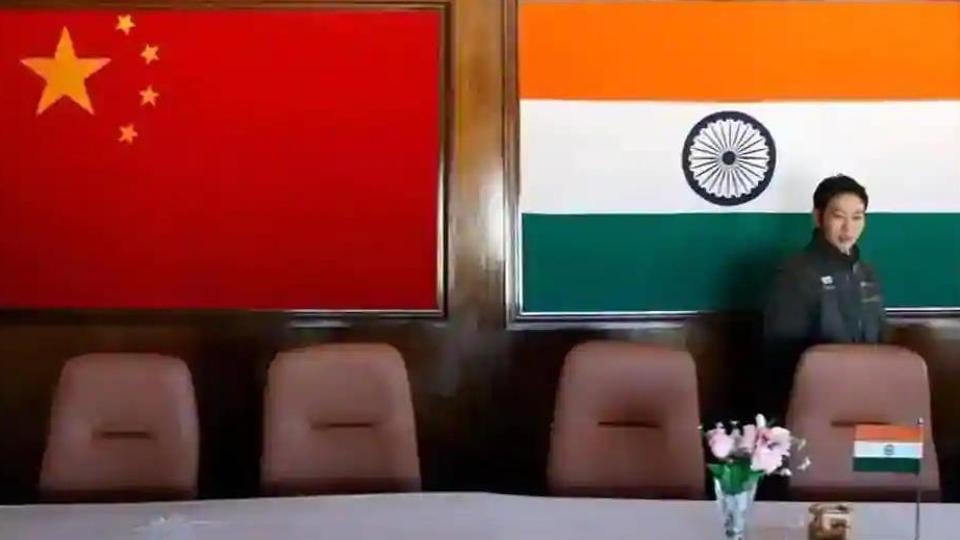
China on Tuesday accused the Indian army of provoking and attacking Chinese soldiers after a border meeting to de-escalate the ongoing tension, leading to a “physical conflict” between the two sides on Monday.”
These are the first Indian casualties in a clash with the PLA s ince 1975 when an Indian patrol was ambushed by Chinese troops in Arunachal Pradesh.
HT learns that the officer is the commanding officer of the unit involved in the scrap, and that one of the other casualties is that of a JCO.
The Indian army said the incident took place at a time the “de-escalation process” was “underway in the Galwan valley”. Senior “military officials of the two sides are currently meeting to defuse the situation”, the army said, signalling that the efforts to stabilise the situation is still work in progress.
The Chinese foreign ministry said it was not aware of Indian soldiers being killed in the exchanges. Neither did it say anything about casualties on its side.
Also Watch l India-China border faceoff: What led to escalation of tensions?
A violent face-off between Indian and Chinese soldiers near the line of actual control (LAC) in eastern Ladakh, where rival soldiers were caught in a standoff that began with a confrontation between rival patrols near Pangong Tso on the night of May 5-6, has led to multiple casualties on the Indian side, New Delhi said in a statement on Tuesday.
Responding to a query on the development, Zhao Lijian, spokesperson of the Chinese foreign ministry, said he wasn’t aware about the fatalities.
“I am not aware of the information you provided. Recently to ease the situation on the India, China border, the two countries have been in close communication through military and diplomatic channels on June 6,” Zhao said at the regular ministry briefing on Tuesday.
Zhao then put the blame squarely on Indian soldiers for triggering the violent exchange.
“Our border troops had a high-level meeting and reached important consensus on easing the border situation. But astonishingly on June 15, the Indian troops seriously violated our consensus and twice crossed the border line for illegal activities and provoked and attacked Chinese personnel which led to serious physical conflict between the two sides,’’ Zhao said.
China has lodged strong protest and representation with the Indian side, Zhao added.
Last week, when asked about the reports of the troops on both sides disengaging and moving back to their previous positions, spokesperson Hua Chunying said that both sides were taking steps to ease the situation along the borders.
“Recently the diplomatic and military channels of China and India held effective communication on the situation along the border and reached positive consensus,” she said.
“The two sides are following this consensus to take actions to ease the situation along the borders,” Hua added.
The Chinese foreign ministry had earlier said the situation along the border was “stable and controllable”.
HT was the first to report on May 10 about border tensions between India and China flaring up when 150 soldiers were involved in a tense standoff in north Sikkim a day earlier. Four Indian and seven Chinese soldiers were injured at Naku La during the confrontation.