E-Paper




Atal Bihari Vajpayee could not be boxed into any narrow party ideology
India’s former prime minister and one of the country’s most-loved and respected leaders, Atal Bihari Vajpayee, died on Thursday evening.

 Prefer HTon Google


I had the rare privilege of working as the secretary to Atal Bihari Vajpayee when he was Prime Minister. I had also spent time with him way back in 1984, when he had visited Japan and I was there. There are a few characteristics of Atal ji which stood out. The first was that he could not be boxed into the narrow confines of any party ideology. He had a national vision and recognised the need for India to join the global economy.
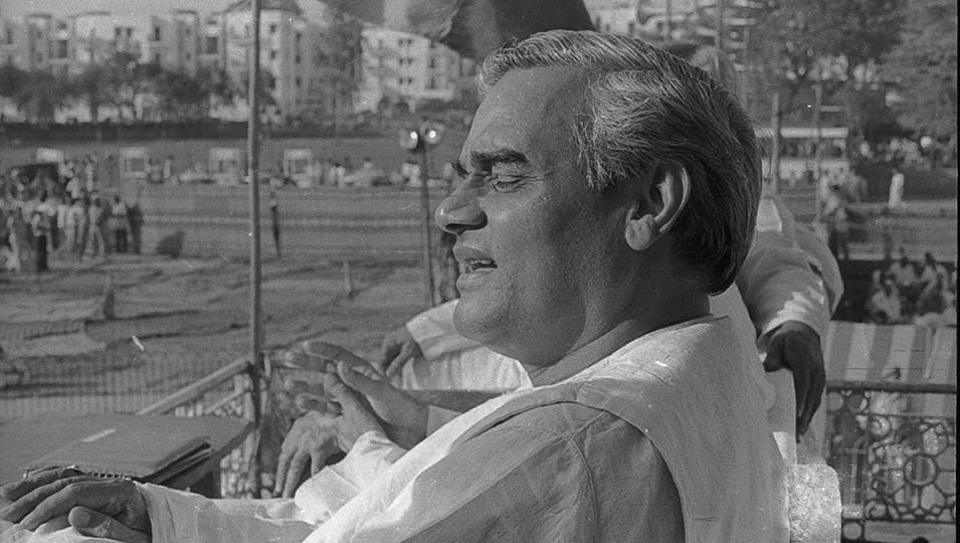
When I was appointed as his secretary, he gave me flexibility and handed over all economic departments. He had a macro vision and wanted to constitute both the Economic Advisory Council and Council of Trade and Industry.
What he had in mind was a small body where, in a drawing-room atmosphere, the PM could share ideas. For the Council of Trade and Industry, we had some regular names -- Ratan Tata, Mukesh Ambani. From the east, I suggested the name of RP Goenka. But Brajesh Mishra (Vajpayee’s principal secretary) said he was busy printing the posters of (then-Congress president) Sonia (Gandhi). Atal ji immediately said, “Matlab ka aadmi hai, kaam ka aadmi hai ki nahin? Agar hai toh unhe aap avashya rakhein. (Is he useful or not? If he is, please take him).”
A key area of focus for him was telecom. He had inherited a legacy where all the private companies had bid for licenses with unrealistic amounts of revenue generation as target. They were going bust. Banks had non-performing assets. Courts were going after them. The telecom minister was Jagmohan. The PM was worried and asked, what should we do? I said, technically, Jagmohan was asking for guarantees to be encashed. But there were real economic concerns for the sector with this.
He then said – ‘why are we doing it then? Let us solve this’. Jagmohan was sidelined. Soli Sorabjee was put in charge. The Supreme Court had to be persuaded. We moved to a new revenue-sharing model. We regained our leadership in telecom.
We were travelling to New York. The next day, the PM was scheduled to talk to business and industry. He asked us to come up something new. Brajesh Mishra and I then said we should deregulate telecom and gave him an assessment of the costs and benefits. He said let us go ahead.
His sagacity in dealing with allies was immense. He once told me, “Chandrababu Naidu has not asked for anything, no ministry, yet he supports us. You give him what he wants. He should not come to me.”
We solved his problems. In the most difficult and stressful circumstances, one joke of his, one repartee would be enough to ease the tension. He grappled with a lot of internal resistance on pace of reforms. Yet, he constantly supported change, reform, productivity, and liberalisation. Enhancing economic change and helping India achieve leadership status remained his prime motivation.
(As told to Prashant Jha)