
 E-Paper







Shishir Gupta is Executive Editor at Hindustan Times and one of India's top journalists covering national security, strategic affairs, foreign policy and geopolitics. Over the past three decades, he has extensively reported on India's military, diplomatic and security landscape, covering every major conflict and national security challenge, from the 1999 Kargil War and the 2020 East Ladakh standoff to Operation Sindoor in 2025. He has also covered major terror attacks, including the IC-814 hijacking, the 26/11 Mumbai attacks and the 2025 Pahalgam terror strike, along with numerous Pakistan-backed terrorist incidents in the Kashmir Valley and across India. He has reported on national and state elections for more than three decades. A recognised authority on strategic affairs, Gupta has covered India's nuclear programme since the Pokhran-II (Shakti series) tests in May 1998 and has written extensively on global nuclear issues, Indian diplomacy and the country's expanding global outreach. He has also reported widely on international conflicts and terrorism, with a special focus on the Indian subcontinent. Gupta has interviewed Prime Minister Narendra Modi more than four times, including Modi's first interview with the print media after becoming Prime Minister in May 2014. His other interviews include three with the Dalai Lama, as well as conversations with Benjamin Netanyahu, Amit Shah, Yogi Adityanath, S. Jaishankar, Nirmala Sitharaman and Piyush Goyal. He is the author of Indian Mujahideen: The Enemy Within (Hachette, 2011) and Himalayan Face-off: Chinese Assertion and Indian Riposte (Hachette, 2014). He was awarded the Chevening-Wolfson Joint Scholarship at Wolfson College, University of Cambridge, UK, in 1998 and participated in the International Visitor Leadership Program (IVLP) of the US State Department in 2006. He received the Ben Gurion Prize from Israel in 2011 and the K. Subrahmanyam Prize for Strategic Studies in 2015 from the Manohar Parrikar Institute for Defence Studies and Analyses (MP-IDSA). Since 2024, he has hosted Point Blank, Hindustan Times' weekly YouTube show on global geopolitics.
‘Agniveers' are about meritocracy and accountability, will officers follow suit?
The Ministry of External Affairs has recommended compulsory retirement of two senior IFS officers under clause 56 J of Fundamental Rules this month as the Modi government moves towards merit cum seniority not the other way around.


Amidst all the noise, outrage and uncalled-for arson over the 'Agnipath' model of military recruitment, selected 'Agniveers' at the end of the day will represent victory of merit over long practiced mediocrity in the Government of India. It will also, in turn, impose accountability at the level of commanding officers and generals who, in the past, routinely got away with 10/10 outstanding appraisals and promotions.
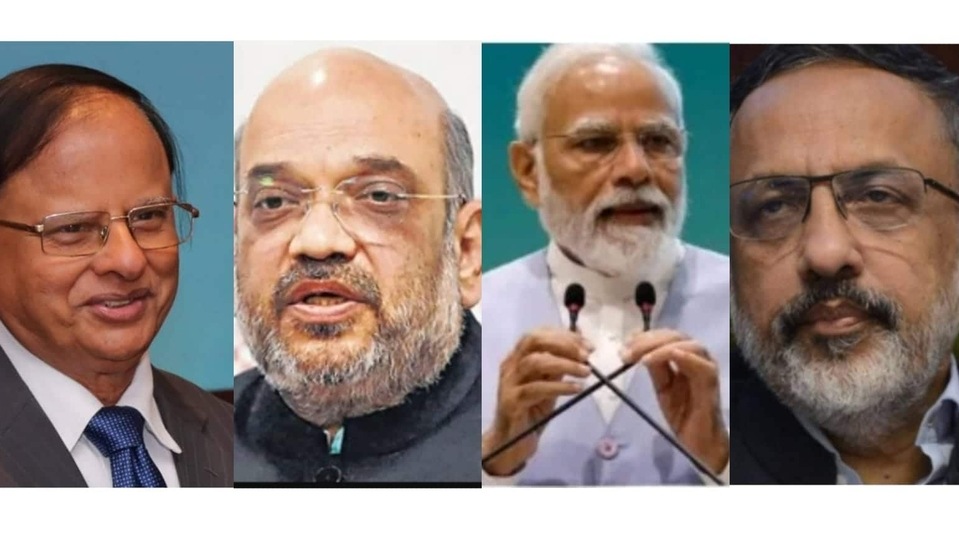
That the Narendra Modi government is for merit-cum-seniority, and not the other way around, and is clear on removing bureaucratic deadwood despite legal hurdles, is evident in the appointment of military chiefs, particularly in the case of present Army chief General Manoj Pande and the late General Bipin Rawat in the near past.
READ: Why a young, fitter and tech-savvy 'Agniveer' is the only answer to China?
The Ministry of External Affairs has now also joined this bandwagon of holding bureaucrats accountable for their work by recommending compulsory retirement this month of two senior Indian Foreign Service (IFS) officers under clause 56 J of the Fundamental Rules.
Although Hindustan Times will not disclose the names of the officers concerned, the decision has sent shock-waves within the hallowed diplomatic establishment as the MEA has decided not to tolerate mediocrity and a casual attitude.
The days of IFS officers getting a good foreign posting after serving in hard areas abroad, or only on seniority, are over with MEA deciding to post only ambassadors who speak the local language and experience as a prerequisite for heading a mission.
While the Finance Ministry has taken similar action under 56 J against several IRS officers, the government should also initiate similar action in other civil service branches, even though appointments to posts like Secretary to Government of India or Director General of Police are done after much due diligence.
However, heads of ministries, military and intelligence are facing a peculiar situation while removing deadwood or appointing to key posts, as most civil services officers got top appraisals in the past and it is a legal hurdle to justify their removal.
Under GoI, an 'outstanding' appraisal means an officer has marks between eight to 10, 'very good' is between six to eight, and 'good' is below six. Perhaps due to lax control or oversight most officers have 10/10 appraisals and these officers represent or go to the court if they are marked even 8/10.
The other issue faced by departmental heads is that dismissed officers deliberately drag the head of the institution to the court by name, so the person is left to fight the case with his/her pension once he/she retires. Those lowly appraised spend their time representing against it to the government or tribunals.
Despite the legal hurdles, merit-cum-seniority - or the best person for the best job - should be the mantra for the government or else policies of the ruling dispensation will be caught in a maze of files and file-pushers with little productivity.
The Indian bureaucracy is still process-driven and not product-driven as the mandarin, after passing the civil services exam is there for a minimum of 30 years while the politician must pass an 'exam' every five years.
With the Modi government constantly on a reform path, it is important the bureaucracy is brought up to speed so they own the reforms rather than be a neutral bystander. The recent resistance to all reforms by the Modi government are partly because of implementation delays or communication gaps on the part of the bureaucracy. After eight years in government, Prime Minister Narendra Modi needs to shift gears on bureaucratic reforms and throw out those who believe in status quo or live in the past era of entitlement.





