
Of the 4,000-odd brick kilns operating in national capital regions of Uttar Pradesh and Haryana, less than one fourth have shifted on to the cleaner zig-zag technology to curb pollution levels.
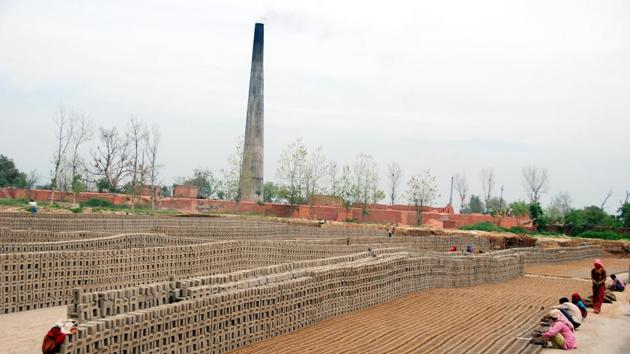
“Only around 722 brick kilns have adopted the zig-zag technology to bring down their emission levels. Under the Graded Response Action Plan, notified by the Union environment ministry, only brick kilns that have adopted the zig-zag technology can operate after June 30,” said a member of the Supreme Court-appointed panel Environment Pollution (Prevention and Control) Authority.
Zig-zag technology slows down emission of smokes through the chimneys at brick kilns, allowing particulates to settle and leading to a reduction in pollution. Brick kilns fumes are potential sources of PM2.5. “Those that have not adopted the cleaner technology would have to close down after June 30. EPCA would take a call on when the brick kilns can resume operations,” said Sunita Narain, member of EPCA.
A section of brick kiln owners urged EPCA to not resort to sudden closures as it would lead to heavy losses. “The investment required for switchig over to zig-zag is at least Rs 10 lakh. And we are doing it on our own. So the government should not force us to shut shop during the February to June window,” said one of the brick kiln owners.
{{/usCountry}}A section of brick kiln owners urged EPCA to not resort to sudden closures as it would lead to heavy losses. “The investment required for switchig over to zig-zag is at least Rs 10 lakh. And we are doing it on our own. So the government should not force us to shut shop during the February to June window,” said one of the brick kiln owners.
{{/usCountry}}ABOUT THE AUTHOR
Follow the latest breaking news, major developments and agenda-setting stories from India and around the world with the newsdesk at Hindustan Times. Operating round the clock, the desk brings together experienced editors, reporters and correspondents to deliver fast, accurate and contextual reporting across subjects that influence public policy, governance, business, society and international affairs. The HT News Desk covers politics, elections, government policies, the economy, business and markets, science and technology, the environment, law and order, infrastructure, education, climate issues and geopolitics, while closely tracking developments across states, institutions and global capitals. The team also leads coverage of major breaking news events, policy announcements, court proceedings, natural disasters, public emergencies and significant international developments. Reports published by the newsdesk are based on information gathered from reporters on the ground, official statements, government agencies, court records, regulatory filings, recognised institutions and other authoritative sources. Stories undergo editorial scrutiny and verification processes to ensure accuracy, fairness and relevance, and are updated as events evolve and additional information becomes available. Whether covering a key political decision in New Delhi, an economic policy shift affecting millions, a landmark court ruling or a major global event, the HT News Desk aims to provide readers with reliable, fact-based journalism that delivers not only the latest developments but also the context and analysis needed to understand their wider implications.
