
 E-Paper




Beyond Act East: Can India become a credible security partner for ASEAN?
As China expands its influence and disputes persist in the South China Sea, India has an opportunity to support ASEAN nations’ sovereignty.

 Prefer HTon Google


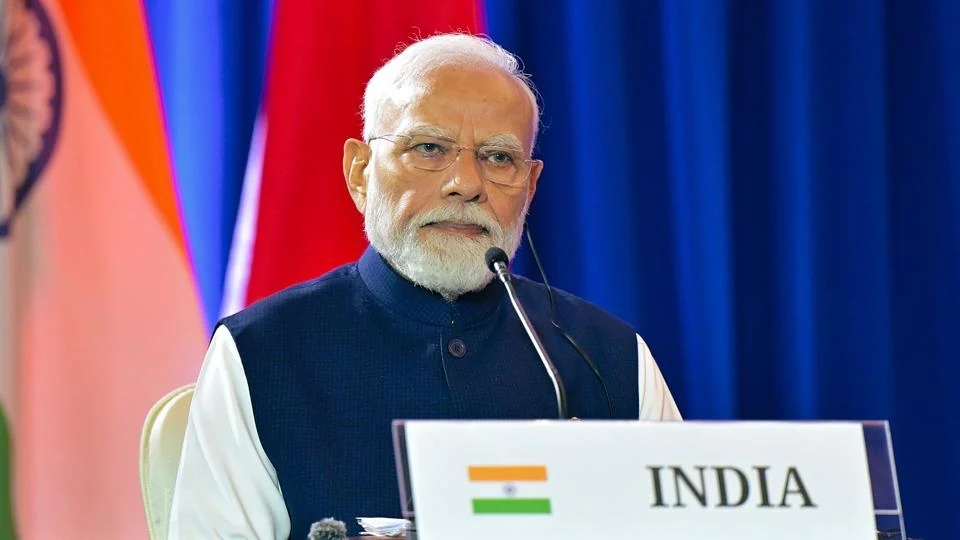
Prime Minister (PM) Narendra Modi attended the 23rd ASEAN and 21st East Asia Summits in Manila, Philippines, recently. The main agenda in focus was the deepening of security engagement with the region, reviewing trade relations (AITIGA-ASEAN India Trade in Goods Agreement) and the progress of the Comprehensive Strategic Partnership. However, the central assessment could be made around the regional security arrangement India can offer to the ASEAN nations in the face of Chinese expansionism and the uncertainty of US assurances.
The ASEAN map is mostly covered by sea, where Laos is the only landlocked nation. Then comes the presence of vital sea trade routes through the Strait of Malacca and the Strait of Singapore; 80% of China’s energy supply and two thirds of China’s maritime trade pass through this route. Further, the factor of mineral richness, oil and fish has made the South China Sea region disputed waters with Vietnam, the Philippines, Malaysia and Taiwan. Beijing also disputes the exclusive economic zone with Brunei and Indonesia. The irony is that all of the parties have ratified UNCLOS, which governs the sea. China has hardly complied and claims over 90% of the territory through its unofficial Nine-Dash Line.
In addition, the US has had regular defence exercises with the ASEAN nations. However, in light of the ongoing war in West Asia, the message is clear that it cannot ensure freedom of navigation anymore. This was witnessed in West Asia with the culmination of the Mecca Agreement. Above all this, the intra-regional conflicts like Cambodia-Thailand clashes have created a wedge within the bloc. Hence, these testing times provide India an opportunity to make a strong footprint in security cooperation with the region.
Modi’s statement noted the convergence of ASEAN Community Vision 2045 with Viksit Bharat 2047. However, the major highlight was India-ASEAN long-term maritime cooperation, enhancing maritime domain awareness, disaster management, connectivity and Coast Guard cooperation.
From a strategic point of view, India has successfully attracted defence agreements for the sale of the BrahMos missile system to the Philippines, Vietnam, and Indonesia. This is a huge step forward in positioning India as a net security provider in the future. However, the success depends on timely delivery. Further, the prospective sale of Dornier aircraft for coastal security to Malaysia projects India’s security commitments in the region.
In addition to this, India is an active participant in the ASEAN Defence Ministers' Meeting-Plus (ADMM-Plus) working group and also the Information Fusion Centre (IFC-IOR), which focus on early warning systems and maritime awareness, and has liaison officers from Singapore and Thailand. It indicates India’s resolve for freedom of navigation across the seas.
Nevertheless, the challenges faced by India in providing security are serious, which can also diminish goodwill among the players. Primarily, the delay in defence equipment manufacturing and its delivery capacity. India has poor defence industrial collaboration to sustain its production and mostly depends on PSUs like HAL. Furthermore, China, though having disputes with ASEAN, has increased its arms sales to the region, as per Lowy Institute research. India also holds a trade imbalance post the AITIGA agreement, reaching a $51.5 billion deficit in 2025.
First, India must fuse the Act East Policy with the MAHASAGAR vision of maritime cooperation. This elevation from regional SAGAR focus of India Ocean gives a strategic expansion to a global maritime approach. This will check the growing Chinese footprint in the Indo-Pacific region and place India as a counterweight to former expansionism. This is because China may have made inroads to Southeast Asia but India still enjoys the trustworthiness.
Second, India can look forward to holding regular ASEAN-India Maritime Exercise whose second edition concluded recently. This should not be delayed in the coming years but must be reinforced with expanded cooperation in training of the personnel, disaster management and coastal patrolling. This approach can keep up open navigation and also reduce drug and arms smuggling via sea routes. Most importantly, India can train ASEAN personnel in using its defence platforms.
Third, India should focus on strengthening its domestic defence production with more private participation and research at the academic level to develop cost-effective equipment in the medium to long term. Also, convert defence agreements into an institutional mechanism with joint training, technology transfer.
Fourth, India must preserve its goodwill with ASEAN nations as a non-aligned partner. This boosts trust among the key players of the region. India should not just focus on countering China but also on making its position credible as a promising partner from South Asia and a leader of the Global South. Further, Track 1.5 diplomacy like Rasina Dialogue can be put in place as a measure for confidence building measure and reduce mistrusts
Fifth, India can expand its cooperation in the energy and space sector. For instance, once the NAVIC system is fully functional, it can offer the navigation platform to ASEAN partners too. It can enhance strategic interdependence.
Ultimately, India's success will be measured not by how effectively it counters China's influence, but by how effectively it empowers Southeast Asian nations to safeguard their sovereignty and strategic choices.
(The views expressed all personal)
This article is authored by Girish M, independent policy researcher, Mysuru.





