
 E-Paper




India’s next farm revolution is under our feet
India’s agricultural future depends on treating soil as productive national capital.




For a farmer, soil is not merely land. It is working capital. It stores water, carries nutrients, supports roots, determines productivity and ultimately decides whether a season ends in profit or distress. Yet soil is rarely treated in economic policy with the seriousness given to irrigation, credit, fertiliser or procurement. That must change. India’s next agricultural transformation will depend not only on what we grow, but on how well we protect the natural asset on which every crop and rural livelihood rests.
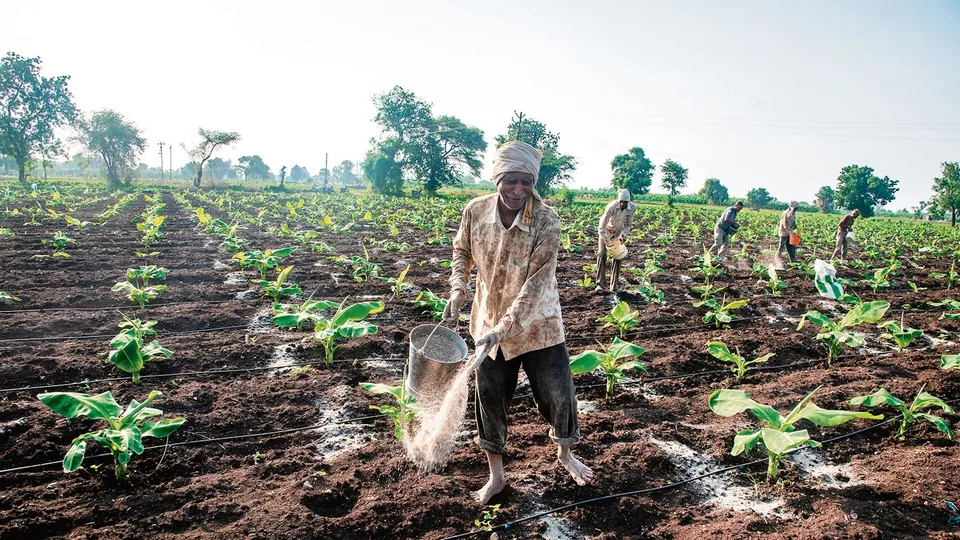
The good news is that India is not starting from scratch. The Central Ground Water Board tracks groundwater quality and extraction, while annual assessments classify blocks as safe, semi critical, critical or over exploited. The 2025 assessment estimated annual groundwater recharge at 448.52 billion cubic metres, extractable resources at 407.75 BCM and total annual extraction at 247.22 BCM. The national stage of groundwater extraction was 60.63%. Significantly, nearly 87% of extracted groundwater is used for irrigation. This makes agriculture central to India’s water and soil security story.
There is reason for calibrated confidence rather than alarm. Government data show that 98.9% of samples were within the permissible Sodium Adsorption Ratio threshold for irrigation. At the same time, 11.27% recorded elevated Residual Sodium Carbonate, indicating localised risks to soil structure, permeability and productivity if such water is used continuously without appropriate management. The lesson is clear. India does not face one uniform soil problem. It faces multiple local soil and water challenges requiring district and block level responses.
Policy is already moving in that direction. The Watershed Development Component of Pradhan Mantri Krishi Sinchayee Yojana supports soil and moisture conservation, water harvesting structures, afforestation, pasture development and livelihood interventions on degraded land. Crop diversification efforts in Punjab, Haryana and western Uttar Pradesh seek to reduce dependence on water intensive paddy, while Per Drop More Crop promotes drip and sprinkler irrigation. Rainfed Area Development encourages integrated farming systems, the Soil Health and Fertility scheme supports integrated nutrient management, and organic and natural farming are being promoted through dedicated programmes. Together, these initiatives mark an important shift from maximising output at any ecological cost towards productivity with resource efficiency.
The next step is to make soil health a measurable economic outcome. A farmer does not adopt a practice because it is environmentally desirable in the abstract. Adoption accelerates when better soil translates into lower input costs, more stable yields, improved water retention and higher net income. India should, therefore, build what may be called a Soil Health Economy. Every district should maintain a dynamic soil and water balance sheet combining nutrient imbalance, groundwater quality, extraction stress, cropping intensity and irrigation efficiency. Such information should shape local crop planning, extension advice and public investment.
Second, India should move from generic input support towards smarter incentives for resource efficiency. Where water stress is high, policy should make it economically attractive to shift towards less water intensive crops, micro irrigation, precision nutrient application and diversified farming systems. The objective should not be to dictate what farmers grow, but to make conservation profitable. Farmers who save water, improve soil quality or adopt verified nutrient management practices could receive preferential access to credit, technology support or stronger market linkages.
Third, crop diversification must be backed by markets. Asking a farmer to move away from a familiar crop without ensuring procurement, processing, storage and demand simply transfers risk from the environment to the household. Diversification towards pulses, oilseeds, horticulture, millets or agroforestry will succeed when the value chain is visible before sowing. Farmer-producer organisations, food processors and institutional buyers can help create that bridge. Soil conservation becomes durable when ecological wisdom is matched by commercial logic.
Fourth, groundwater management should become more local and participatory. India has completed aquifer mapping across about 25 lakh square kilometres of mappable area and prepared a national master plan for artificial recharge. The next frontier is to convert this scientific knowledge into village and block level water budgets that farmers can understand and use. Panchayats, water user groups, KVKs and local agricultural institutions should know how much water is recharged, how much is extracted and which cropping choices are pushing the balance towards stress.
Technology can accelerate this transition. Soil testing, remote sensing, farm sensors, mobile advisories and digital records can enable more precise nutrient and irrigation decisions than blanket recommendations. But technology must remain farmer centric. The real test is whether it reduces fertiliser waste, saves water, improves soil structure and raises the farmer’s margin. India should evaluate soil and water technologies not only by scientific performance but also by rupees saved or earned per acre.
There is a larger socio-economic dividend. Healthier soils mean greater resilience to drought and erratic rainfall, lower dependence on excessive inputs and more stable farm incomes. Better groundwater management reduces competition between agriculture, households and industry. Restoring degraded land can generate rural employment and strengthen local ecosystems. Soil policy, therefore, sits at the intersection of food security, climate resilience, rural prosperity and intergenerational equity.
India’s Green Revolution was built on the power to produce more. The next agricultural revolution must be built on the capacity to produce better, with less water, balanced nutrients and healthier soils. The policy architecture is increasingly in place. What India now needs is tighter integration between science, incentives, markets and local governance. The country that treats every acre of healthy soil as productive national capital will strengthen the economic foundations of rural India for decades to come.
(The views expressed are personal)
This article is authored by Suman S, director, Rural Livelihoods and Kumar Abbhishek, senior technical associate, Soil Health, Dr. Reddy’s Foundation.





