
 E-Paper






Abhishek Behl is a Special Correspondent with Hindustan Times, Gurugram bureau. With over a decade of experience in journalism, he reports on Gurugram's rapid urban transformation, covering the city's changing infrastructure, governance, and planning landscape. His reporting spans major civic agencies, such as the Gurugram Metropolitan Development Authority (GMDA), Department of Town and Country Planning (DTCP), Haryana Shahari Vikas Pradhikaran (HSVP), and the National Highways Authority of India (NHAI). Behl has reported on key urban development issues such as RRTS projects, metro expansion, road and highway projects, water supply, drainage, mobility, environmental concerns, land use planning, affordable housing, and the city's real estate sector. He closely tracks policy decisions, infrastructure implementation, and their impact on the city and its residents. He also covers regulatory action against illegal constructions, urban flooding, traffic management, and initiatives aimed at improving civic services and sustainable development. Behl has also written on political developments in south Haryana, focusing on elections and governance. His journalism is driven by fact-based reporting, ground-level coverage, and an understanding of the social and economic dynamics of Gurugram. Apart from work he is a cyclist and a cricketer and a resident of Palam Vihar since 2010.
High-speed rail linking Delhi, Gurugram and Rewari approved
The Haryana government also ordered a techno-feasibility study on connecting the Iffco Chowk station to Dwarka’s Sector 21.


The Haryana government, on Friday, approved the Regional Rapid Transit Systems (RRTS) project for a high-speed rail link from Sarai Kale Khan in Delhi to the Haryana-Rajasthan border near Shahjahanpur-Neemrana-Behror.
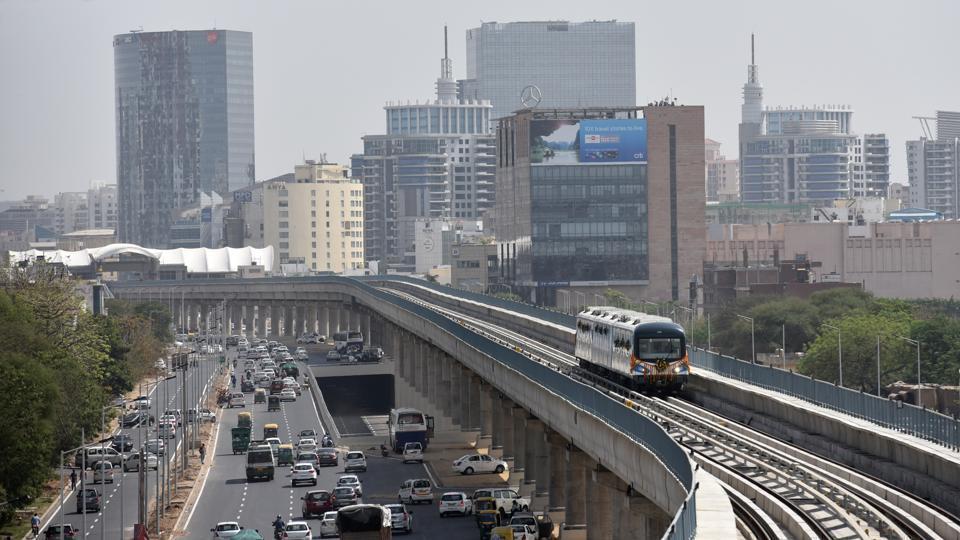
Apart from this, the state government approved connecting the HUDA City Centre with Gurugram railway station through a separate network.
The government also ordered a techno-feasibility study on connecting the Iffco Chowk station to Dwarka’s Sector 21.
Public transport has been Gurugram’s Achilles Heel and the lack of a city bus service and limited Metro network have forced residents to remain dependant on cars, motorbikes, autorickshaws and cabs, congesting city’s roads.
Once these projects, including the city bus service, become operational only then commuters could truly have a multi-modal transport system.
These projects were approved in a cabinet meeting chaired by chief minister Manohar Lal Khattar and attended by Union minister of state and Gurugram MP Rao Inderjit Singh.
“The RRTS project will provide a new impetus to the growth and investment in Gurugram specifically and to south Haryana in general,” Khattar said.
A government spokesperson said that in the RRTS Phase-1, the rail link will be on an elevated section beginning from Old Delhi Gurgaon road to Lt Atul Katarya Chowk proceeding to Signature Tower Chowk and then along NH-48 up to Rajiv Chowk. Thereafter, it will move underground beyond Kherki Daula where it would emerge above the ground up to IMT Manesar. The alignment would move along the highway up to Dharuhera, Rewari and Bawal before entering Rajasthan at Behror, an official press release said.
The first phase would cost Rs25,000 crore and the average speed of rail would be 100kmph.
The project would be executed by the NCR Transport Corporation (NCRTC)— a joint venture of the Central government and the states of Uttar Pradesh, Haryana, Rajasthan and Delhi—and the entire length of this section would be 106.94km.
The proposed stations of the rapid rail include Sarai Kale Khan, Millennium Park, Jor Bagh, Munirka, Aerocity (all in Delhi), Old Delhi-Gurgaon Road, Signature Tower, Rajiv Chowk, Kherki Daula, Manesar, Pachgaon (a rail depot is planned there), and Dharuhera in Gurugram.
There are five more stations in Rajasthan, including Rewari, Bawal up to Shahjahanpur-Neemrana-Behror.
The detailed project report would be prepared in three months and physical work is likely to start by March 31, 2019.
Commenting on the development, Rao Inderjit Singh said, “The rail network will benefit all of south Haryana and ensure people can travel between Delhi, Gurugram, Manesar, Rewari, Bawal up to Behror within an hour-and-a-half. The Metro will benefit the local commuters in the city. I have been consistently working to ensure that, both, the metro and the rapid rail project take off soon.”
“These projects would take care of mass transport as well local transport needs of this region.
“These are very well-planned and the execution will begin within the next few months,” ULB principal secretary Anand Mohan Sharan said.





