
 E-Paper







Leena Dhankhar is Senior Editor and Bureau Chief, Gurugram, at Hindustan Times, where she has spent over 17 years chronicling the transformation of one of India's fastest-growing urban regions. From starting her career as a crime reporter to leading the Gurugram bureau, her journalism has been defined by investigative reporting, in-depth storytelling and an unwavering focus on public interest. Over nearly two decades, she has reported extensively across crime, politics, civic governance, elections, real estate, environment, courts, sports, education and entertainment, covering Gurugram, Faridabad, Nuh and Palwal. Her reporting has exposed several major scams and systemic failures, including insurance frauds, waste management irregularities, illegal arms manufacturing units in Nuh, illegal mining in the Aravallis, organised crime networks and governance lapses affecting millions of residents. Known for her investigative work and exclusive stories, Leena has reported on high-impact national issues, including the Nicaragua charter flight carrying Indian migrants that was turned back amid allegations of human trafficking, exposing the growing network of illegal immigration rackets. Her work has also focused on gang wars, prison administration, juvenile crime, women and child protection systems, the functioning of the Juvenile Justice Board and Child Welfare Committee, and environmental challenges such as pollution, waterlogging and deteriorating civic infrastructure. Beyond hard news, Leena has extensively documented Haryana's rich heritage, forests and wildlife, bringing attention to the state's historical landmarks, biodiversity, conservation efforts and ecological challenges through immersive reportage and feature writing. Her journalism has consistently gone beyond breaking news. She has documented Gurugram's rapid urbanisation through long-form narratives and enterprise reporting on issues ranging from pothole-ridden roads, flooding and waste management to the changing social fabric of India's Millennium City. She also writes widely read feature columns, including The Outsider, Changemaker, and Concern for Gurugram, profiling people, places and ideas shaping the city's identity. Leena is the author of Gurugram School Murder, published by Juggernaut Books, a deeply reported account of one of India's most high-profile school murder investigations. She is currently working on her second book, an investigative work exploring some of India's most significant scams and fraud investigations. Beyond print journalism, she has expanded her storytelling through public speaking and digital media. She is a TEDx speaker and has produced podcasts exploring Gurugram's transformation, civic challenges and untold stories. Her work reflects a commitment to narrative journalism that combines rigorous reporting with compelling storytelling. A law graduate with an MBA in Human Resources, Leena brings a multidisciplinary perspective to her reporting, particularly on governance, public policy and legal affairs. She has travelled extensively across India to pursue investigative assignments, often reporting from remote locations and conflict-prone areas in search of stories that matter.
Gurugram: Residents set to highlight issues through cricket
The tournament aims to bring the residents together to push for development of new sectors


The much awaited first inter-society cricket tournament for new and developing housing societies will be played on Saturday. The matches will be played at the OM Cricket Academy in Sector 86.
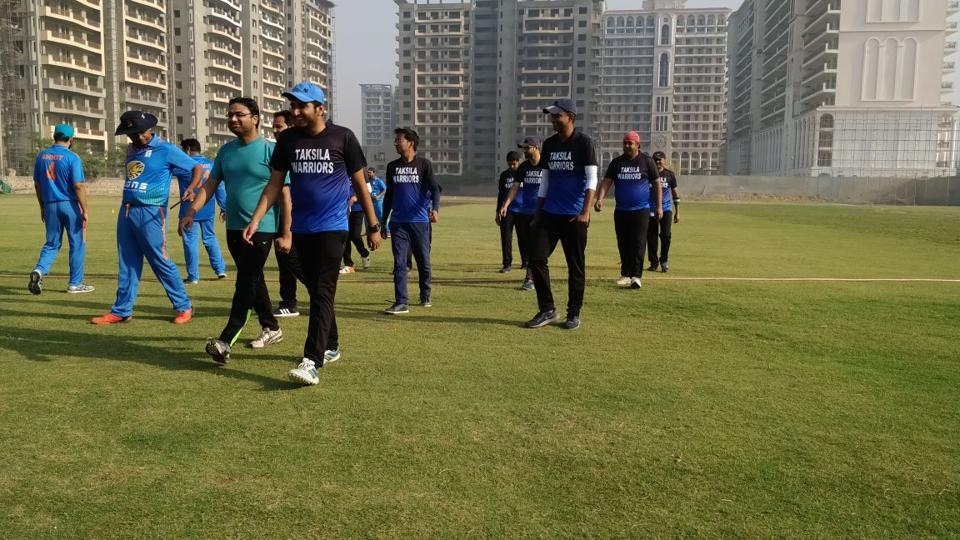
Eighteen teams have registered their participation for the tournament, which will be inaugurated by Yashpal Yadav, commissioner, Municipal Corporation of Gurugram (MCG).
Organised by the Dwarka Expressway Welfare Association (DXPWA), the tournament is aimed at encouraging sporting events between the new societies and make sure the residents come together to push for the development of the new sectors, in terms of infrastructure development and provision of urban amenities, which has been in limbo for the last several years.
“The issues (plaguing residents in new sectors) are being taken up and will be addressed in due course of time. This is a good initiative by residents to highlight the issues affecting them and seek redressal. We, too, are working towards resolving their problems. We won’t disappoint them,” Yadav said.
In addition to holding the cricket tournament, the DXPWA members have also organised voter ID registration camps for the residents of the new and developing sectors at the match venue. Majority of the people who took up residence in these new sectors have yet to get their voter identity cards made.
“Apart from organising cricket matches to highlight our problems, we will also hold voter ID registration camps at the match venue and at Vatika India Next, K Block, Sector 83, between 10am and 3pm on April 21 and 22,” Yashesh Yadav, president, DXP welfare association, said.
Read I Gurgaon: Love for the game of cricket pushes wheelchair heroes
This is the first time that residents societies in all new and developing sectors have come together to organise a cricket tournament of this kind. The tournament will kick off on Saturday, May 21, and will end on May 14.
All matches will have a unique theme of ‘One issue-One match’, highlighting concerns of residents in new sectors. The first match will feature residents seeking relocation of the Kherki Daula toll plaza, while the second will involve residents seeking early completion of the Dwarka Expressway. The third match will feature residents demanding construction of internal roads.
The matches will be 15 overs a side and each society can have a maximum of two teams. A team’s squad will comprise 18 players and the playing eleven will be selected from that squad.
“Each match will be played for a cause. We have suffered because of water pipelines that haven’t been constructed as yet, and lack of electricity, too, is a major concern for residents in new sectors. Again, in some places, sewer lines have not been laid, parks haven’t been developed, streetlights are not in adequate number and there is no police station, hospital and post office in the vicinity. Residents are also suffering due to the lack of adequate water connections,” Pradeep Rahi, general secretary, DXPWA, said.





