With the education space changing every day, AI, automation, and emerging technologies have been gaining prominence. For students who are completing their Class 12, choosing the right undergraduate programme has become increasingly important, with industry demand, practical exposure and future-ready skills playing a crucial role in career decisions.
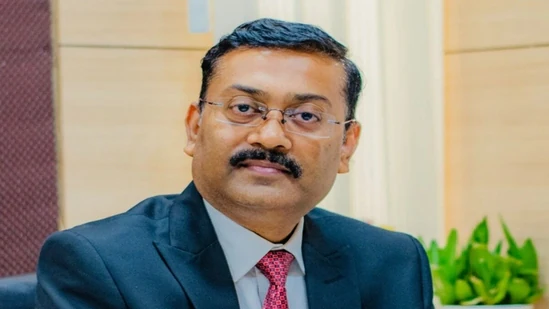
In an interview with HT Digital, Dr Rajesh Jain, Registrar, BIT Mesra, discusses how the institute is adapting its academic programmes for this new world, which factors students should consider when choosing a UG programme, the changing job market, and more.
Breaking Subject Barriers: How NEP 2020 is giving students more academic choices
Read the interview here:
How is BIT Mesra adapting its academic approach to prepare students for the changing higher education landscape? What skills should students prioritise?
Indian higher education is in a period of reset. NEP 2020 has restructured Indian higher education through flexible, student-centric frameworks. It includes four-year undergraduate programmes, academic credit banking and greater scope for internships. Employers are revisiting what they expect of graduates. Semicon 2.0 and the IndiaAI Mission are also creating demand for talent in semiconductors and emerging technologies.
In response, BIT Mesra has expanded its academic offerings into new areas while maintaining its recognized strengths in engineering and technology. This approach is reflected in programs such as computer science and engineering, artificial intelligence and machine learning, and electronics and communication engineering. With more than 65 laboratories, students can apply classroom learning through experiments, practical tasks, and projects. This experience also helps children apply theoretical concepts in the real-world.
{{/usCountry}}In response, BIT Mesra has expanded its academic offerings into new areas while maintaining its recognized strengths in engineering and technology. This approach is reflected in programs such as computer science and engineering, artificial intelligence and machine learning, and electronics and communication engineering. With more than 65 laboratories, students can apply classroom learning through experiments, practical tasks, and projects. This experience also helps children apply theoretical concepts in the real-world.
{{/usCountry}}For skills: fundamentals matter the most. Analytical thinking, programming, data literacy and clear communication carry value in every discipline. So does the capacity to learn afresh. Technology will keep advancing, and graduates must be able to keep pace.
What makes BIT Mesra a compelling choice for students who have completed Class 12? What academic and campus experiences can they benefit from?
Our institution offers a residential setting in which classroom learning, practical exposure and campus life reinforce one another. BIT’s Mesra campus houses hostels, laboratories and a sports complex, giving students the facilities for study, research and extracurricular pursuits in one place.
Research opportunities also keep expanding. The AI Centre of Excellence powered by NVIDIA will give authorised users access to advanced computing systems built on B200 GPUs, for work in artificial intelligence, robotics and other emerging technologies. A five-year MoU with IIT Kanpur also adds scope for joint research, internships and academic engagement, subject to the arrangements for each activity.
Student life carries its own lessons. Around 34 clubs and societies let students explore interests beyond academics. PANTHEON, the annual technical festival, and BITOTSAV, the annual cultural festival, are key campus events. Students organise and lead both. They plan activities, manage teams and coordinate participants. PANTHEON celebrates technology and innovation. BITOTSAV brings together culture, creativity and diversity. Both festivals give students a chance to take responsibility. They learn to make decisions, work in teams and manage challenges. These experiences build confidence, leadership and a sense of ownership.
98% Is Not a Failure: Rethinking success, ambition and mental wellbeing
What factors should students consider before selecting an undergraduate programme after Class 12?
Students should begin with their interests, aptitude and the kind of problems they enjoy solving. Students should also examine the programme itself. Does it offer strong fundamentals? Is the curriculum relevant? Who will teach them? Are there good laboratories and opportunities for internships or practical work? They should also consider how the subject may change as technology advances and industry requirements shift. The Economic Survey 2025-26 highlights the employment implications of wider AI adoption. Students must be prepared to update their skills as these changes unfold.
Which sectors are likely to create the most promising career opportunities over the next five to ten years?
India’s best career prospects over the next five to ten years are likely to lie in artificial intelligence and data science, semiconductors, advanced manufacturing, space technology and biotechnology. The IndiaAI Mission, with an approved outlay of more than ₹10,370 crore, should lift demand for professionals in AI development, data science, model deployment and governance. Semiconductors will need specialists in chip design, fabrication and process engineering. Automation and robotics will favour engineers versed in industrial automation.
The space sector also presents considerable opportunities. IN-SPACe projects India's space economy to grow from $8.4 billion to $44 billion by 2033. Biotechnology has a similarly important role to play, with India's bioeconomy targeted to reach $300 billion by 2030. Its applications extend across healthcare, pharmaceuticals, agriculture and industrial research.
At BIT Mesra, programmes in AI and Machine Learning, Computer Science, Electronics and Communication, and Biotechnology lead into several of these areas, and postgraduate Space Engineering serves the space sector. Each rests on a strong technical base applied across disciplines.
Looking ahead to 2035, how do you envision the job market changing with AI and automation? How should students prepare?
By 2035, AI and automation are likely to change the nature of work across sectors. Repetitive and routine tasks will pass increasingly to machines, redesigning many roles. The World Economic Forum’s Future of Jobs Report 2025 estimates that 39% of workers’ existing skill sets could be transformed or outdated by 2030, with 170 million jobs created and 92 million displaced worldwide. Professionals will have to work alongside intelligent systems, test their outputs and bring domain knowledge to complex decisions. Critical thinking, problem-solving, ethical judgement, communication and adaptability will retain their worth.
Students should therefore build firm foundations in their chosen fields, stay familiar with emerging technologies and keep updating their skills. They should also gain experience applying these tools to problems within their own disciplines. Institutions, for their part, must keep curricula abreast through practical learning and research. BIT Mesra has a record here: its Department of Space Engineering and Rocketry dates to 1964, and Computer Science teaching to 1983. Our continued engagement with emerging technologies, including through the AI Centre of Excellence powered by NVIDIA, reflects this approach to academic preparation.
Beyond academics, how does BIT Mesra equip students with industry exposure, practical skills, internships and entrepreneurial opportunities?
Students get practical experience through research projects and laboratory assignments. They also take part in industry visits, internships and entrepreneurship activities. More than 65 laboratories support their project work. The Placement Office coordinates campus recruitment and works with companies on industry engagement opportunities.
Partnerships carry research beyond the classroom. The five-year MoU with IIT Kanpur, signed in November 2026, provides for joint guidance of undergraduate research from the third year, summer and winter internships, specialised short courses and laboratory visits, subject to arrangements under individual activities. Five-year MoUs with IIT Kharagpur and IIT Bhubaneswar broaden these options.
Enterprise has an institutional home in BIT-STEP, established in 1985. The student-run Entrepreneurship Development Cell complements it with activities, workshops and expert interactions that help students understand the process of developing and evaluating business ideas. BIT-STEP also provides an institutional base for technology-led ventures. Together, they give students opportunities to explore employment, research and entrepreneurship after graduation.
