
 E-Paper







Abhishek Jha is Assistant Editor-Data at Hindustan Times. He uses statistical programming to generate newsworthy insights from large datasets. He is part of the team that produces Number Theory, a daily data story feature of the paper’s print edition. Since March 2024, he has been writing Weather Bee, a weekly column for the Hindustan Times website. He is a chemical engineer by training, who specialises in stories related to weather, climate, and the environment. Jha has been at HT since 2018, where he offers data-driven perspective and analysis on politics, environment, weather, climate, economy and society. His work includes data coverage of elections in India and abroad, including the 2019 and 2024 Lok Sabha elections; the disasters and extreme weather resulting from changing climate, such as floods, droughts, heat waves, cold waves, and dwindling snow cap in the Himalayas; the factors that drive poor air quality in northern India; the changing patterns of land use; the Covid-19 pandemic and its impact on labour market conditions; the changing pattern of consumer spending seen in the new consumer spending surveys; and social norms seen in the surveys such as the National Family Health Survey.
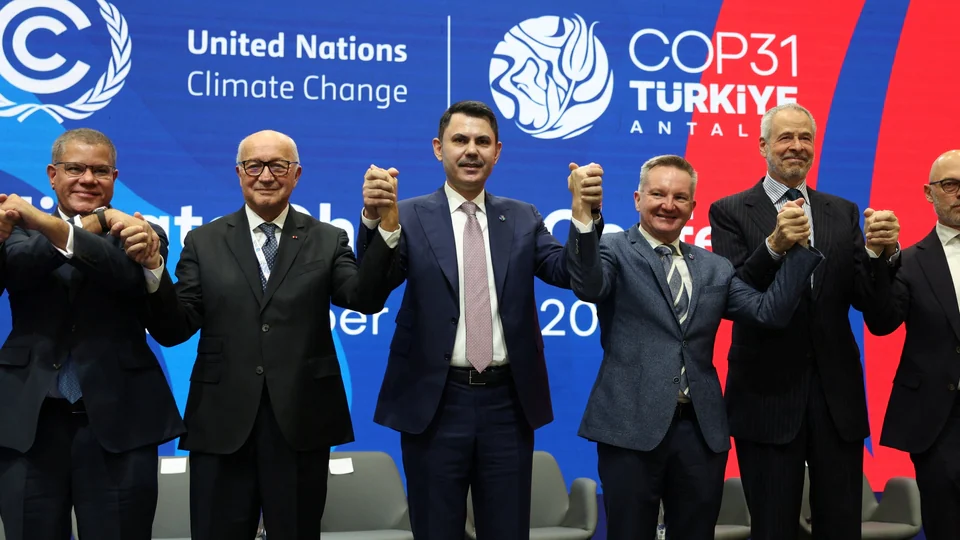
Why COP31 failed to deliver on climate action | Number Theory
Why did the Antalya COP fail to act on it? Here are three charts that try to answer this question
Published on: Nov 24, 2026, 06:41:53 IST


Share via
Copy link
The first part of this two-part data series pointed out that without an unprecedented decline in fossil fuel emission becoming an annual norm, we are almost certain to face the catastrophic climate crisis expected in a world 1.5°C warmer than the pre-industrial one. Clearly, we are facing an existential threat. Why did the Antalya COP fail to act on it? Here are three charts that try to answer this question.
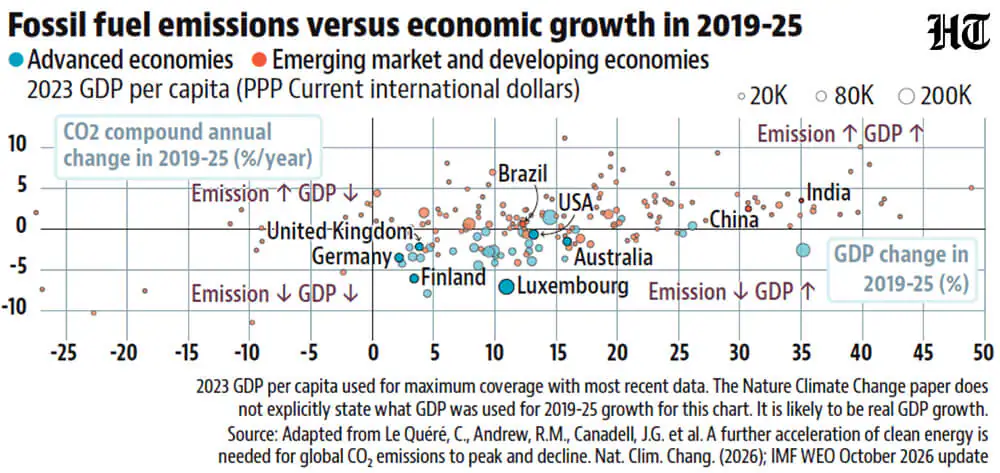
 Emissions aren’t decreasing largely because a large share of world population is still developingThe Global Carbon Project’s 2026 report lists 59 countries that decreased their emissions in the 2019-2025 period without a contraction in GDP. This shows that decoupling emissions from economic growth is not an impossible technological puzzle. Why, then, are global emissions not decreasing? The short answer is that the economics of deploying the technology are still not attractive to all countries. For example, 33 of the 59 countries are advanced economies. Most of the 26 emerging markets and developing economies on the list are those that experienced slow growth during the period (such as Venezuela, South Africa, or Jamaica) or are among the richer economies (such as Hungary and Poland). China is expected to join the latter group, with emissions decreasing soon. Clearly, deploying clean energy at scale in a large economy is not always economically feasible for poorer economies seeking to emerge from poverty. The list of 59 must also be read in the context of advanced economies outsourcing their emissions to poorer countries. As HT has highlighted earlier, emissions based on consumption tend to be higher for advanced economies than the emissions generated within their own territories. This is the fundamental contention that regularly makes agreement in COP difficult. Antalya is only a special case of this general trend in the sense that countries refused to compromise after disagreement.
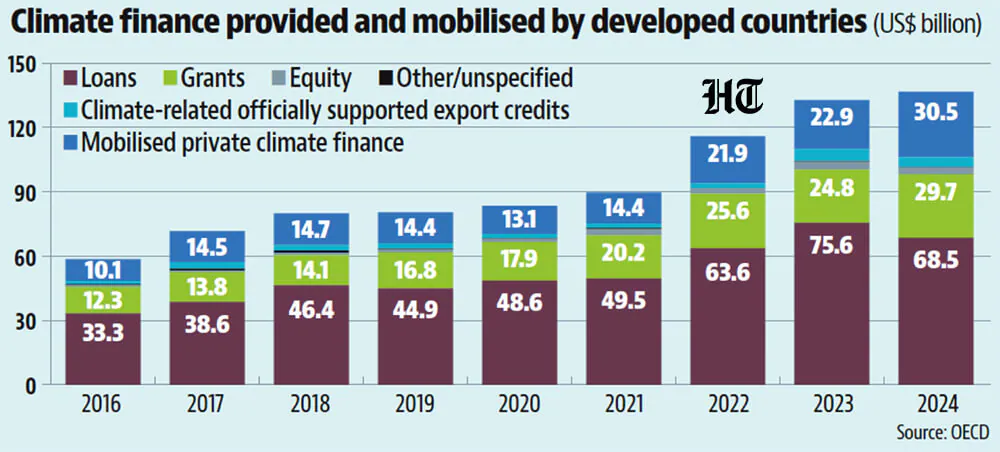
- And they cannot make a just transition without assistance from developed countriesSince most cumulative emissions to date have been generated by today’s advanced economies, the latter agreed to mobilise $100 billion in climate finance by 2020 at the 15th COP in 2009. This figure was updated to $300 billion by 2035 at the 29th COP in 2024. Both figures are a fraction of the $6-11 trillion per year that developing economies estimate they need up to 2030. Yet the $100 billion in climate finance has started materialising only since 2022, with most of it coming in the form of loans. While estimates for 2025 are not yet available, Carbon Brief reported on November 11 that bilateral pledges – amounting to around $40 billion since 2022 – that expired in 2025 have largely not been renewed in 2026. This could mean climate finance will become even more loan-funded or decline. Neither is acceptable to poor countries seeking an energy transition or funds to adapt to the new normal. While these loans are typically offered at concessional rates, taking on additional debt at lower rates is only marginally better than borrowing at market rates. This was the other key issue preventing a compromise in Antalya.
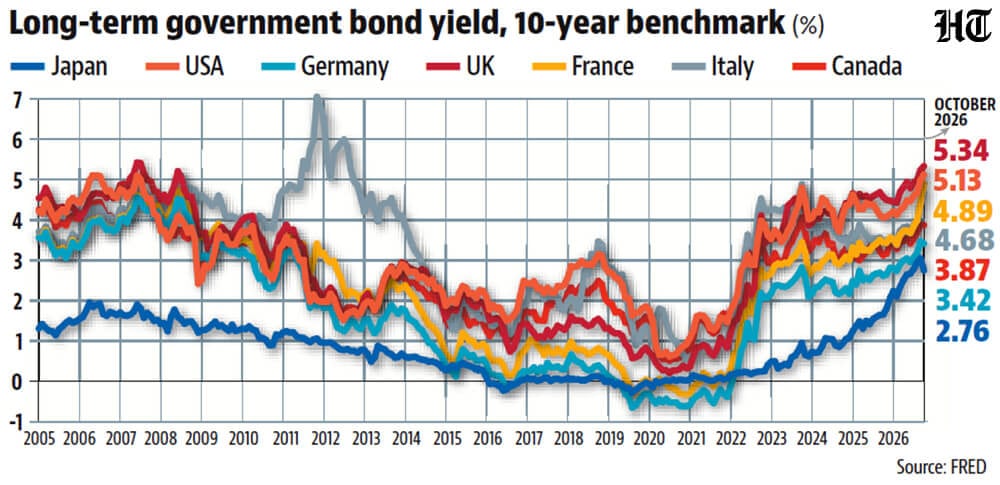
- Climate finance will be harder with higher interest rates fuelled by West Asia war and AI buildupEven loan-fuelled climate finance appears difficult currently. Interest rates have increased in advanced economies this year for two reasons: rising inflation resulting from the West Asia war and high demand for capital from AI companies. Add to this the rising debt of advanced economies, and mobilising adequate climate finance appears difficult. Against this backdrop, the lack of agreement in Antalya makes perfect sense, even if the global climate is moving from the frying pan into the fire.
ABOUT THE AUTHOR

Unlock a world of Benefits with HT! From insightful newsletters to real-time news alerts and a personalized news feed – it's all here, just a click away! -Login Now!





