
A controversy that shook the cricket world more than eight and a half years ago, attracted sanctions that seemed a little excessive, and which appeared to have been put to bed, has resurfaced dramatically in the last few weeks, tearing apart a cricketing ecosystem that prided itself on being unshakably united in multiple directions.
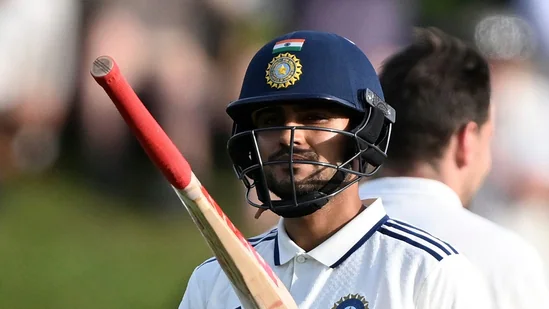
The Sandpapergate scandal of March 2018, with then Australian captain Steve Smith, David Warner and rookie Cameron Bancroft eventually painted as the sole villains, had gradually faded from memory—as most things do with time—when Usman Khawaja ripped off the band-aid with stunning revelations in an interview just before the release of his autobiography, Sabr.
The Pakistan-born Khawaja’s insistence that the entire team was in the know has sparked emotional confirmations and violent denials, exposing gaping cracks in the Australian system that can no longer be papered over.
The use of sandpaper to artificially and illegally alter the cricket ball's condition so it could be a reversing weapon of destruction isn’t the first chronicled tale of ball-tampering, nor is it the last.
There have been murmurs from time immemorial about players resorting to unfair practices to ‘maintain’ the ball. It is possible to address the said maintenance through legal means as well, but the impact isn’t the same as using artificial substances, ranging from saliva and lozenges to more creative objects such as bottle caps or, in Bancroft’s case, sandpaper.
{{/usCountry}}There have been murmurs from time immemorial about players resorting to unfair practices to ‘maintain’ the ball. It is possible to address the said maintenance through legal means as well, but the impact isn’t the same as using artificial substances, ranging from saliva and lozenges to more creative objects such as bottle caps or, in Bancroft’s case, sandpaper.
{{/usCountry}}Picking the seam with one’s nails is another example of tampering with the ball without necessarily using artificial means. When Wasim Akram and Waqar Younis destroyed England in their own backyard in 1992, the dynamic pace duo was accused by the holier-than-thou English of ball-tampering, an allegation that Geoffrey Boycott, their own legend, dismissed, insisting that the two Ws could have bowled England out with an ‘orange’.
Coincidentally enough, India’s first genuine tryst with tampering came during the tour by England in 1976-77 when Bishan Bedi, the captain, charged John Lever, the left-arm swing bowler, with resorting to the use of Vaseline to keep one side of the ball shiny and heavy, thereby aiding the challenging art of reverse swing. The English embraced righteous indignation though the reality is that Lever wasn’t ever the same force that took seven for 46 in Delhi or five for 59 after the Bedi tirade.
This writer’s first direct tryst with ball-tampering in competitive cricket came during the semifinal of the Moin-ud-Dowlah Gold Cup at the Gymkhana Grounds in Secunderabad in 1994, in a 50-over match involving two corporate giants from Chennai. Both sides boasted India internationals of the time; one of them was tacitly involved in the tampering act, keeping the umpire at the bowler’s end occupied in idle chat as a teammate used a bottle cap (Gold Spot, one can remember distinctly) to rough up one side of the ball during the closing stages of the innings. As the offending party tossed the bottle cap carelessly on the outfield at lunch, I quickly walked across to take possession, outlining the chain of events and offering the cap (with pieces of red leather stuck to it) to the two umpires. Their hasty refusal to be any part of that exercise was a disappointing eye-opener.
It was hard, having had first-hand experience, therefore to believe that ball-tampering didn’t exist at all. If it could happen in a match with little to no significance in the larger scheme of things, who’s to say that it didn’t happen in games where so much is riding, especially in an era where the ball wasn’t in possession of the officials at intervals, and when the scrutiny of now-prying television cameras was non-existent.
Reverse swing is a lethal weapon when you know how to use it. Sarfaraz Nawaz, the cunning Pakistani pacer, was among its first exponents though as he has proudly proclaimed in public, he didn’t obtain it through legitimate means. Just to prove a point, Kiwi Chris Pringle used a bottle cap cut in quarters in a Test in Faisalabad in 1990 to prove a point and just because the Pakistanis did so, finishing with career-best figures of seven for 52. But not everyone with a ball that’s been scuffed up, through natural wear-and-tear or otherwise, can claim to have mastered reverse swing.
In recent times, to indulge in such mischief is fraught with danger, as Bancroft found out at Newlands in 2018. It is impossible for random (or not so) acts of tampering to not be spotted by the multiple television cameras used by the broadcasters. And yet, players still attempt that, just to gain that little competitive edge that can be the difference between victory and defeat.
‘Maintaining’ the cricket ball is a fine art, and the use of that specific term usually holds positive connotations. It translates to using all legal methods to keep one side shinier and heavier than the other. In conventional swing, the ball tends to move in the air in the direction opposite to the one where the shine is. In reverse swing, the ball travels in the direction of the shine, because the shiny side isn’t just shiny, it is also heavier and aerodynamics work in such a way as to pull the ball in the direction of the side which is heavier.
That heaviness comes largely from the viscosity of the saliva, the preferred natural source to facilitate shining the ball. The use of saliva, however, has been banned since July-August 2020 by the International Cricket Council after the onset of the COVID-19 pandemic, a decision that hasn’t sat well with Shubman Gill, the Indian captain.
On Monday at the Basin, Gill made a passionate plea for the return of saliva use, arguing that the ban was introduced at a certain time and for a certain cause. Gill further pointed out that on flat featherbeds like the one at the Basin Reserve, the use of saliva and whatever reverse can be procured because of that will even the level-playing field a little bit because it is impossible to obtain reverse swing naturally on most grounds with lush outfields which are a no-no when it comes to generating friction between the ball and the turf.
Gill’s argument that the pandemic is a thing of the past and that the world has moved on since then is hard to argue with. Maybe there is a case for the ICC’s Cricket Committee to consider.
‘Making the ball’ legally isn’t just paying it lip service; the process of getting one side to stay rougher and abrasive, and the other to be shiny, smooth and heavy entails dry hands, at least one designated ball-maker in each team, and a great deal of effort and care and industry. A ball that can reverse still needs a skilled operator to use it effectively, but especially on featherbeds that are slow and completely nullify the skills of the bowlers, it is a weapon worth having. For that weapon to be primed legally, saliva is a must-want. And Gill wants saliva.
